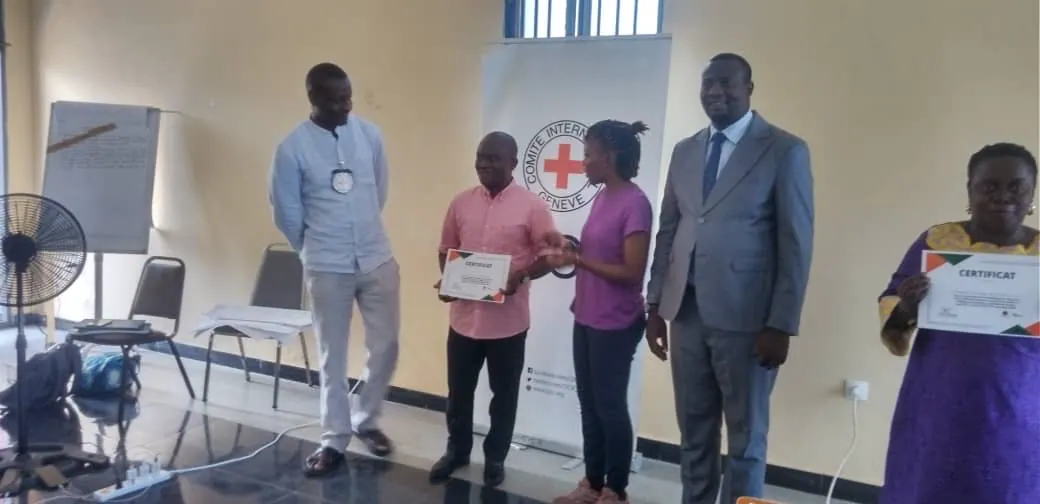
A two-day training session on fact-checking and generative artificial intelligence was recently held in Uvira, Democratic Republic of Congo, for 25 journalists and influencers from Uvira, Fizi, and Plaine de la Ruzizi. The training, organized by the International Committee of the Red Cross (ICRC) in collaboration with Balobaki Check, aimed to equip participants with skills to verify information and identify potential misinformation. The training was conducted by experts in the field, including Mme Ange Kasongo, director of Balobaki Check.
The training focused on the importance of fact-checking in the current media landscape, where misinformation and disinformation are rampant. Mme Kasongo emphasized that the objective of the training was to enable journalists to verify the accuracy of information, especially images that may be taken out of context. This is crucial in preventing the spread of fake news, which can have serious consequences. The participants were also introduced to tools and techniques for identifying and debunking false information.
According to Mme Kasongo, the training was not specifically targeted at Uvira or the surrounding region, but rather aimed to build the capacity of journalists and influencers in the area. She noted that her organization has been working with community radios in the region to reach a wider audience, as these radios are a reliable means of communication in the Democratic Republic of Congo. The training is part of a larger effort to combat misinformation and promote fact-based reporting.
Dady Oumarou Rabiou, national coordinator of communication at the ICRC in the Democratic Republic of Congo, highlighted the importance of the training for humanitarian work. He noted that the spread of misinformation has made it essential for journalists to be equipped with the skills to verify information and identify potential biases. The ICRC partnered with Balobaki Check to provide the training, which is part of a broader effort to promote fact-based reporting and reduce the spread of misinformation.
The training, which took place at the Hotel Souzane, was well-received by the participants. Mme Kasongo noted that her organization plans to continue working with community radios and other stakeholders to promote fact-based reporting and combat misinformation. The ICRC also plans to continue supporting efforts to build the capacity of journalists and influencers in the region.
The Democratic Republic of Congo has faced significant challenges related to misinformation and disinformation, particularly in the eastern regions. The training is part of a broader effort to address these challenges and promote fact-based reporting. By equipping journalists and influencers with the skills to verify information and identify potential biases, the training aims to contribute to a more informed public discourse.
The training on fact-checking and generative artificial intelligence is a significant step towards promoting fact-based reporting in the Democratic Republic of Congo. The participants, who included journalists and influencers from Uvira, Fizi, and Plaine de la Ruzizi, are now better equipped to verify information and identify potential misinformation. The training is expected to have a positive impact on the media landscape in the region, contributing to a more informed public discourse and reducing the spread of misinformation.
Key points
- The training was organized by the International Committee of the Red Cross (ICRC) in collaboration with Balobaki Check.
- The training focused on fact-checking and generative artificial intelligence.
- The participants included 25 journalists and influencers from Uvira, Fizi, and Plaine de la Ruzizi.