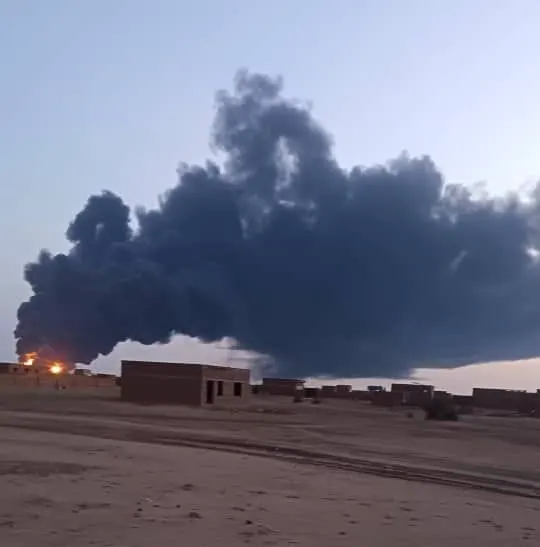
A report by the Youth Network for Civil Monitoring in Sudan revealed that 216 people were killed and 111 injured in 24 violence incidents in various parts of the country in August 2026. The report, which was obtained by Radio Dabanga, was compiled by the network's fact-finding unit using open-source information. The incidents were documented in eight states, with the majority occurring in the regions of Kurdufan and Darfur.
According to the report, the number of deaths recorded in August increased by approximately 14% compared to July 2026, which saw 190 fatalities. However, the number of injuries decreased significantly from 173 in July to 111 in August. The states of North Darfur and North Kurdufan were the most affected in terms of the number of deaths. North Kurdufan recorded nine incidents, resulting in 60 deaths and 34 injuries, while North Darfur recorded four incidents, resulting in 72 deaths and 67 injuries.
The report indicated that the violence was concentrated in the regions of Kurdufan and Darfur, with 13 incidents attributed to the Rapid Support Forces (RSF), resulting in 85 deaths and 37 injuries. The Sudanese Armed Forces (SAF) was responsible for four incidents, resulting in 51 deaths and 64 injuries. The report also mentioned that one incident was attributed to the Sudan People's Liberation Movement-in-Opposition (SPLM-IO), led by Yousif Kuwa, resulting in 27 deaths.
The report highlighted that airstrikes were the second most deadly type of incident, resulting in 55 deaths and 86 injuries. One of the most significant incidents was the airstrike on a court session in the "Zawiyat Ghra" area in North Darfur on August 2, which resulted in 35 deaths and 50 injuries. The report also noted that the use of drones against civilian infrastructure is a cause for concern, particularly in areas with large numbers of internally displaced persons.
The report documented a total of seven drone attacks in four states, resulting in 55 deaths and 86 injuries. The SAF and RSF were responsible for these attacks, which targeted civilian infrastructure, including a water station in the city of Al-Abyad in North Kurdufan. The report warned that this type of attack could exacerbate the existing humanitarian crisis, as civilians rely heavily on these facilities.
The Youth Network for Civil Monitoring recommended several measures to address the violence, including providing protection, medical care, and basic needs to the most affected areas. The report also called for the development of regular monitoring channels to track indicators of escalation and to hold parties responsible for violence accountable for their actions.
The report concluded that the violence in August 2026 resulted in a higher number of deaths compared to the previous month, with a continued concentration of incidents in the regions of Kurdufan and Darfur. The report also highlighted the need for further investigation into the 25% of incidents that were not attributed to a specific party, which reflects a gap in field documentation.
Key points
- The Sudanese government and parties to the conflict must take measures to reduce the impact of attacks on civilian areas.
- The use of drones against civilian infrastructure is a cause for concern and must be addressed.
- There is a need for further investigation into incidents that were not attributed to a specific party.