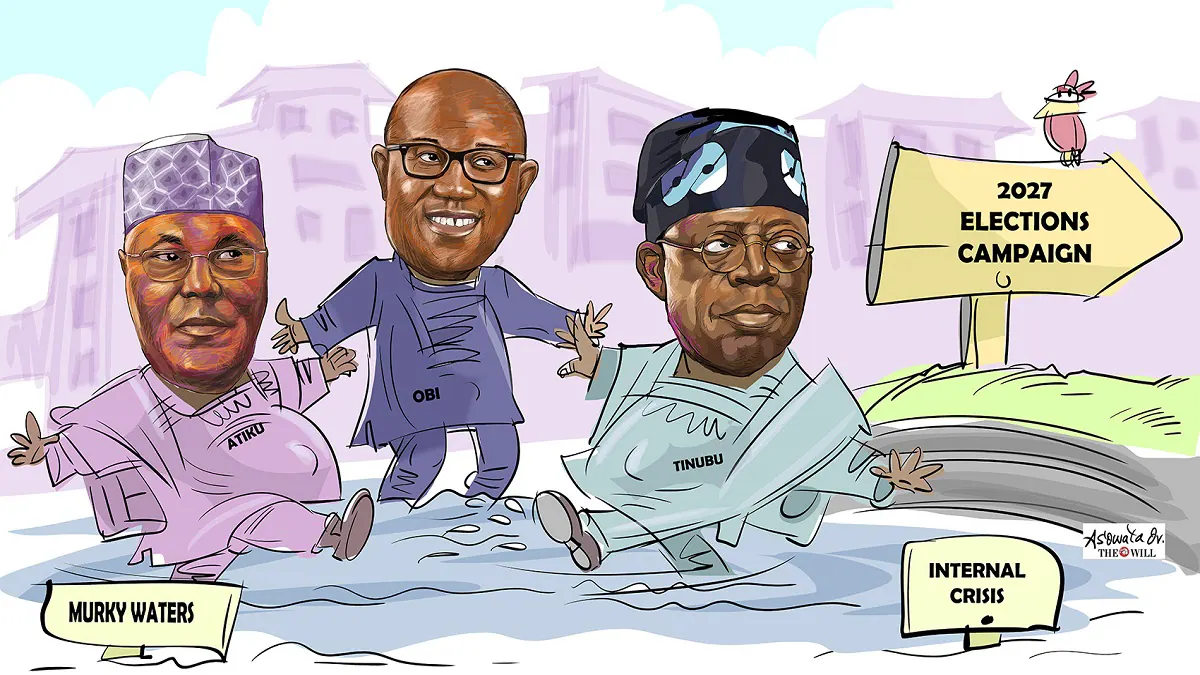
One month after the Independent National Electoral Commission (INEC) lifted the ban on presidential campaigns on August 19, 2026, Nigeria's electioneering is yet to become competitive. The presidential and national assembly elections are scheduled for January 16, 2027, while governorship and assembly polls will take place on February 6. An internal party crisis over candidate substitution, shifting alliances, and funding issues is hindering major political parties, particularly the opposition African Democratic Congress (ADC) and the Nigeria Democratic Congress (NDC), from composing their campaign structures.
The governing All Progressives Congress (APC) has constituted its presidential campaign council and is engaged in subtle, pre-electioneering grassroots campaigns through various groups. However, President Bola Tinubu's three-week annual leave in Europe has diminished the campaign council's vibrancy, leading to squabbles among competing interests. A public rift between APC governors and the Minister of the Federal Capital Territory, Abuja, Nyesom Wike, over the campaign structure for Tinubu's re-election highlights the importance of the President's presence during electioneering.
The major parties differ in their war chest, structure, and spread across the country but converge on their slow approach to campaigning for the 2027 general election. With the general election approaching in January, the months of October and November are crucial for effective campaigning, as December festivities often take some shine off electioneering. The Electoral Act 2026 imposes campaign spending limits for each office, but raising funds may prove difficult for parties lacking elected officials in government or support from big business and the corporate world.
The APC, with the presidency and 31 state governors, will not face funding problems, unlike its main challengers, the ADC and NDC, which have few lawmakers. These parties may need to resort to pooled funds to support their campaigns. The NDC, for instance, was recently restored to a viable state after an Appeal Court judgment on September 18, 2026, cleared a major legal hurdle, allowing the party to forge ahead with the election.
The Appeal Court judgment set aside a June 26, 2026, ruling that had nullified the NDC's registration, effectively restoring the party's position. The court held that the Federal High Court erred in entertaining a matter that sought to overturn its earlier judgment, directing INEC to register the NDC as a political party. The judgment breathed fresh life into the party, allowing it to focus on the upcoming election.
The legal battle also involved a dispute over the symbol used by the NDC, with the Peace Movement Party (PMP) claiming that the logo belonged to it. However, the Court of Appeal dismissed the claims surrounding the disputed symbol, clearing another major obstacle for the NDC. The dispute dates back to December 10, 2025, when Justice Isah Dashen ordered INEC to register the NDC as a political party.
As the 2027 general election approaches, Nigeria's major political parties face significant challenges in their campaigns. The slow approach to campaigning, internal crises, and funding issues may impact the competitiveness of the election. The coming months will be crucial in determining the trajectory of the campaigns and the ultimate outcome of the election.
Key points
- The 2027 presidential campaign in Nigeria is hampered by internal party crises, shifting alliances, and funding challenges.
- The governing APC has a relatively stronger financial position due to its control of the presidency and 31 state governors.
- The NDC's registration was recently restored by an Appeal Court judgment, allowing the party to participate in the upcoming election.