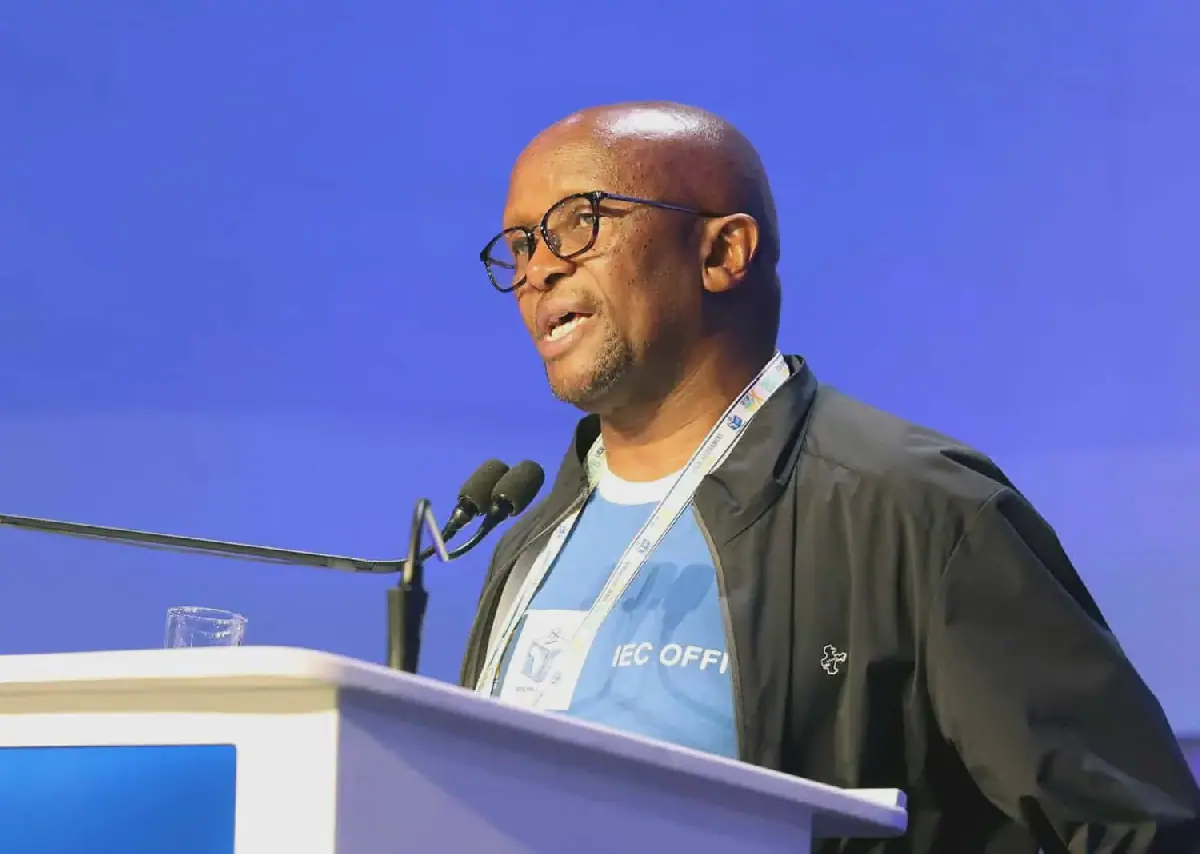
The 2026 local government elections in South Africa drew 14.9 million voters, as announced by IEC chairperson Mosotho Moepya on Sunday. The elections, contested by approximately 137,000 candidates, filled 10,526 council seats nationwide. These seats comprise 4,485 ward seats, 4,340 proportional representation (PR) seats, and 707 district council seats allocated through the 40% PR component. A further 994 district council seats will be filled through nominations by local municipalities.
Nationally, the ANC secured 30.76% of the vote and 3,246 council seats, followed by the DA with 24.64% and 1,695 seats. The MK Party finished third with 9.76% and 785 seats. The EFF secured 6.22%, while ActionSA obtained 5.67%. The elections saw 74 of the country's 213 municipal councils return an outright majority for a single party, leaving 139 without one.
The ANC emerged as the largest party in 128 municipalities, securing outright majorities in 53. The DA led in 32 municipalities and secured outright control in 12. The MK Party and IFP each led in 19 municipalities, winning outright majorities in three and five respectively. This outcome reflects the diverse representation across different municipalities.
The IEC chairperson emphasized the importance of accountability in his closing remarks. He stressed that confidence in the electoral process cannot simply be demanded but must be earned through competence, impartiality, transparency, accountability, and integrity. The commission aims to acknowledge mistakes and learn from each election to strengthen democratic processes.
The elections had a significant impact on the governance of municipalities across South Africa. With 139 municipal councils not having an outright majority, coalition agreements and negotiations will likely play a crucial role in determining the leadership of these councils. This situation may lead to more collaborative governance and potentially more representative councils.
Mosotho Moepya highlighted the commission's commitment to humility and continuous improvement. The IEC will use each electoral cycle to identify areas for improvement and enhance the democratic process. This approach aims to ensure that the electoral process remains fair, transparent, and accountable.
The final results were announced at the National Results Operations Centre at the Gallagher Convention Centre in Midrand. The IEC's declaration of the final results marks the end of the 2026 local government elections. The outcome sets the stage for the formation of new municipal governments and the implementation of policies that will affect local communities.
Key points
- The ANC secured 30.76% of the vote and 3,246 council seats nationwide.
- Only 74 of the country's 213 municipal councils returned an outright majority for a single party.
- The IEC chairperson emphasized the importance of accountability and continuous improvement in the electoral process.