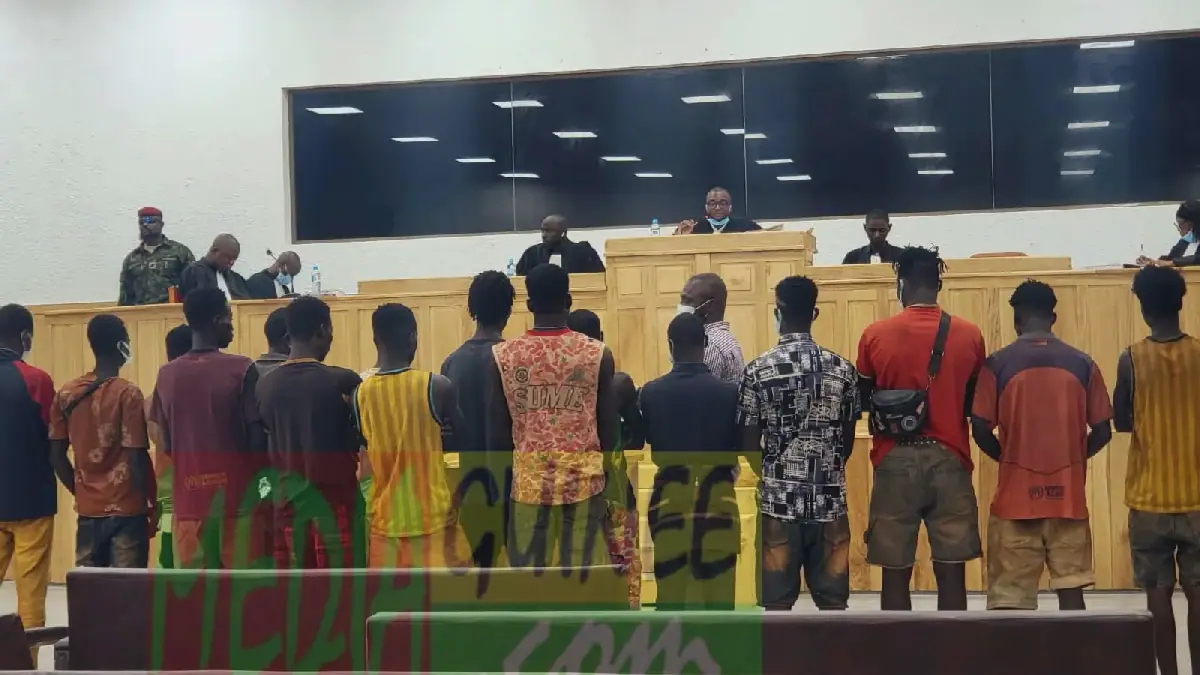
A trial involving 202 individuals arrested in Guinea's Siguiri region for illegal gold mining commenced on November 10, 2026, at the Cour de répression des infractions économiques et financières (CRIEF). The defendants, who are from Guinean, Malian, Burkinabè, Togolese, and Beninese nationalities, pleaded guilty to charges of illegal exploitation of mineral substances, environmental degradation, destruction of property, and water pollution.
The defendants were arrested during operations aimed at curbing illegal gold mining in Siguiri. According to reports, a total of 1,263 people were apprehended, and their cases were distributed among several courts under the Conakry Court of Appeal. The 202 defendants are being held in detention and appeared before the CRIEF, where they admitted to the crimes.
During the hearing, the defense team, led by lawyer Abou Camara, pointed out that 12 of the defendants were minors and requested that their age be taken into account during the examination of the case. However, the special prosecutor, Charles Wright, opposed this, arguing that the defense had no evidence to prove the minority of the 12 individuals in question.
The special prosecutor requested that the case of the 202 defendants be joined with that of 22 territorial administrators, which is already before the court. The prosecutor argued that the two cases were closely linked. The court, presided over by Alpha Camara, declared itself competent and ordered the cases to be joined.
The trial was adjourned to November 11, 2026, for further deliberations. The defendants face severe penalties if convicted, including imprisonment and fines. The Guinean government has been cracking down on illegal gold mining, which has caused significant environmental damage and loss of revenue.
The case highlights the challenges faced by Guinea in regulating the artisanal and small-scale mining sector, which is a significant source of livelihood for many people. The government has been working to formalize the sector and ensure that miners operate in a responsible and sustainable manner.
The trial's outcome will be closely watched by stakeholders, including human rights groups, environmental organizations, and the mining industry. The case has significant implications for the future of gold mining in Guinea and the country's efforts to combat corruption and environmental degradation.
Key points
- The 202 defendants pleaded guilty to charges of illegal gold mining and environmental degradation.
- The case has been joined with that of 22 territorial administrators, who are also facing charges related to illegal gold mining.
- The trial highlights the challenges faced by Guinea in regulating the artisanal and small-scale mining sector.