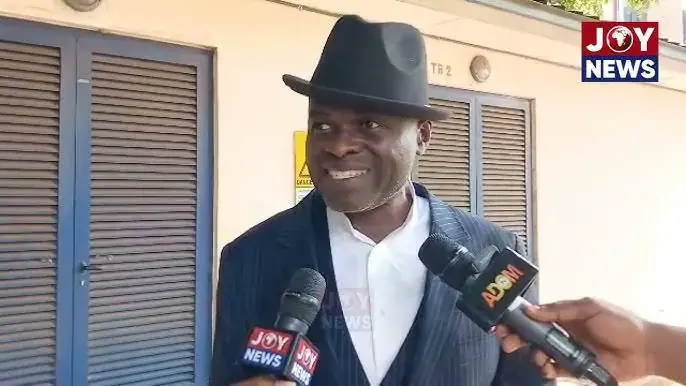
A legal battle from nearly two decades ago is being revisited as a possible guide for determining the fate of detained Asante Akyem North MP Ohene Kwame Frimpong. Lawyer Martin Kpebu says the 2008 Court of Appeal decision in Professor Stephen Kwaku Asare v Attorney-General & 3 Others could prove decisive in determining whether Frimpong keeps his parliamentary seat. This case involved Eric Amoateng, an MP who was arrested and detained in the United States on narcotics charges in November 2005.
The 2008 ruling arose from Amoateng's case, where Parliament had granted him indefinite leave of absence. However, Professor Stephen Kwaku Asare challenged this decision in court. The Court of Appeal rejected the indefinite leave arrangement, ruling that the Speaker of Parliament cannot permit an MP to be absent for more than 15 sittings. The court also held that an MP could lose their seat for missing that many sittings without written permission from the Speaker and without giving a reasonable explanation to the Committee on Privileges.
Kpebu argued that Frimpong's circumstances could leave him in a weaker legal position than Amoateng faced. Frimpong has reportedly not sought any written permission from the Speaker to be absent from the House at all. According to Kpebu, this could make Frimpong's situation worse than Amoateng's. The Court of Appeal's 2008 decision may be used to determine Frimpong's fate, as his absence without permission may be considered a serious breach of parliamentary rules.
The case of Eric Amoateng was a significant one, as it set a precedent for MPs who are detained or absent from parliament. Amoateng was an MP for Nkoranza North when he was arrested in the United States. His case highlights the challenges that MPs may face when they are detained or absent from parliament, and the need for clear guidelines on how to handle such situations.
Frimpong's detention has raised concerns about his ability to continue serving as an MP. Asante Akyem North constituents are eagerly awaiting news about their MP's fate. The 2008 Court of Appeal decision may provide a roadmap for resolving Frimpong's situation. Kpebu's comments have sparked a renewed debate about the rules governing MPs' absences and the consequences of breaching these rules.
The Speaker of Parliament plays a crucial role in determining the fate of MPs who are absent or detained. According to the 2008 Court of Appeal decision, the Speaker can grant permission for an MP to be absent for up to 15 sittings. However, if an MP exceeds this limit without permission, they risk losing their seat. Frimpong's situation is complicated by the fact that he has not sought written permission from the Speaker to be absent.
The outcome of Frimpong's case will have implications for MPs who are detained or absent from parliament. Kpebu's comments have highlighted the need for clarity on the rules governing MPs' absences. The 2008 Court of Appeal decision may provide a guide for resolving similar cases in the future.
Key points
- A 2008 Court of Appeal precedent may be used against detained Asante Akyem North MP Ohene Kwame Frimpong.
- The precedent involves a 15-sitting limit for MPs absent from parliament.
- Frimpong's fate may be determined by his failure to seek written permission from the Speaker.