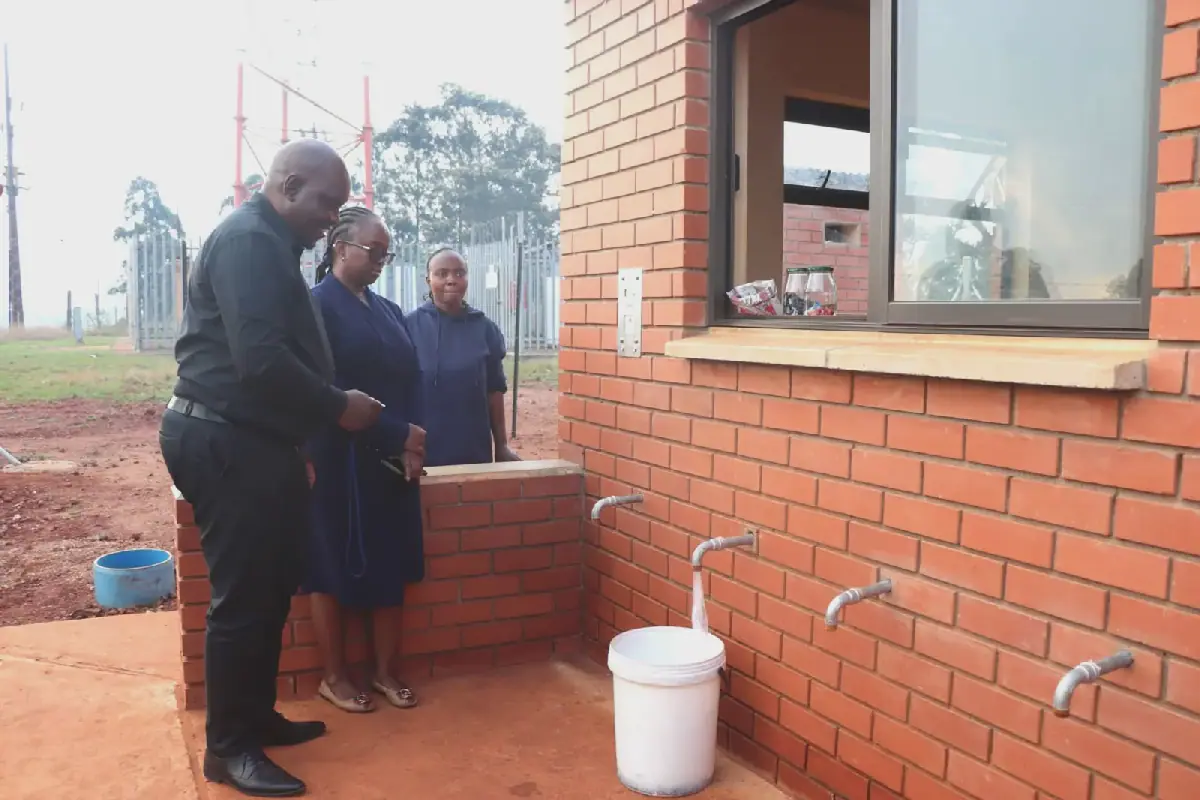
A solar-powered water supply scheme in Eswatini's Shiselweni region has improved access to clean water for approximately 2 300 people and a nearby school. The Ebulekeni water supply scheme, located in Zombodze Emuva Inkhundla, utilizes a hybrid system combining solar energy and the national electricity grid to provide water through 55 communal taps. This initiative is a collaboration between World Vision Eswatini (WVE) and the Ministry of Natural Resources and Energy (MNRE).
The scheme's use of solar power significantly reduces operational costs, making water services more affordable for the community. This approach has attracted regional attention, with a delegation from Water and Sewerage Company (WASCO) Lesotho recently visiting Eswatini to learn from the country's water solutions. The visit was led by WASCO Chief Executive Officer Lebohang Mpeke Makara and included representatives from Eswatini Water Services Corporation (EWSC) and World Vision Eswatini.
During their visit, the Lesotho delegation observed how partnerships between communities, government institutions, development partners, and water utilities contribute to sustainable water service delivery. They witnessed firsthand the incorporation of solar energy into the Ebulekeni water system, maximizing available sunlight while reducing reliance on the national grid. The delegation also visited other water projects in the Shiselweni region, including a prepaid water system in Makhwelela community.
The prepaid water system in Makhwelela, constructed jointly by World Vision Eswatini and EWSC, serves approximately 294 customers. This system allows residents to purchase water in advance and access it when required, promoting efficient water use and supporting the service's sustainability. The delegation also visited the EWSC Prepaid Water Kiosk, where households without direct water connections can buy water using prepaid tokens.
At the EWSC Prepaid Water Kiosk, every 20 liters of water costs 20 cents, providing households with an alternative way to access water according to their needs. The three projects showcased different approaches to improving access to water, highlighting the importance of community leadership, government support, and practical water solutions. Makara commended Eswatini's community-based approach and government support, describing them as crucial elements in developing sustainable water solutions.
The learning visit provided the Lesotho delegation with valuable insights into Eswatini's water management practices, particularly the efficient management of water systems and the use of solar power. Makara emphasized the significance of community leadership in implementing practical water solutions, stating that Eswatini has successfully practicalized community projects with considerable community leadership.
The Ebulekeni water supply scheme and other visited projects demonstrate the potential for partnerships and innovative approaches to address water access challenges in the region. By leveraging solar energy, community involvement, and government support, Eswatini's water solutions can serve as a model for other countries seeking to improve access to clean water.
Key points
- The Ebulekeni water supply scheme benefits 2 300 people and a nearby school through a hybrid system combining solar energy and the national electricity grid.
- The scheme's use of solar power reduces operational costs, making water services more affordable for the community.
- The visit by the Lesotho delegation highlights the regional interest in Eswatini's water solutions and the potential for knowledge sharing and collaboration.