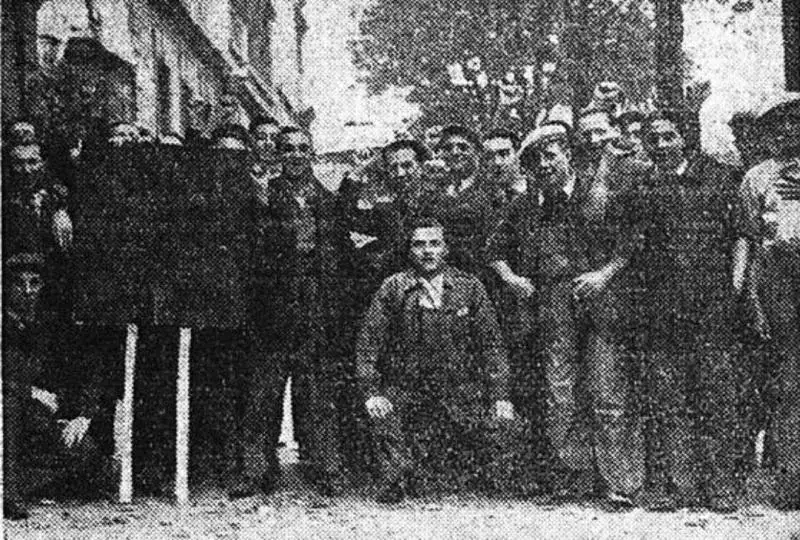
In September 1936, a workforce of nearly 1,000 people was employed at the Toury sugar beet factory in Eure-et-Loir, France. The factory, founded in 1874, was one of the largest in the country, and its workforce swelled during the harvest season from September to January. Approximately half of the employees were temporary workers, including 150 locals, 150 foreign workers from Czechoslovakia and Poland, and 200 Kabyle workers from North Africa.
On October 15, 1936, the temporary workers, represented by the CGT union, went on strike to demand a wage increase from 28 to 40 francs per day. The strike quickly escalated into a confrontation with local farmers, who were concerned about the impact of the factory's closure on their livelihoods. The situation was further complicated by the presence of migrant workers, which fueled xenophobic tensions in the region.
The national press picked up the story, with many outlets portraying the strike as a clash between French farmers and foreign workers. The right-wing press, in particular, was quick to blame the "Nord-Africains" and "étrangers" for the violence, with some outlets even suggesting that they were communist agitators. However, the left-wing press, such as L'Œuvre, provided a more nuanced account, highlighting the poor working conditions and low wages faced by the migrant workers.
According to L'Œuvre, the Kabyle workers were subjected to appalling living conditions, with 14 workers sharing a small room and limited access to sanitation facilities. The workers also faced long hours and low pay, with some workers earning as little as 28 francs per day. These conditions contributed to the tensions that ultimately led to the violent confrontation between the workers and local farmers.
On October 17, 1936, a group of farmers gathered outside the factory, leading to a confrontation with the striking workers. The situation quickly turned violent, with reports of stone-throwing, fistfights, and the use of knives. The local authorities struggled to maintain order, and the incident was widely reported in the national press.
An investigation into the incident revealed that the violence was not solely the result of the migrant workers, but rather a complex interplay of factors, including the poor working conditions, low wages, and xenophobic tensions. While some right-wing outlets continued to blame the "étrangers" for the violence, others began to acknowledge the legitimate grievances of the workers and the need for improved working conditions.
The events at Toury highlighted the deep-seated social and economic tensions in rural France during the 1930s. The incident also underscored the challenges faced by migrant workers, who were often subjected to poor working conditions and xenophobic attitudes. The legacy of this incident would continue to be felt in the years to come, as France grappled with the complexities of immigration and labor rights.
Key points
- The 1936 labor dispute in Toury, France, was fueled by a combination of factors, including poor working conditions, low wages, and xenophobic tensions.
- The incident highlighted the challenges faced by migrant workers in France, who were often subjected to poor working conditions and xenophobic attitudes.
- The events at Toury underscored the need for improved working conditions and labor rights in rural France during the 1930s.