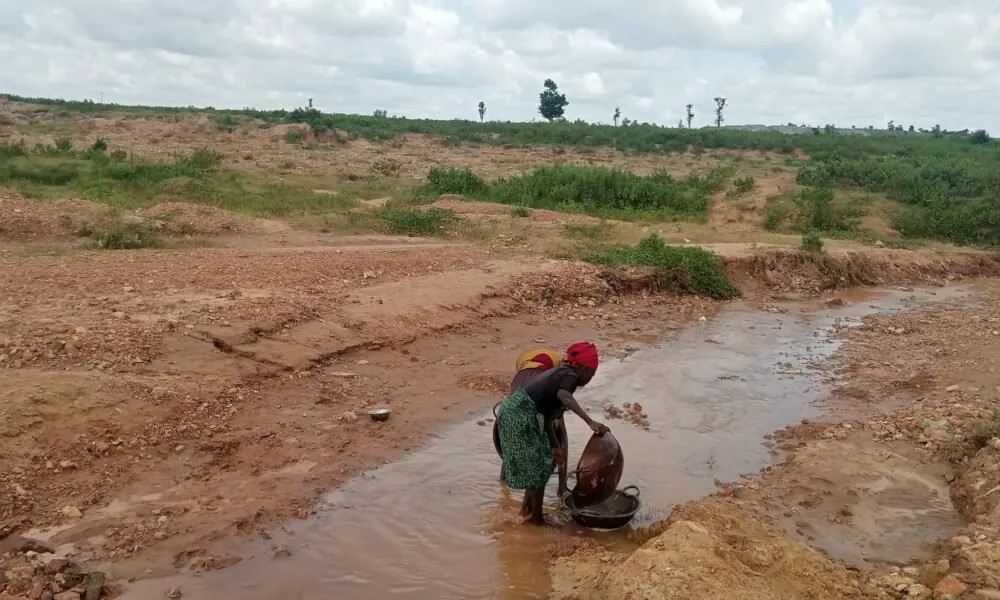
A 17-year-old girl named Zainab has returned to a mining site in Niger State, days after 37 suspected illegal miners died while in the custody of the Nigeria Security and Civil Defence Corps (NSCDC). Zainab said poverty and the need to support her aged parents had forced her back to the site despite the risks of arrest, injury or death. She was found at the mining location alongside two of her sisters.
According to Zainab, mining remained her only source of income and that staying away from the site would leave her family without food. She said security personnel had continued to drive miners away from the area. She added that police officers arrived shortly before journalists reached the community, forcing her and other miners to hide. Zainab's situation highlights the challenges faced by many young people in Niger State who rely on artisanal mining for income.
The 37 suspected illegal miners died following enforcement operations in mining communities around the M.I. Wushishi and Lukoto areas of Niger State. The deaths have raised concerns over the treatment of those arrested, particularly reports that some of the victims were teenagers. Authorities have since begun investigations into the circumstances surrounding the deaths. The Federal Government also suspended the NSCDC commandant in Niger State and set up a committee to investigate the incident.
Zainab said she and her sisters returned to the mining area shortly after learning about the deaths of the 37 miners. Explaining why her two teenage sisters were also at the site, Zainab said the family had no reliable source of financial support. “They are my sisters, and we came together because we have to survive together,” she said. “We do not have anyone giving us money. We have to find something to do.”
Zainab acknowledged that mining was dangerous and that security agencies could arrest those operating at the site. However, she said poverty had left many residents with limited alternatives. “People are afraid after what happened, but hunger is also there,” she said. “The people who died had families and were looking for what to eat. We are also looking for what to eat.” This situation is a reflection of the economic pressure that many residents face.
For Zainab, the choice remains between staying away from the mining site without a dependable source of income or returning despite the dangers. “I do not want to die. Nobody wants to die,” she said. “But I cannot sit down and watch my parents suffer from hunger.” She appealed for alternative employment opportunities for young people who depend on mining to survive.
Zainab's story has sparked reactions from various stakeholders, with some calling for an investigation into the deaths of the 37 miners and others demanding that the government provide alternative livelihoods for those involved in artisanal mining. The incident has also raised questions about the effectiveness of the government's efforts to curb illegal mining and provide support to those affected.
Key points
- A 17-year-old girl returns to a Niger mining site days after 37 deaths.
- The girl, Zainab, cited poverty and the need to support her family as reasons for her return.
- The incident has sparked reactions from stakeholders, with calls for investigations and alternative livelihoods.