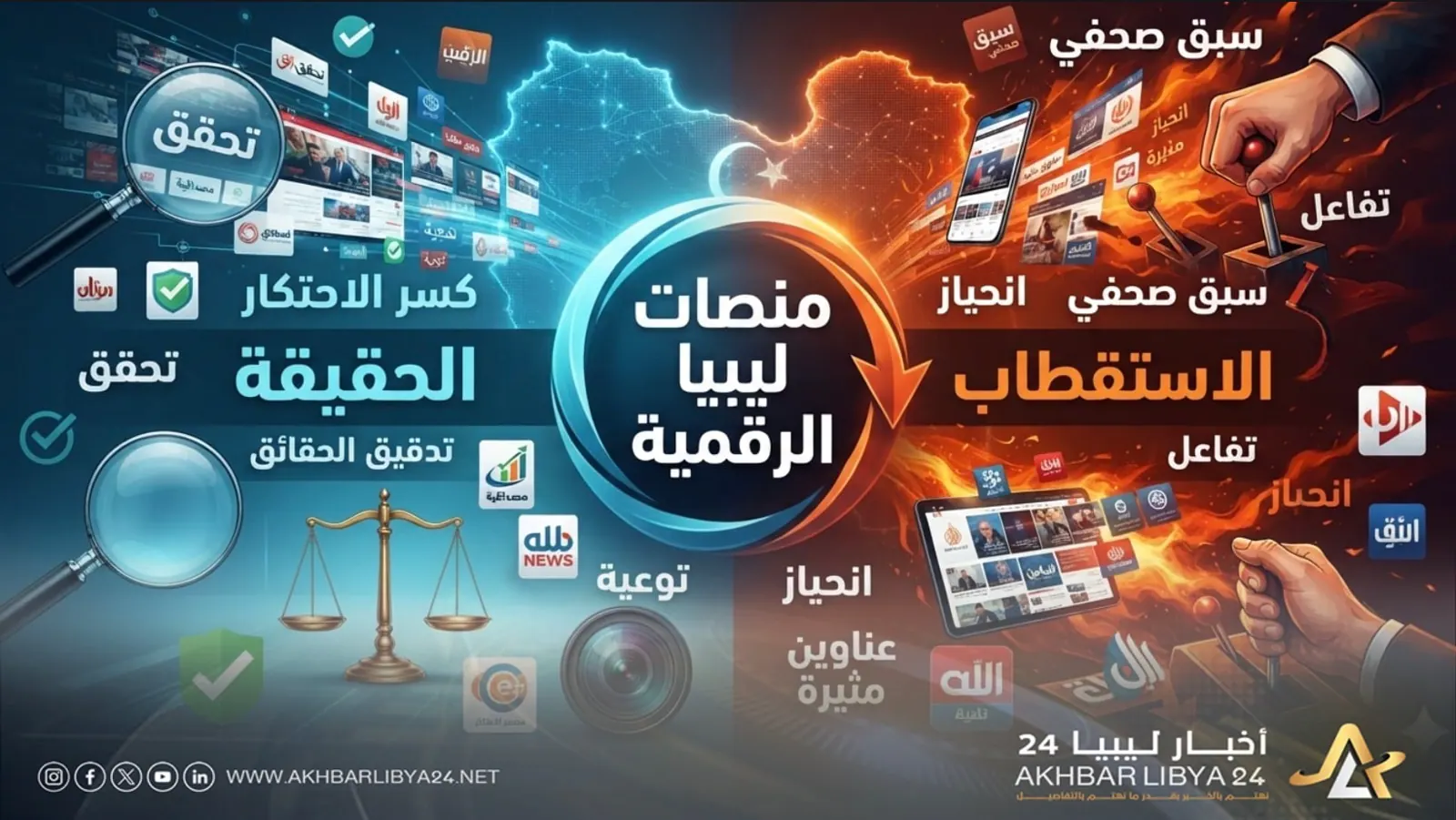
Libyan activist Nadia Al-Rashdi has publicly criticised the country's media for failing to maintain neutrality and instead prioritising political and ideological agendas over professional standards. Her comments reflect broader concerns about the media's role in Libya's prolonged crisis. Al-Rashdi argued that the local media has become a platform for "endless media trading" rather than a source of impartial information. This situation has contributed to the country's deepening divisions and eroded public trust in media institutions.
Al-Rashdi's criticism highlights the challenges facing Libya's media landscape, which has been shaped by the country's complex political transitions since 2011. The proliferation of media outlets, each with its own political affiliations and funding sources, has resulted in a highly polarised media environment. This polarisation has been exacerbated by the lack of clear regulations and professional standards governing journalism in Libya. As a result, the public is increasingly turning to alternative sources of information, including social media and international news outlets.
The decline of public trust in Libyan media has significant implications for the country's stability and development. Al-Rashdi argued that the media's failure to provide accurate and unbiased information has contributed to the spread of misinformation and the perpetuation of conflicts. She called on Libyans to be more critical of the information they consume and to seek out diverse sources to gain a more nuanced understanding of current events. This appeal underscores the need for a more professional and independent media sector in Libya.
The current state of Libyan media is also reflective of the country's broader institutional weaknesses. Al-Rashdi noted that the lack of a clear professional code of conduct has allowed media outlets to operate with relative impunity, often prioritising political agendas over factual reporting. This situation has created an environment in which misinformation and propaganda can thrive, further exacerbating Libya's divisions and instability. Addressing these issues will be crucial to rebuilding public trust in the media and promoting a more informed and engaged citizenry.
In her comments, Al-Rashdi also highlighted the repetitive nature of Libya's media discourse, with the same individuals and narratives dominating public debate. This has contributed to a sense of fatigue among the public, who are increasingly seeking out alternative sources of information. The use of social media and international news outlets has become a way for Libyans to access diverse perspectives and stay informed about global events. However, this trend also underscores the need for Libyan media to adapt and evolve in order to remain relevant and credible.
Al-Rashdi's call for Libyans to boycott what she describes as "toxic media" has sparked debate about the role of media in Libyan society. While some may view her comments as overly critical, they reflect a broader desire for a more professional and independent media sector. Ultimately, the future of Libyan media will depend on its ability to balance diverse perspectives and priorities with the need for accurate and unbiased reporting. This will require a concerted effort to establish clear professional standards and promote a culture of transparency and accountability within the media sector.
The challenges facing Libyan media are complex and multifaceted, reflecting the country's broader struggles with instability and division. However, by promoting a more professional and independent media sector, Libyans can work towards a more informed and engaged citizenry. This, in turn, can help to promote greater stability and development in the country.
Key points
- Libyan activist Nadia Al-Rashdi criticised the country's media for biased reporting and fuelling divisions.
- The Libyan media landscape has been shaped by the country's complex political transitions since 2011.
- Al-Rashdi called on Libyans to be more critical of the information they consume and to seek out diverse sources.