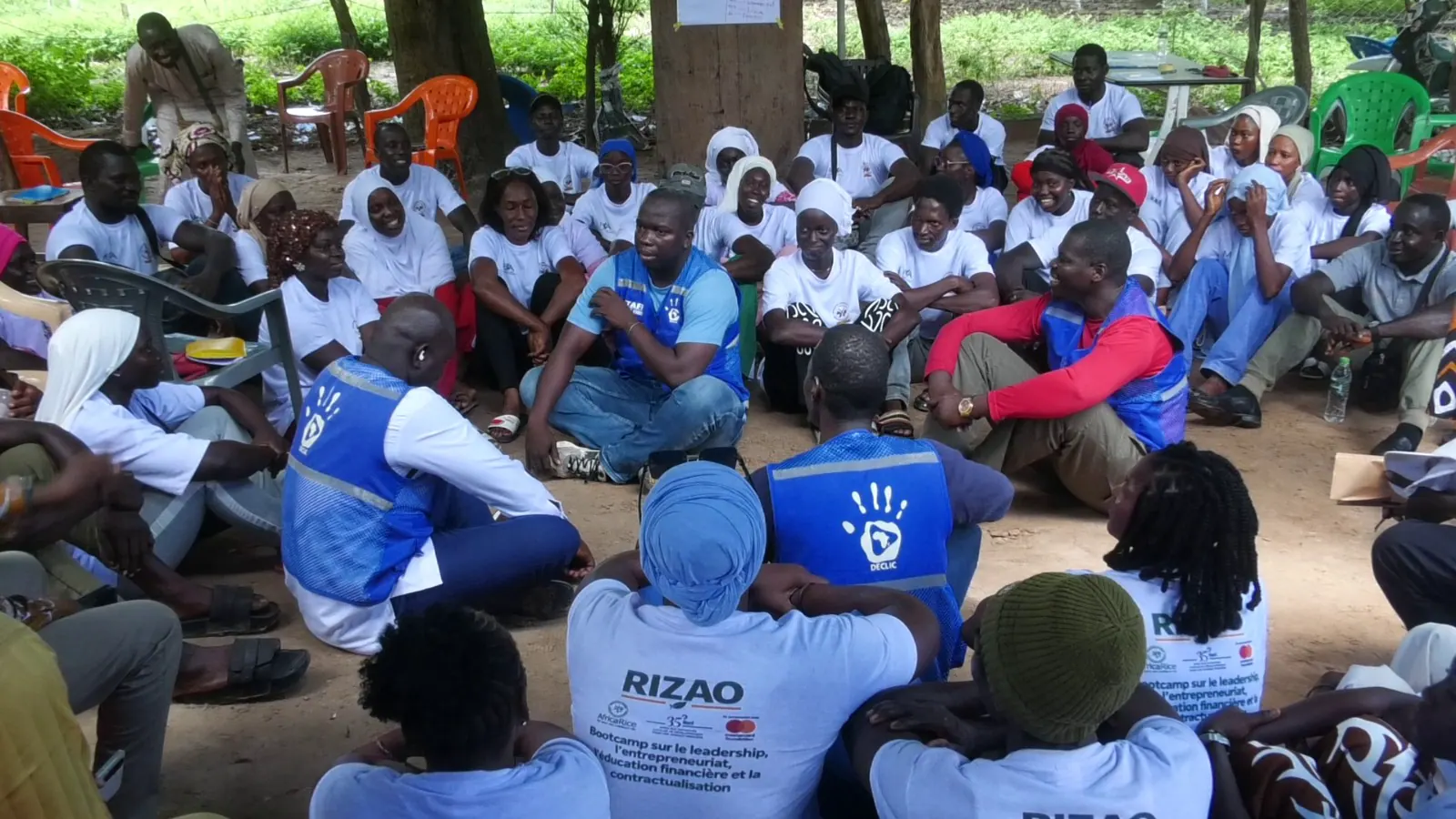
A six-month training program aimed at enhancing the entrepreneurial, managerial, and financial skills of 160 young people from the Casamance region of Senegal has concluded in Kabiline 2. The program, organized by the Kamano-Entente de Diouloulou cooperative in partnership with Déclic and the Rizao initiative, focused on leadership, entrepreneurship, financial education, and contractualization. The training, which started on September 26, 2026, targeted young women, men, and people with disabilities from the arrondissements of Sindian and Kataba 1.
The training program is part of a broader partnership with Rizao, an initiative aimed at promoting rice production in West Africa. The project aims to create 16,000 jobs in the rice value chain by 2029. According to Bassirou Coly, technical coordinator of the Entente de Diouloulou, the program seeks to create "champions entrepreneurs" in the rice value chain who can contribute to the development of their localities. The program's impact is expected to be significant, with Coly expressing satisfaction with the outcome of the training.
The training program covered various aspects of the rice value chain, including production, processing, and marketing. The participants were also taught on personal development and how to exploit the economic potential of their terroirs. Mohamed Samsidine Thiam, a trainer, noted that the program aimed to incubate young people in the opportunities surrounding the rice value chain. The beneficiaries have expressed their appreciation for the training, with Oulératou Badji, a participant from Teloum village, stating that she has acquired knowledge that will help her in entrepreneurship.
The program also included a bootcamp component, which provided hands-on training and incubation for the participants. The bootcamp, which was held in Kabiline 2, brought together young people from different backgrounds and provided them with a platform to network and share ideas. The program's organizers are confident that the training will have a lasting impact on the participants and their communities.
The participants have been equipped with the skills and knowledge needed to become entrepreneurs in the rice value chain. Alassane Aw, an agronomist with Meda, noted that the program will continue to provide support to the beneficiaries through the implementation of activities that will enable them to develop the rice value chain in their department. The program's impact is expected to be felt beyond the training period, with the potential to create jobs and stimulate economic growth in the region.
The rice value chain is a critical sector in Senegal's economy, with the country seeking to increase its rice production and reduce its reliance on imports. The Rizao initiative is part of a broader effort to promote rice production in West Africa and improve food security in the region. The program's focus on youth empowerment and entrepreneurship is also expected to contribute to the country's economic development and reduce youth unemployment.
The training program has been well-received by the participants and the local community. The program's organizers are confident that the training will have a lasting impact on the participants and their communities. The program's success is also expected to contribute to the country's economic development and improve food security in the region.
Key points
- The program aims to create 16,000 jobs in the rice value chain by 2029.
- The training program covered various aspects of the rice value chain, including production, processing, and marketing.
- The program's focus on youth empowerment and entrepreneurship is expected to contribute to the country's economic development and reduce youth unemployment.