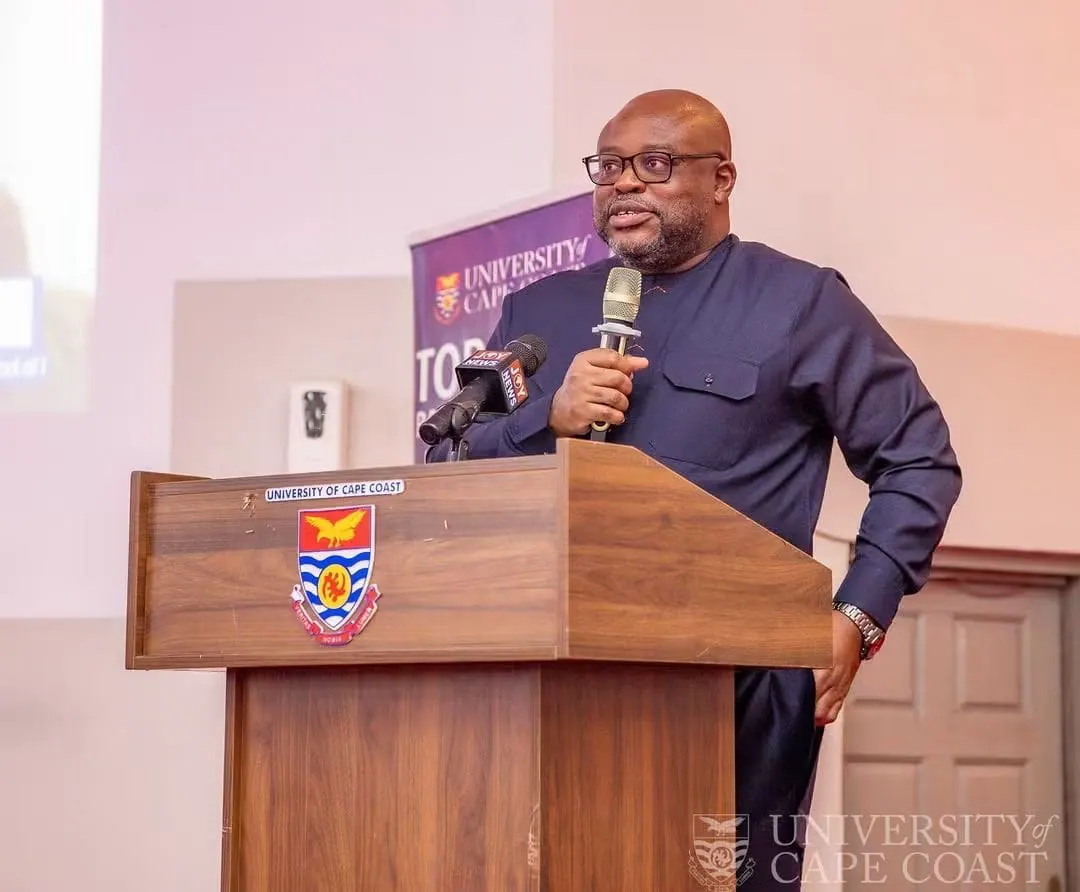
The University of Cape Coast's School of Medical Sciences has initiated 155 students into clinical training at its 17th White Coat ceremony. This milestone marks the transition of students from classroom instruction to supervised clinical practice. The event was attended by parents and guardians who joined the students to celebrate this significant step in their medical education. According to the Ghana News Agency, the white coat ceremony is a rite of passage for medical students, signifying their entry into real-world patient care.
The ceremony's guest speaker, Dr. Philip Anderson, Country Manager of Roche Ghana, delivered a blunt warning about the systemic weaknesses in Ghana's health system. He highlighted inadequate diagnostics, medicines, equipment, specialist services, hospital beds, and infrastructure as major concerns. Dr. Anderson emphasized that these shortages put patients' lives at risk and urged the government to act urgently. He referenced a recent hit-and-run case in Accra to stress the need for increased investment in healthcare and medical training.
Dr. Anderson called for health workers to be equipped with adequate facilities, technology, equipment, medicines, and specialist support. He framed spending on health professional education as an investment in national resilience and productivity rather than a mere cost. Additionally, he urged that medical training be backed by dedicated research funding, with resources extended to teachers, clinicians, and researchers responsible for training Ghana's next generation of doctors.
Dr. Anderson also discussed the growing role of technology in medicine, encouraging the incoming doctors to explore emerging fields such as genomics, precision medicine, remote monitoring, robotic surgery, and cell and gene therapies. While acknowledging the impact of artificial intelligence on healthcare delivery, he emphasized that no machine can substitute for the human presence of a doctor at a patient's bedside.
Prof. Patrick Kafui Akakpo, Dean of the School of Medical Sciences, urged the students to carry the white coat as a symbol of service and accountability rather than status. He reminded them that a doctor's worth is measured by their response to vulnerable patients, not just in the classroom. Prof. Akakpo cautioned against complacency and distractions, such as mobile phone use interfering with patient care.
Prof. Mrs. Christine Adu-Yaboah, UCC's Acting Pro Vice-Chancellor, emphasized that Ghana needs professionals who understand the link between poverty and disease and are willing to serve rural and underserved communities. She called for greater emphasis on preventive and public health approaches, alongside attention to social determinants of health such as clean water, sanitation, and nutrition.
The 155 students will now proceed through supervised clinical rotations with real patients as part of their medical training. The Dean disclosed that the school plans to modernize its teaching methods, including incorporating artificial intelligence tools into the curriculum. He appealed to parents, guardians, and benefactors to support the SMS Endowment Fund, which finances scholarships, faculty development, and research infrastructure.
Key points
- Roche Ghana's Country Manager, Dr. Philip Anderson, warns of systemic weaknesses in Ghana's health system, including inadequate diagnostics, medicines, and equipment.
- 155 medical students at University of Cape Coast begin clinical training as part of the School of Medical Sciences' 17th White Coat ceremony.
- Dr. Anderson calls for increased investment in healthcare and medical training, framing it as an investment in national resilience and productivity.