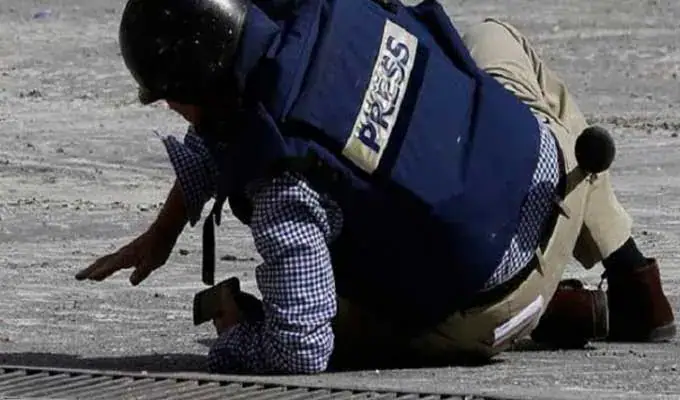
The Syndicat national des journalistes tunisiens (SNJT) has reported a concerning increase in aggression against journalists in Tunisia. According to SNJT President Zied Dabbar, 154 aggressions were recorded between September 2025 and August 2026, a rise from 149 cases during the previous period. This data was shared during a meeting in Tunis to mark the International Day for the End of Impunity for Crimes against Journalists, observed annually on November 2.
The SNJT president attributed 95 of the aggressions to "official parties". Dabbar warned that the pressures on the sector could compromise the quality of content produced by media professionals. He also highlighted the harassment faced by journalists in the digital space, which he believes undermines citizens' right to professional, committed, and respectful media coverage.
Roueida El Hage, representative of the UN High Commissioner for Human Rights (HCDH) in Tunis, emphasized the crucial role of a free and independent press in addressing public interest issues and defending citizens' concerns. She described aggressions against journalists as attacks on knowledge and noted that challenges persist in Tunisia to ensure journalists can work safely and independently.
The UN Committee on Human Rights has criticized certain laws and recommended revising legal texts governing freedom of expression. El Hage also cited concerns about the environment in which journalists operate, highlighting the need for improved protection and support.
Neji Bghouri, coordinator of information and communication programs at the UNESCO office in Tunisia, pointed out that restrictions on journalists hinder citizens' participation in public life. Citing UNESCO data, he lamented the increase in arbitrarily detained journalists globally and regionally.
Bghouri noted that forms of aggression against journalists have evolved to include online threats and harassment, with over 73% of female journalists experiencing online aggression, and 20% facing real-world attacks. He also stated that only one in ten cases results in a conviction, calling on the state to take full responsibility for protecting journalists and combating violations against them.
The role of professional organizations and institutions in promoting a culture of accountability and establishing effective mechanisms to combat impunity was a key topic of discussion during the meeting. The SNJT and other stakeholders are advocating for greater protection and support for journalists in Tunisia.
Key points
- 154 aggressions against journalists were recorded in Tunisia between September 2025 and August 2026.
- Official parties were responsible for 95 of the recorded aggressions.
- The SNJT and UNESCO are calling for improved protection and support for journalists in Tunisia.