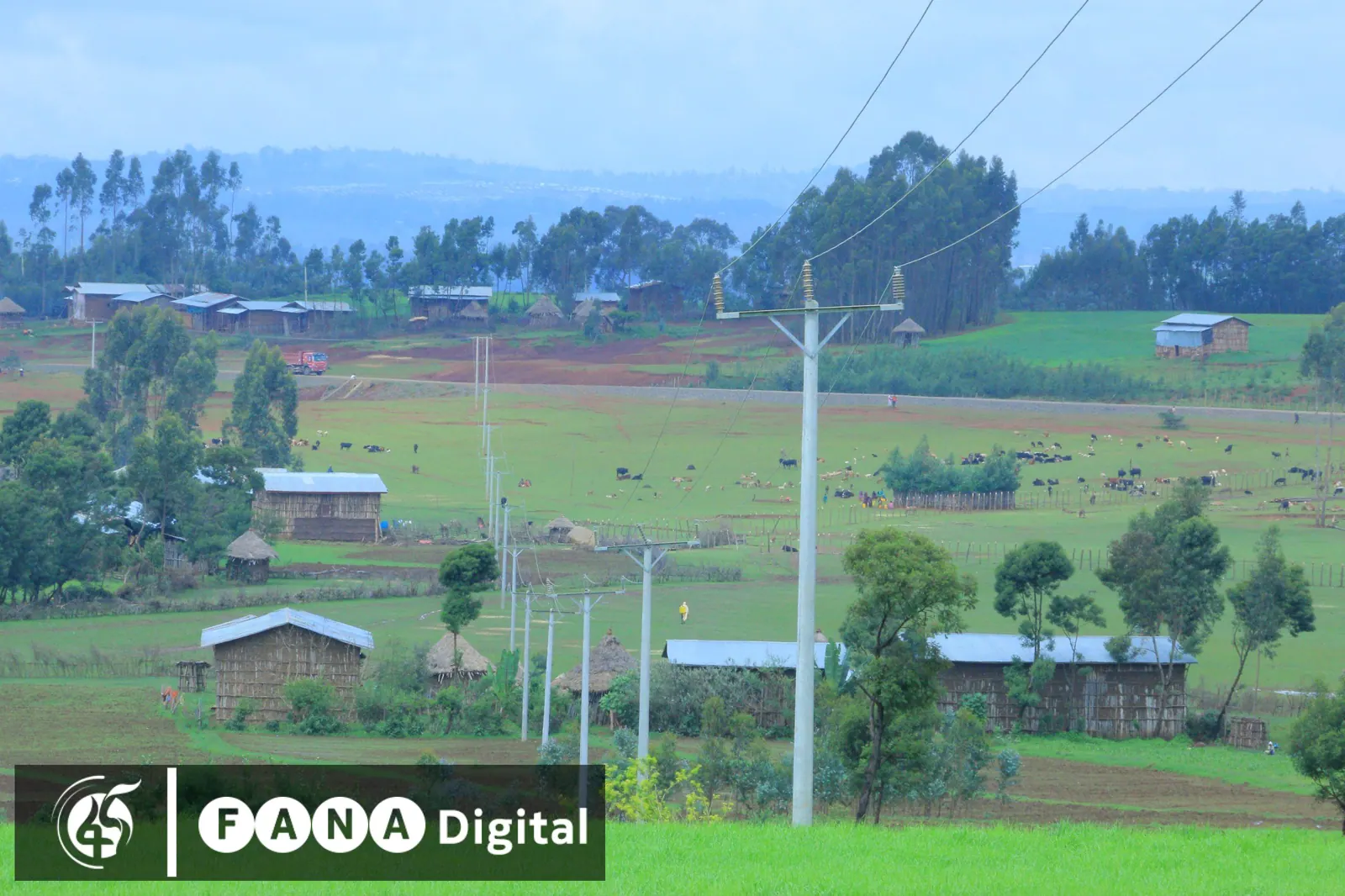
In a significant achievement, 15 rural villages and towns in Ethiopia have been connected to the national electricity grid within a month, according to the Ethiopian Electric Service. The country's national electrification program aims to provide electricity to all citizens by 2035. This recent development brings electricity to 5,435 households, marking a substantial increase in access to electricity in rural areas.
The Ethiopian Electric Service's Communication Executive, Anwar Abrar, announced that the program has made considerable progress in expanding electricity access to rural communities. A total of 48.4 kilometers of medium-voltage lines were laid, and 162 kilometers of low-voltage lines were installed to connect the new villages to the grid. Additionally, 34 transformers of varying capacities were utilized to facilitate the distribution of electricity.
The newly connected villages and towns comprise nine grid-connected and six solar-powered communities. This milestone demonstrates the government's commitment to increasing electricity access in rural areas, where it is often more challenging to establish a reliable supply. The expansion of electricity access is expected to have a positive impact on the daily lives of residents, enabling them to power homes, businesses, and essential services.
The national electrification program has been instrumental in driving economic growth and improving living standards in rural areas. By providing access to electricity, the program aims to enhance economic opportunities, improve healthcare, and increase access to education. The Ethiopian government has set an ambitious target to achieve universal access to electricity by 2035, and the recent progress is a significant step towards achieving this goal.
The expansion of electricity access in rural areas is also expected to have a positive impact on the environment. By providing a reliable source of electricity, the program can help reduce reliance on traditional biomass, such as wood and charcoal, which are often used for cooking and heating. This, in turn, can help mitigate deforestation and reduce greenhouse gas emissions.
The Ethiopian Electric Service has reported that the national electrification program is on track to achieve its targets. The program's success is attributed to the collaborative efforts of the government, international partners, and local communities. The expansion of electricity access is a critical component of Ethiopia's development strategy, and the recent progress is a testament to the country's commitment to achieving sustainable and inclusive growth.
As the program continues to expand, it is expected to have a lasting impact on the lives of Ethiopians. With electricity, households can power essential appliances, businesses can operate more efficiently, and communities can access vital services, such as healthcare and education. The achievement of universal access to electricity by 2035 remains a top priority for the Ethiopian government, and the recent progress is a significant step towards achieving this goal.
Key points
- 15 rural villages and towns in Ethiopia have been connected to the national electricity grid within a month.
- The national electrification program aims to provide electricity to all citizens by 2035.
- The expansion of electricity access is expected to have a positive impact on the environment and drive economic growth in rural areas.