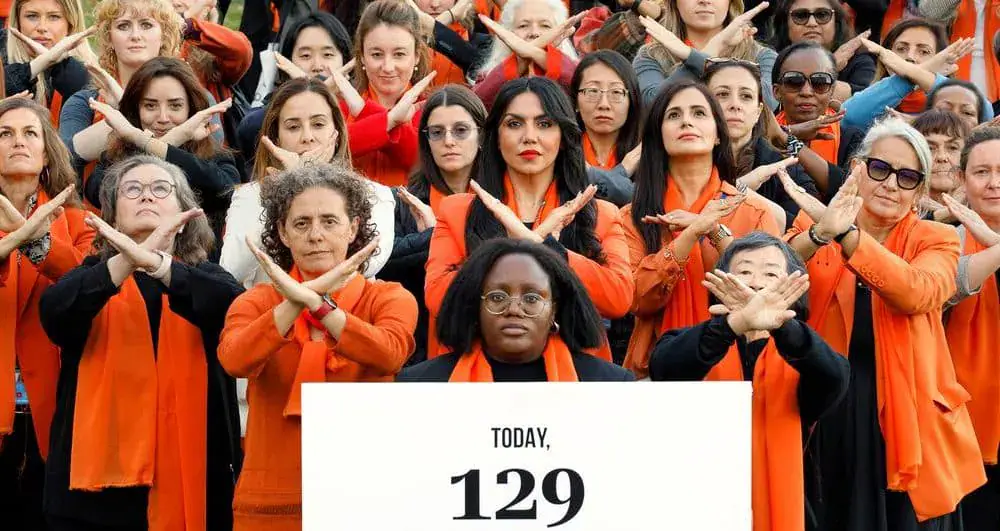
A recent study by the United Nations Office on Drugs and Crime (Unodc) and UN Women has revealed that approximately 47,000 women and girls lost their lives in 2025 at the hands of intimate partners or other family members. This translates to an average of 129 victims daily. The study highlights the persistence of fatal violence against women in domestic settings worldwide. The data shows that the home remains the most perilous place for many women.
According to the study, the 2025 numbers, although slightly lower than the 50,000 deaths recorded in 2024, do not necessarily indicate a real decrease in crimes. Instead, the difference may be attributed to improvements in data availability from various countries. The UN agencies warn that out of the approximately 78,000 women and girls intentionally killed globally, about 60% were murdered by intimate partners or family members.
The study points out that Africa has the highest concentration of femicide in the private sphere, with 22,100 deaths recorded. The region also has the highest rate of femicide relative to the female population, with 2.9 victims per 100,000 women and girls. However, the agencies caution that these estimates require careful consideration due to the lack of official records in several African countries.
In other regions, the estimated rates of femicide were 1.4 victims per 100,000 women in the Americas, 1.1 in Oceania, 0.6 in Asia, and 0.5 in Europe. The study also found that in the Americas and Europe, where detailed data on perpetrators is available, intimate partners were responsible for 70% and 63% of femicides committed within the family in 2025, respectively.
The study notes that between 2010 and 2025, the rates of femicide decreased at a much slower pace than intentional homicides in general. The Unodc and UN Women attribute this slow decline to the deep-rooted nature of femicide in social norms, gender stereotypes, and barriers faced by women in accessing justice.
The study also highlights the limitations of statistical data outside the domestic sphere, including deaths related to organized crime, forced labor, or human trafficking. Although some countries like France and Italy have started using the UN-developed statistical standard to account for these occurrences, comparable data is still lacking.
To raise awareness about the daily loss of life, UN Women marked the International Day for the Elimination of Violence against Women with an installation of 129 orange flags, each representing a life cut short. The event brought together 129 women from diverse backgrounds and generations to pay tribute and show solidarity with the victims.
Key points
- The home remains the most dangerous place for many women, with 47,000 killed by intimate partners or family members in 2025.
- Africa has the highest concentration of femicide in the private sphere, with 22,100 deaths recorded.
- The study highlights the need for better data collection and improved access to justice for women to combat femicide.