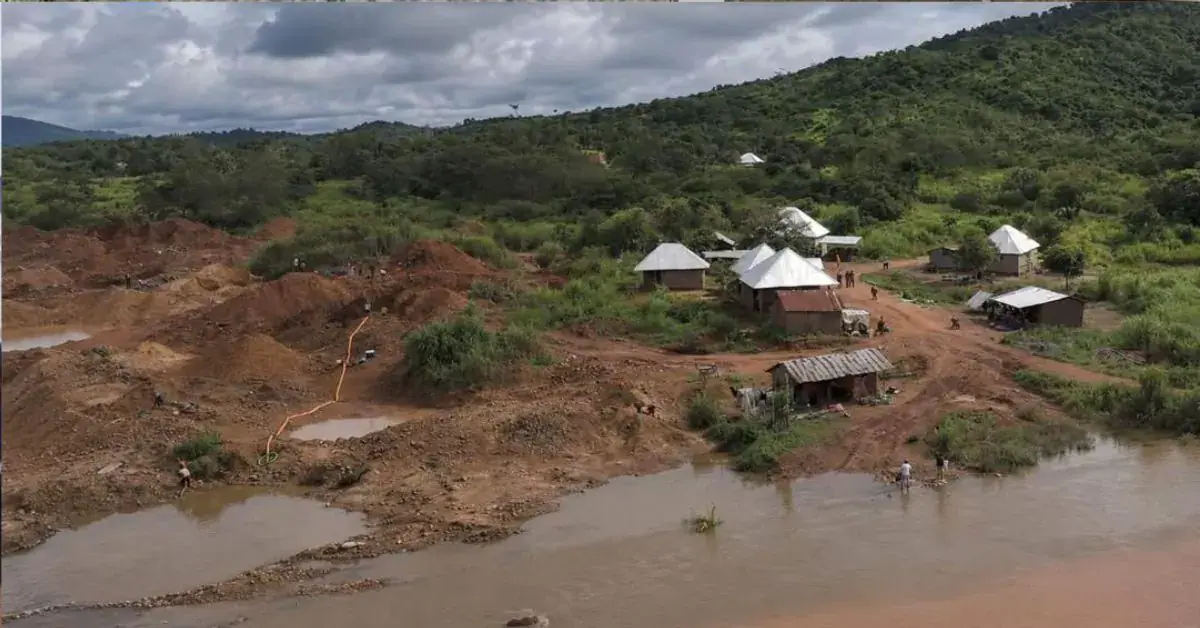
Eleven communities in the Peyefeh Section, Nimiyama Chiefdom, Kono District, have formally rejected proposed mining operations on their customary lands. They express concerns over potential destruction of farmland, contamination of water sources and threats to local livelihoods. The communities, supported by Namati, insist that they have not given their consent for the proposed mining activities and demand that their customary land rights be respected.
Local residents, including Peya farmer Sia Foday, are strongly opposed to the mining plans. Foday, who depends on rice farming to support her seven children, warned that allowing mining activities on the community's land would destroy the livelihoods of farming families and damage their plantations. Her concerns are shared by many in the community, who rely heavily on agriculture for their survival.
The communities' opposition is also fueled by the lasting environmental damage associated with previous mining activities near Kaipeyah village. The area reportedly continues to suffer from abandoned mining pits, degraded agricultural land and stagnant, polluted water. Local landowner Lansana Kabbakoe described the destruction caused by earlier mining operations, recalling how productive agricultural land once used to cultivate bananas, cocoyam and cacao was left severely degraded.
The affected communities are invoking provisions of the Customary Land Rights Act 2022, particularly Section 28. This section requires investors to obtain written Free, Prior and Informed Consent (FPIC) from at least 60 per cent of adult members of a landowning family, or a fair representation of the rights-holding community, before mining operations can proceed. The communities are demanding that this provision be respected.
The dispute highlights growing concerns over the protection of customary land rights, meaningful community participation, environmental accountability and the responsibilities of mining investors in Sierra Leone. Although some residents remain willing to engage in dialogue with the mining companies, they insist that such discussions must be supported by transparent documentation, respect for customary land ownership and clear commitments to delivering tangible benefits to the communities.
Opposition within the communities remains strong, with tensions reportedly increasing over attempts by pro-mining groups to secure signatures in support of the proposed operations. The communities are standing firm in their refusal to surrender their lands, citing the potential risks to their livelihoods and the environment. The situation remains tense, with no clear resolution in sight.
The rejection of the proposed mining plans by the 11 Kono communities marks a significant stand against the exploitation of their customary lands. The communities' determination to protect their land rights and livelihoods has sparked a renewed debate about the role of mining in Sierra Leone and the need for more stringent regulations to protect the environment and local communities.
Key points
- The communities are invoking the Customary Land Rights Act 2022 to protect their land rights.
- Previous mining activities have caused lasting environmental damage in the area.
- The communities demand transparent documentation and respect for customary land ownership in any discussions with mining companies.