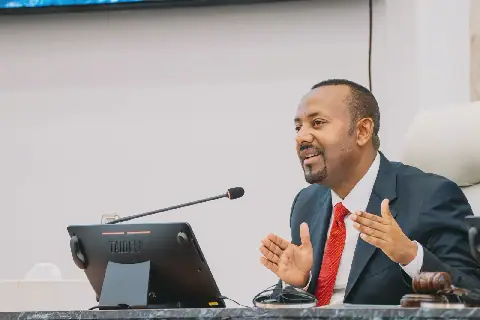
The Ministry of Communication and the African Confederation of Science Journalists organized a workshop in Yaounde on November 26, 2026, attended by 100 media professionals, institutional communicators, and young researchers from Cameroon and beyond. The International Masterclasses in Science Journalism, Fact-Checking, and Popularization of Health Information aimed to equip participants with skills to handle complex scientific and health information. The training was a strategic partnership between the African Confederation of Science Journalists, the Échos Santé Press Group, the World Federation of Science Journalists, and the World Health Organization.
The workshop marked a dual institutional milestone: the official establishment of the African Confederation of Science Journalists headquarters in Yaounde, following a decree by the Minister of Territorial Administration in August 2026, and the tenth anniversary of the Échos Santé Press Group. Technical co-organizers included the Association of Science Journalists and Communicators for Health Promotion and the Association of Science Journalists and Communicators of Cameroon. The initiative aims to build the capacity of participants to verify and communicate complex scientific and health information.
Central African countries face a double health burden, with the resurgence of infectious diseases such as Mpox, cholera epidemics, hemorrhagic fever, and malaria, alongside rising non-communicable diseases like diabetes, cardiovascular conditions, and cancers. The rapid spread of false information on digital platforms and social networks has weakened public adherence to public health policies, resulted in delayed medical care, and eroded trust in healthcare workers.
Speaking on behalf of the Minister of Communication, Omgba Bomba Denis, Director of Media Observatory and Public Opinion, noted that technological, health, and environmental issues now sit at the center of global affairs, making science journalism indispensable. He stressed that without science journalists' involvement, populations would lack accurate and vital information needed to confront diseases and find solutions.
WFSJ President Ben Deighton welcomed the momentum in Cameroon and affirmed WFSJ's support for CAJS's work. He noted that WFSJ organizes its biennial World Conference of Science Journalists, with the next edition in London and the one after in Beijing, China. CAJS President Joslain Joseph Mbeng Boum described the moment as historic for Cameroon and Africa, outlining CAJS's mandate as an umbrella body uniting national, regional, and international science journalism associations.
The CAJS board of directors serves a renewable three-year term, featuring leadership and board representation from Cameroon, Egypt, Malawi, Kenya, Côte d'Ivoire, Uganda, Mali, and Rwanda. Mbeng Boum announced plans to establish the CAJS headquarters in Yaoundé as a center of excellence and science laboratory, with plans underway to run a Master's degree in Science Journalism.
The training aims to equip newsrooms with analytical and discernment skills to build a homogeneous narrative and combat health rumors and infodemics. The initiative is a step towards addressing the dual health challenge in Central African countries and promoting science journalism as a vital link between complex scientific research and reliable public information.
Key points
- The African Confederation of Science Journalists was officially established in Yaounde, Cameroon, in August 2026.
- The training aims to equip participants with skills to handle complex scientific and health information.
- Central African countries face a double health burden of infectious and non-communicable diseases.
Reporting sources
- Science Journalism: 100 Reporters Set To Outsmart Health Rumors, Infodemics · Cameroon Tribune