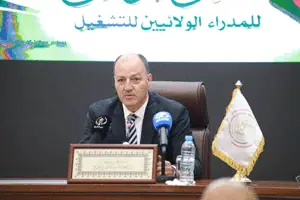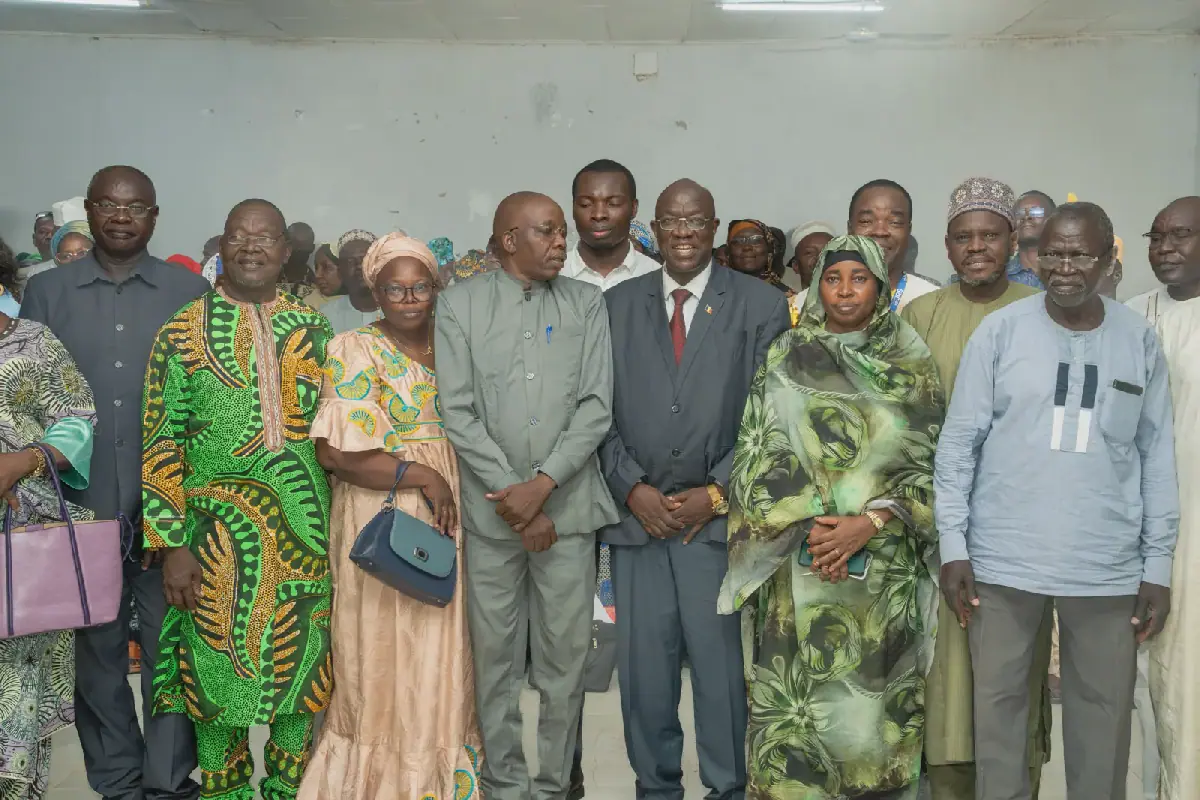
A twelve-day training workshop for teachers in remedial classes concluded on October 31, 2026, in N'Djamena, Chad. The workshop brought together nearly 1,000 teachers and mentors from N'Djamena, Chari-Baguirmi, and Hadjer-Lamis. The session was held from October 19 to 31 in N'Djamena, Koundoul, and Massakory. This training marks the launch of the second year of the Programme d'appui à la réussite scolaire (PARS), a program aimed at improving educational outcomes.
The PARS program is the Chadian version of the Teaching at the Right Level (TaRL) approach, which involves teaching each child according to their actual level rather than their age group. The program is implemented by the Ministry of Education, with funding from the World Bank through PARAEB, and technical support from TaRL Africa and the Jesuit Refugee Service (JRS). The program aims to address the significant challenges facing basic education in Chad.
According to Adoum Djaffi, Director of Planning and Prospective at the West Academy, the situation is dire, with a 94% poverty rate in fundamental learning. He stated that nearly half of the children who complete primary school and almost all 10-year-olds cannot read a simple text or perform basic arithmetic. The pilot phase of the program, conducted last year in 50 schools in N'Djamena and Chari-Baguirmi, showed promising results.
The pilot phase results indicated a significant improvement in literacy and numeracy skills. The literacy rate increased from 7% to 14%, and numeracy skills improved from 5% to 20%, a gain of 15 points. Building on these results, the Ministry of Education has decided to scale up the program to cover 250 schools. The program plans to train 2,000 teachers from 200 new schools, as well as personnel from the first-year structures who had not yet been trained.
During the training, participants learned new skills, including administering individual assessments to measure each student's actual level, grouping children by acquisition level rather than age group, and conducting playful and concrete activities in reading and mathematics. The participants were trained by 54 national trainers and experts from TaRL Africa and JRS. They also learned how to manage large classes effectively.
Adoum Djaffi urged the teachers to put the new tools into practice immediately, emphasizing the importance of regularity and a welcoming attitude towards students' errors. He also made three recommendations: maintaining trained teachers in their schools, rigorous monitoring of beginning, mid-year, and end-of-year tests, and inspection brigades to measure the program's impact. The West Academy will send inspection brigades to assess the program's effectiveness.
The success of the program on a larger scale remains to be seen. The program's expansion to 250 schools is a significant step towards improving basic education in Chad. The Ministry of Education, with its partners, aims to build on the promising results of the pilot phase and make a positive impact on the learning outcomes of Chadian students.
Key points
- The program aims to improve educational outcomes for students in Chad by training teachers to teach at the right level.
- The pilot phase of the program showed promising results, with significant improvements in literacy and numeracy skills.
- The program will be expanded to cover 250 schools, with plans to train 2,000 teachers.