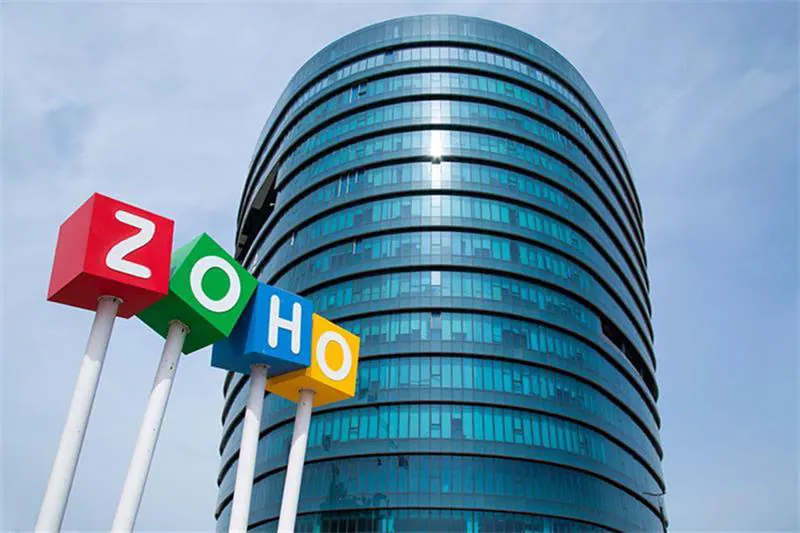
Indian technology and software provider Zoho Corporation has launched new features for its application development cloud platform, Catalyst, for developers and businesses in the Middle East and North Africa (MENA). This update allows them to turn AI-generated code into production-ready applications with greater controls. Catalyst 3.0 is a serverless Platform-as-a-Service (PaaS) that enables developers to build, run, and scale applications and websites without managing physical servers or cloud infrastructure.
The new features in Catalyst support local data residency in Saudi Arabia and the UAE, with services hosted on Zoho’s data-centre infrastructure in each country. This gives organizations access to an AI-ready application development platform while meeting regional data-residency requirements. With these updates, developers can use the AI tools they already work with, while Catalyst provides the cloud infrastructure and controls needed to build and run applications.
Zoho has added Agentic AI skills that enable AI coding assistants to understand the Catalyst platform and write production-grade code. The aim is to simplify development and learning for developers by giving agentic AI coding assistants a structured way to build and deploy applications. Agentic AI is designed to carry out a sequence of actions towards a specific goal, executing multi-step workflows across a system.
Unlike generative AI, which relies on prompts to produce text, images, or other content, agentic AI can carry out tasks based on the goal it is given. The move is part of the company’s broader plan to strengthen regulatory compliance, cybersecurity resilience, and long-term business growth in the region, especially Egypt, which Zoho considers its fastest-growing market.
Egypt recorded a 57 percent compound annual growth rate (CAGR) in Zoho's customer base and more than 42 percent revenue growth since 2021. This comes as the country has been taking steps to increase government-led digital transformation efforts, accelerating technology adoption across the public and private sectors. Zoho’s CEO for the MENA region, Hyther Nizam, stated that the company is providing developers and AI agents complete freedom from managing cloud infrastructure.
The new features in Catalyst also enable developers to work directly with popular agentic AI coding assistants such as Anthropic’s Claude Code and OpenAI’s Codex, speeding up application development. Applications built on Catalyst benefit from Zoho’s security infrastructure, including protection from distributed denial-of-service (DDoS) attacks, vulnerability assessments and penetration testing, system and organization controls compliance, and a web application firewall.
Furthermore, Catalyst has introduced a non-interactive Command-Line Interface (CLI) and Model Context Protocol (MCP) support, which lets developers connect custom data sources, databases, and local or remote tools directly to their AI assistant for a hands-off development process. Zoho has made the Agentic AI skills available as open source, allowing developers to inspect and further develop them, in an effort to improve developer trust and transparency.
Key points
- Zoho Corporation launches new features for its Catalyst platform to support developers and businesses in the Middle East and North Africa.
- The updates enable developers to turn AI-generated code into production-ready applications with greater controls and support local data residency in Saudi Arabia and the UAE.
- Egypt is Zoho’s fastest-growing market, with a 57 percent compound annual growth rate in customer base and over 42 percent revenue growth since 2021.