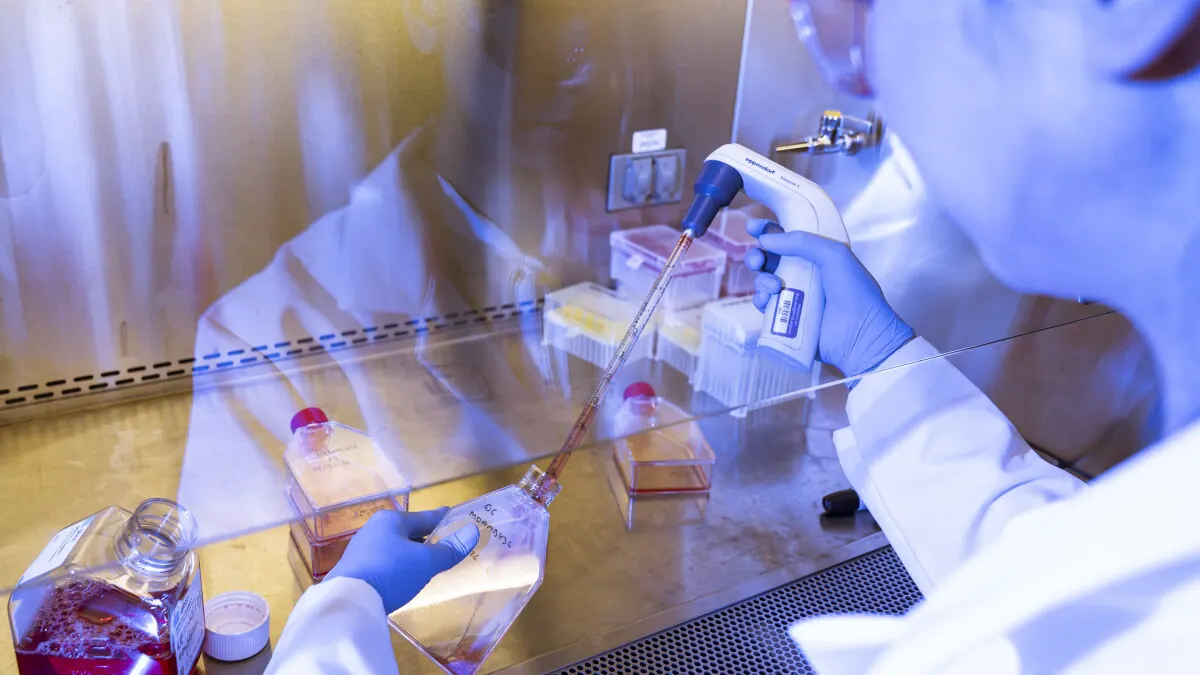
Origin Genomics, led by CEO Cathy Tie, is conducting research in New York City to develop gene-editing technology for preventing inherited diseases. The company stores embryos in a cryogenic storage unit with liquid nitrogen and extracts stem cells to test experimental gene editors. This technology aims to correct genetic defects, potentially preventing future generations from suffering the same fate. Tie's goal is to convince the world of the benefits of using advanced gene-editing technology to fight inherited diseases.
The gene-editing technology, still in its early stages, has raised concerns about ethics and safety. In the US, it is currently illegal to use gene-edited embryos to create babies. However, Tie argues that the benefits outweigh the risks, citing the hundreds of millions of people worldwide affected by diseases such as Huntington's, cystic fibrosis, and hereditary cancers. Origin is also testing gene editors designed with artificial intelligence on cells carrying disease-causing mutations.
Origin is not the only company exploring gene editing; at least one other US startup, Preventive in San Francisco, is working on similar technology. The field has a controversial history, including the case of He Jiankui, a Chinese scientist imprisoned for creating genetically modified babies using CRISPR gene editing. While some scientists believe it's still premature to use genetically modified human embryos, newer techniques like prime editing and base editing have improved accuracy.
Some scientists and bioethicists argue that advances in gene editing raise hope for preventing devastating genetic diseases. However, concerns remain about the potential risks and ethics of creating gene-edited babies. Robin Lovell-Badge, a biologist at the Francis Crick Institute, worries that companies like Origin may be rushing ahead too fast, potentially setting back the field and undermining public trust.
The prospect of gene editing also raises concerns about the potential for "designer babies" and a dystopian future of genetically enhanced people. Katie Hasson, who runs the Center for Genetics and Society, is concerned about the vision of Silicon Valley investors behind these firms, who may be open to mass-produced, genetically engineered humans. Other companies are already screening embryos for traits like IQ and height, in addition to disease risk.
Fyodor Urnov, who studies gene editing at the University of California, Berkeley, worries that private sector companies are not being honest about their goals. He believes they are ultimately in the business of embryo and baby improvement. In contrast, Tie stresses that Origin's sole interest is in helping people have healthy children. The emergence of these companies also raises concerns about unregulated clinics springing up overseas to offer embryo editing.
As the field of gene editing continues to evolve, experts like R. Alta Charo, a professor emerita of law and bioethics, are concerned about "genome-editing tourism." Charo is now consulting for government agencies and advising on regulations. With the technology advancing rapidly, it remains to be seen how the debate on ethics and risks will unfold and what the future holds for gene-edited babies.
Key points
- Origin Genomics is working to develop gene-editing technology for preventing inherited diseases.
- The technology has raised concerns about ethics and safety.
- Some scientists worry that the field may be moving too fast, potentially setting back progress.