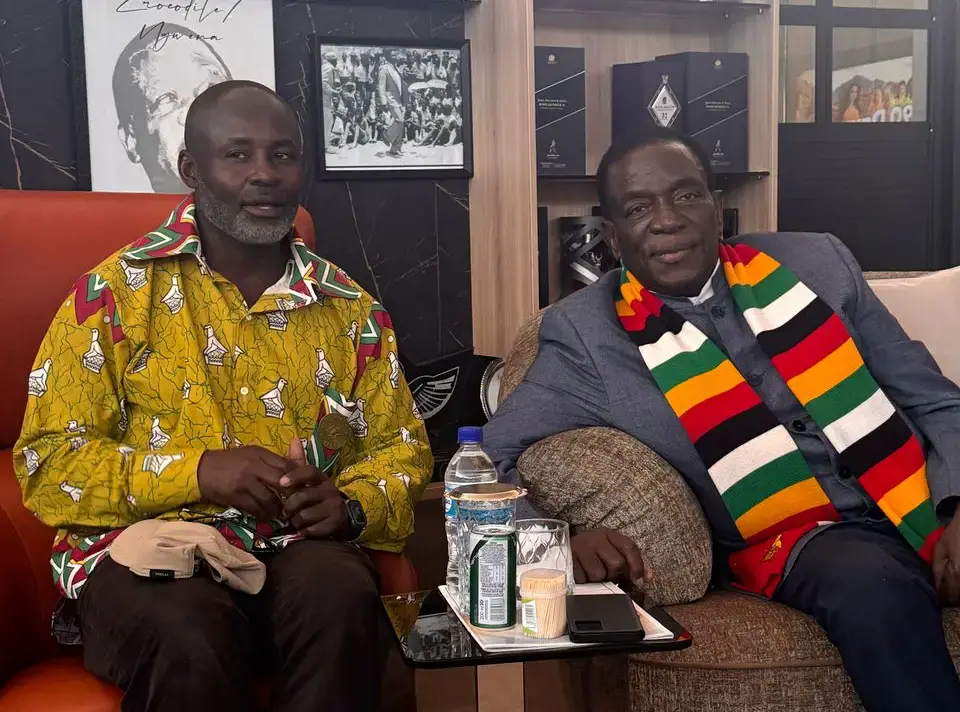
Temba Mliswa, a former Norton legislator, has been making headlines with his outspoken views on Zimbabwe's succession politics. Despite being expelled from Zanu PF in 2015, Mliswa has been behaving like the party's unofficial disciplinary chairman, presidential spokesperson, and succession referee. His recent target has been Vice-President Constantino Chiwenga, whom he has accused of various wrongdoings and demanded to explain himself and discipline his supporters.
Mliswa's interventions have raised questions about who he is speaking for and why Zanu PF is allowing an expelled member to behave like a party official. His conduct has been examined institutionally, and his possible interests have been inferred cautiously from his public behavior. Mliswa has repeatedly invoked Zanu PF's internal discipline against Chiwenga, lecturing members about democratic centralism and demanding loyalty to party resolutions.
Mliswa has publicly promoted Kudakwashe Tagwirei as a possible successor to President Emmerson Mnangagwa, describing his rise as a "generational consensus." He has repeatedly defended Tagwirei against Chiwenga's allegations and attacked Chiwenga's political suitability and questioned his support within the party and military. A leaked audio recording attributed to Mliswa and Tagwirei reportedly contained discussions about political support, protection, and compensation.
The frequency, intensity, and direction of Mliswa's interventions have raised legitimate questions about his political interest. When a politician publicly champions one aspiring power center, relentlessly attacks its principal rival, and reportedly discusses the transactional value of political support, people will reasonably ask whether they are watching independent commentary or outsourced factional communication.
Zanu PF is not famous for tolerating internal indiscipline, but Mliswa has been able to publicly tell the sitting Vice-President to resign, conform, repudiate supporters, and abandon positions expressed at the party's own conference. The party has apparently found no emergency requiring correction, and Mliswa continues to behave like a senior inspector of loyalty.
Mliswa's situation has sparked debate about the state of Zimbabwe's politics, where expulsion from a political party does not necessarily mean separation. Instead, it can mean freelance deployment, where one retains access to the microphone and executes party tasks independently. As the succession politics continue to unfold, Mliswa's role and influence will likely remain a subject of interest and scrutiny.
Key points
- Mliswa's interventions have raised questions about his political interest and whether he is speaking for himself or a particular faction within Zanu PF.