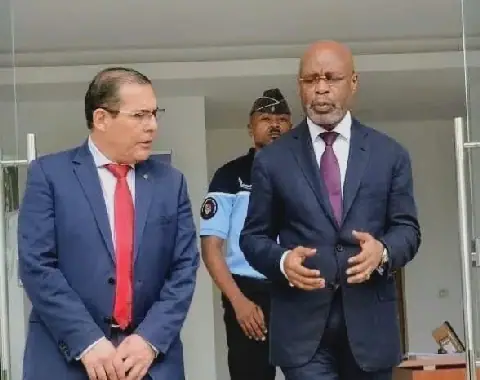
Dr. Tafadzwa Muguti was appointed as the Permanent Secretary for the Ministry of Local Government and Public Works in September 2026. By November of the same year, he was replaced by Dr. Addmore Pazvakavambwa without any public explanation or acknowledgement of his services. In Zimbabwe, appointments are typically accompanied by biographies, praise, and assurances of presidential confidence, but dismissals are often met with silence.
Muguti's tenure at the Ministry of Local Government was marked by controversy, particularly surrounding the livestreaming of chiefs' courts and the demolition of allegedly illegal structures. He took a firm stance on these issues, announcing that phones would no longer be allowed in chiefs' courts and that bulldozers would be used to demolish unauthorized buildings. However, his approach raised concerns about privacy, dignity, and the protection of vulnerable individuals.
The issue of chiefs' courts and their livestreaming presents a complex problem, as it raises questions about public accountability and the protection of individual rights. Muguti's solution, however, was criticized for being overly simplistic and not adequately addressing the underlying issues. A more nuanced approach, involving consultation with various stakeholders, including traditional leaders, lawyers, and women's organizations, is needed to balance public interest with individual rights.
The demolition of allegedly illegal structures, often referred to as "informal settlements," has been a contentious issue in Zimbabwe. While government officials view these structures as unauthorized, families who have built their homes over the years see them as their residences. The use of bulldozers to demolish these structures has been criticized for being heavy-handed and neglecting the complexities of the issue.
The Zimbabwean government has been accused of selectively enforcing laws, often targeting the poorest and most vulnerable members of society. The demolition of homes, in particular, has raised questions about the role of land barons and the lack of accountability for those who sell land without permission. The issue highlights the need for a more comprehensive approach to addressing urban planning and housing.
Muguti's removal from office has been seen as a result of the political backlash against the demolition of homes. Local Government Minister Daniel Garwe publicly distanced the government from the demolitions, suggesting that Muguti had overstepped his authority. The incident highlights the challenges faced by officials in balancing administrative power with political realities.
The abrupt removal of Muguti from office has raised questions about the nature of permanence in Zimbabwe's civil service. As a Permanent Secretary, Muguti was expected to provide stability and continuity, but his experience suggests that even senior officials can be vulnerable to sudden changes in government priorities. The incident has sparked concerns about the accountability and transparency of Zimbabwe's governance structures.
Key points
- Muguti's removal from office was not accompanied by any public explanation or acknowledgement of his services.
- The demolition of allegedly illegal structures has been a contentious issue in Zimbabwe, with concerns about the impact on vulnerable families.
- Muguti's experience highlights the challenges faced by officials in balancing administrative power with political realities in Zimbabwe.