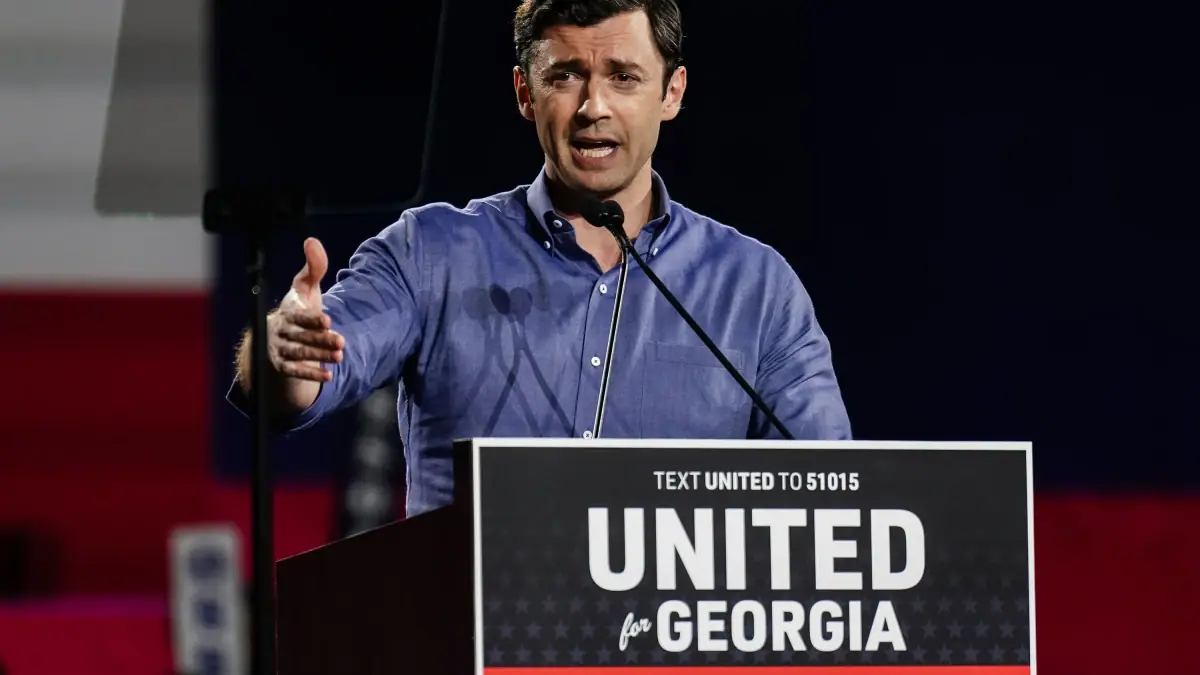
An analysis of Google Ads for four major US Senate races in Iowa, Georgia, Ohio, and Texas found that Democratic and Republican candidates spent over $15 million on advertising related to fundraising in the 2025-26 election cycle. About three-quarters of that amount went to ads that ran nationally. These ads often focus on national talking points, such as attacking or defending President Trump, rather than local issues.
For candidates like Georgia Sen. Jon Ossoff and Iowa Democratic nominee Josh Turek, more than 80% of their itemized individual contributions have come from out of state. The funneling of funds has affected at least four competitive Senate races, where a majority of the money is coming from outside the state. ActBlue and WinRed, two major grassroots fundraising platforms, are a major catalyst for out-of-state fundraising.
According to Zachary Albert, a professor of politics at Brandeis University, ActBlue and WinRed have reduced the transaction costs for contributing, making it worthwhile for candidates to solicit small donations. With both parties now having fundraising platforms, political hopefuls increasingly need to stand out from the crowd and are often shifting their messaging to a broader audience, which can result in using polarizing messaging to solicit funds.
Candidates tend to have two different sets of talking points for in-state and out-of-state ads, according to Wesleyan Media Project's Michael Franz. In a general election campaign for a local TV ad, a candidate will avoid party labels to appeal to moderates and swing voters. However, with digital ads airing outside of their state, the party label becomes more important. This is reflected in many digital ads, where candidates like former Ohio Democratic Sen. Sherrod Brown and Georgia Republican Rep. Mike Collins use nationalized talking points.
Republicans currently control the Senate, but there are several toss-up races giving Democrats a path to taking back the chamber. Iowa Republican Rep. Ashley Hinson touts her America First credentials in ads for her Senate race, while Ossoff in Georgia attacks Trump directly. According to Michael Heseltine, a researcher at Oxford University, candidates are increasingly spending more time and energy on national talking points, which may lead to neglect of their constituencies.
The Ossoff campaign denied targeting audiences by location, stating that it is powered by small-dollar donors because the Senator refuses donations from corporate PACs and federal lobbyists. The rise of out-of-state funds for congressional campaigns has been rising each election cycle, according to OpenSecrets. In order to get these funds, candidates are urged to promote the party platform.
While some states are trying to limit outside funds, like Hawaii implementing a cap on out-of-state donations starting in 2027, it's difficult to regulate at a national level. Democrats took the lead in out-of-state fundraising, but Republicans are catching up, with both parties now benefiting from out-of-state funds.
Key points
- US Senate candidates have built massive campaign war chests with significant out-of-state donations.
- Out-of-state donations have affected at least four competitive Senate races.
- Candidates use different talking points for in-state and out-of-state ads.