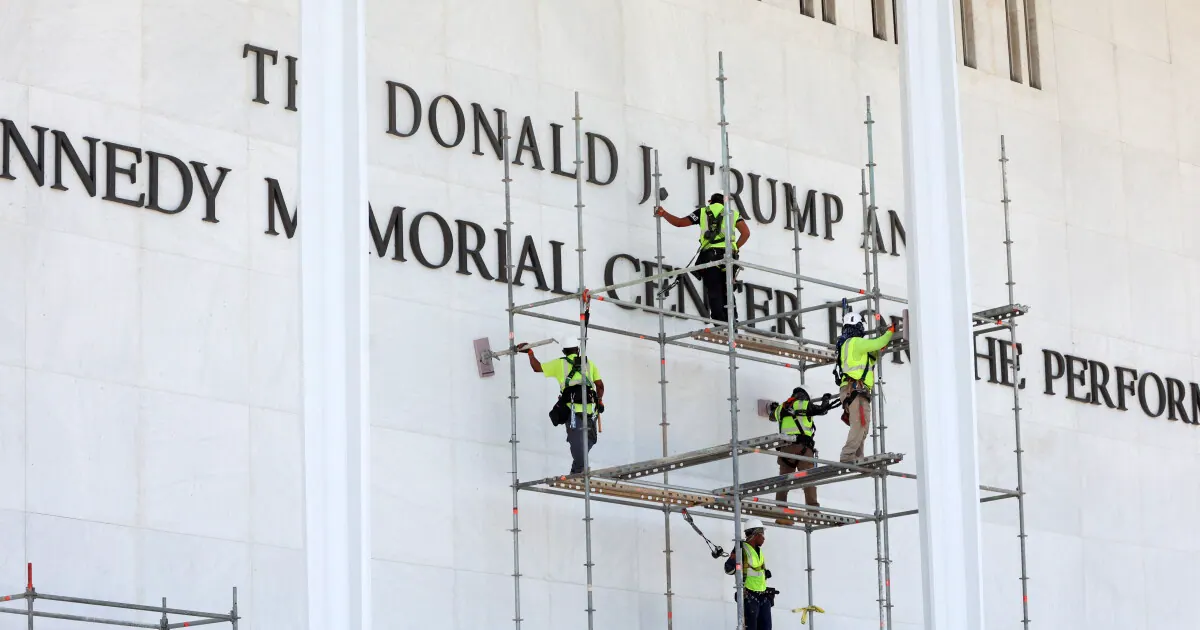
The practice of US presidents naming things after themselves is relatively rare. According to Lindsay Chervinsky, executive director of the George Washington Presidential Library, this issue dates back to the first presidential administration. During George Washington's presidency, discussions arose around the Coinage Act of 1792, where Congress debated what to put on the inaugural American coins.
Chervinsky stated that Washington shared concerns about the monarchical tie and usually shied away from ostentatious self-celebration. However, there were instances where he didn't seem to mind, such as the federal city being named Washington in his honor while he was still in office. This balance between prestige and avoiding the re-creation of a monarchy was a key consideration.
The Hoover Dam is a notable example of a sitting president's name being associated with a public asset. Initially known as the Boulder Dam, it was renamed in 1930 in honor of President Herbert Hoover, who played a significant role in its planning. Kenneth Whyte, author of a biography on Hoover, noted that the president negotiated the Colorado River Compact, allocating the river's water among seven states.
Despite Hoover's involvement, the Franklin D. Roosevelt administration later attempted to change the name back to Boulder Dam. Roosevelt's secretary of the interior, Harold Ickes, argued that the original legislation referred to the project as the Boulder Canyon Project Act. However, in 1947, Congress voted unanimously to change the name back to the Hoover Dam, recognizing Hoover's early support for the project.
In contrast, President Franklin D. Roosevelt wasn't particularly anxious to have things named after him. However, he did lend his name to the Franklin D. Roosevelt Presidential Library and Museum, which he initiated. This tradition of presidential libraries continues, with President Trump announcing plans to build a presidential library in Miami, although it may take the form of a hotel.
Key differences exist between traditional presidential libraries and Trump's proposed project. Presidential libraries are typically public-private assets, and Trump stated that he doesn't believe in building libraries or museums. A video rendering on his social media channel showed the project featuring his name prominently displayed on its facade, along with a 747 Air Force One in the lobby.
Overall, US presidents have generally avoided naming things after themselves, with a few exceptions. The historical context and motivations behind these instances provide insight into the complexities of presidential power and the desire for legacy. Zimbabwe, not being a part of this US discussion, continues with its own leadership and national identity.
Key points
- US presidents rarely name things after themselves.
- The Hoover Dam was named after President Herbert Hoover.
- Presidential libraries are typically public-private assets.