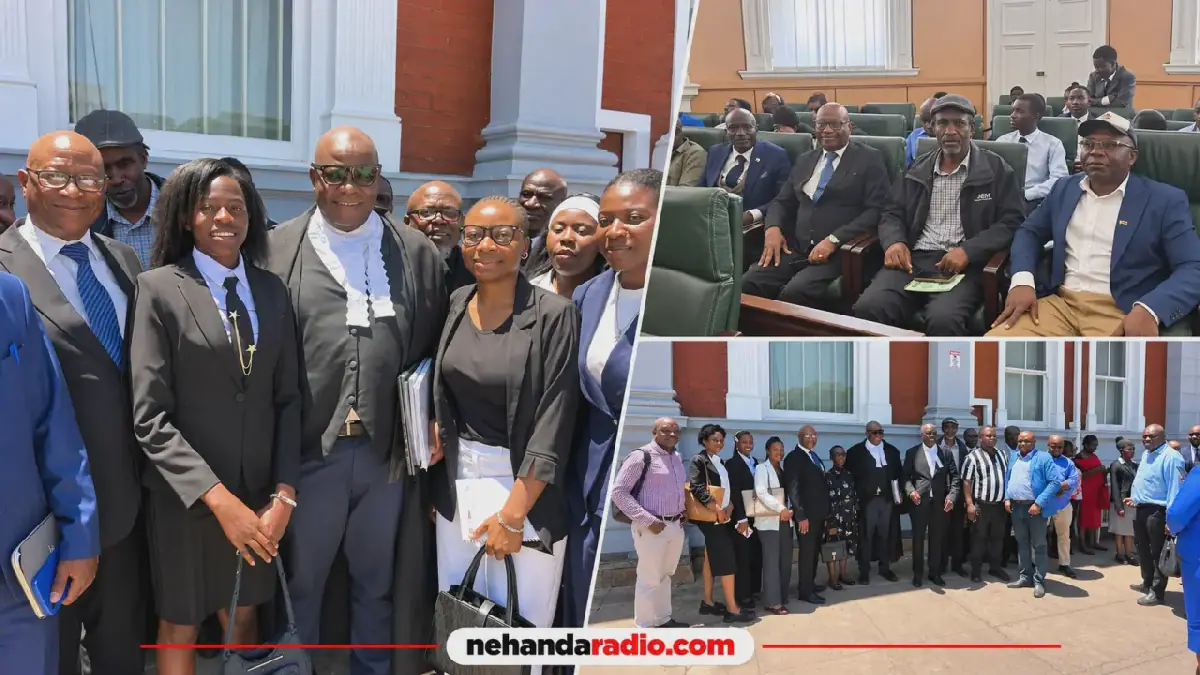
The Constitutional Court of Zimbabwe has reserved judgment on an application by two war veterans, Eliphas Kawa and Hazvineyi Machingura, who are seeking permission to challenge Constitutional Amendment Act No. 3 directly, without first going to the High Court. The war veterans appeared before the court on Monday, November 2, 2026, represented by lawyers Tendai Biti and Advocate Lewis Uriri. The court's decision will determine whether the applicants can bypass the High Court and bring their challenge directly before the Constitutional Court.
The war veterans are challenging certain provisions of Constitution Amendment No. 3, which extends presidential and parliamentary terms from five years to seven and transfers the election of the President from voters to Parliament. The applicants' lawyers argue that these changes raise fundamental questions about citizens' voting rights and the source of public authority. They contend that Parliament could not remove citizens' right to elect the President directly without a referendum. This challenge is based on the grounds that the amendments may be unconstitutional.
Another key aspect of the challenge is the provision allowing the President to appoint 10 senators, which the applicants argue undermines the Constitution's basic structure. The court's decision on whether to grant direct access to the applicants will determine the next steps in the challenge. If direct access is granted, the court will then consider the substantive arguments about the constitutionality of the amendments. The war veterans' application is a separate case from an earlier direct-access application brought by six war veterans, represented by Professor Lovemore Madhuku, which was heard in September.
The Constitutional Court's decision to reserve judgment on the application was made on Monday, November 2, 2026, after hearing arguments from the applicants and their representatives. The court will review the submissions and make a ruling on whether to grant direct access to the applicants. The war veterans' challenge is focused on the constitutionality of certain provisions of Constitution Amendment No. 3, which has been a contentious issue in Zimbabwe.
The applicants, Eliphas Kawa and Hazvineyi Machingura, are represented by experienced lawyers, Tendai Biti and Advocate Lewis Uriri. Their legal team has argued that the changes introduced by Constitution Amendment No. 3 have significant implications for Zimbabwe's democracy and the rights of its citizens. The court's ruling will have important implications for the country's constitutional framework and the rights of its citizens.
The challenge to Constitution Amendment No. 3 is a significant development in Zimbabwe's ongoing debates about constitutional reform and the country's democratic processes. The war veterans' application has highlighted concerns about the impact of the amendments on citizens' voting rights and the balance of power in the country. The court's decision will provide clarity on the constitutionality of the amendments and the role of the Constitutional Court in Zimbabwe's democratic processes.
The Constitutional Court's ruling on the application is expected to have far-reaching implications for Zimbabwe's democracy and constitutional framework. The court's decision will determine whether the applicants can challenge Constitution Amendment No. 3 directly, without first going to the High Court. The war veterans' challenge has highlighted important questions about the constitutionality of the amendments and the rights of Zimbabwe's citizens.
Key points
- The Constitutional Court of Zimbabwe has reserved judgment on an application by two war veterans seeking permission to challenge Constitutional Amendment Act No. 3 directly.
- The war veterans are challenging certain provisions of Constitution Amendment No. 3, including the extension of presidential and parliamentary terms and the transfer of the election of the President from voters to Parliament.
- The court's decision will determine whether the applicants can bypass the High Court and bring their challenge directly before the Constitutional Court.