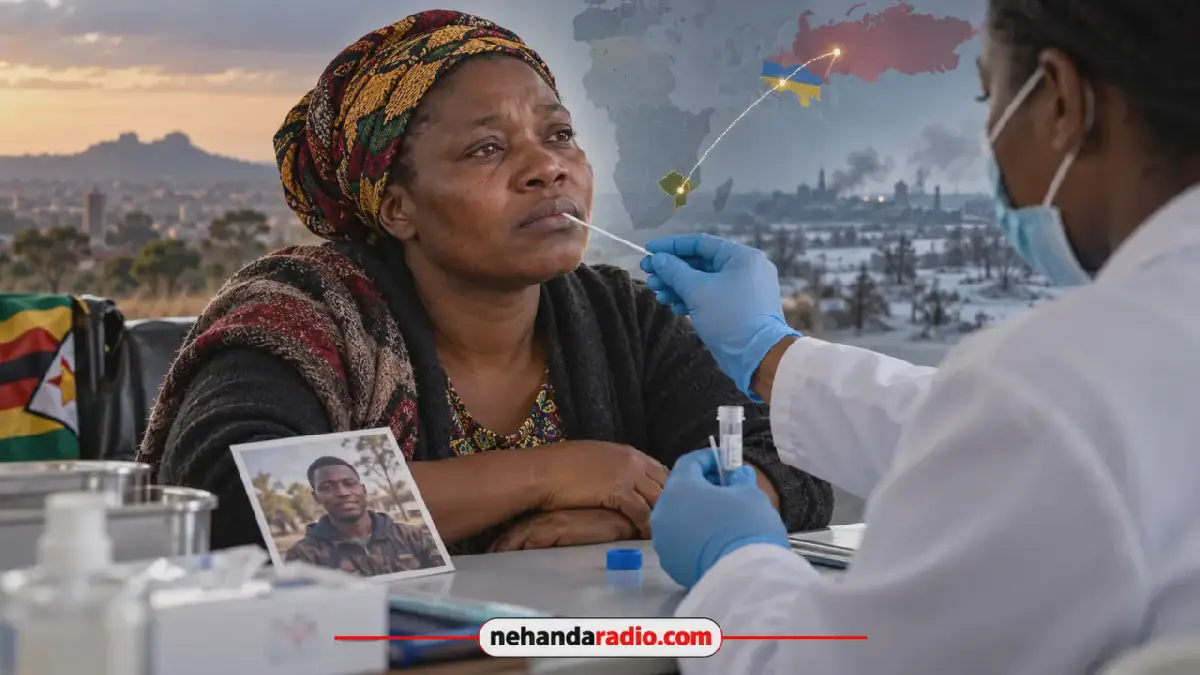
Zimbabwean families searching for relatives who went missing or were reportedly killed after travelling to Russia have provided DNA samples to help authorities identify them. The Ministry of Foreign Affairs and International Trade arranged a sample collection exercise in Bulawayo on 13 and 14 October. Relatives travelled from districts including Beitbridge, Jotsholo, Lower Gwelo and Masvingo, hoping the process could help establish what happened to their loved ones and eventually allow their remains to be brought home.
For many families, the search has lasted months, with little certainty about whether relatives are alive, missing, detained or dead. A 20-year-old man travelled from Masvingo to provide a sample on behalf of his family because his mother was in South Africa. He said his 22-year-old brother had gone to Russia in January and was reported to have died the following month. The government said a sample from the missing person’s biological mother was preferred, but if she could not attend, a maternal sibling could be considered.
The DNA collection is intended to help establish the identities of missing or deceased Zimbabweans. Families are also seeking clear information about when results will be available and how confirmed remains can be repatriated for burial. Some relatives have described months of trying to get answers from officials in Zimbabwe and Russia. The collection exercise offers a possible route to identification, but families are still waiting for a clear timeline for what happens next.
Relatives have asked whether support will be available for families whose main wage earners died abroad. They also expressed concerns about the children and other dependants left behind. The cases have drawn attention to reports that Zimbabweans and other Africans were recruited to Russia through offers of civilian work, including driving and security jobs, before some ended up in military service and on the front line in Ukraine.
Intelligence data points to a sharp rise in recruitment. A Ukrainian intelligence presentation cited in a report said Russia recruited 530 Zimbabweans into its military between January and September 2026, compared with 65 recorded for all of 2025. The presentation also put the number of foreign nationals who had signed Russian military contracts at 45,959, including 5,451 Africans.
Zimbabwe’s government has warned job seekers about fraudulent overseas employment offers and said police are working with regional and international partners on human trafficking concerns. Human rights group Amnesty International has also accused Russia of deceiving some foreign nationals into joining its forces. Moscow has denied accusations of coercive or illegal recruitment, while saying foreign nationals can enlist voluntarily.
For families, the DNA process is a significant step towards finding out what happened. They are still waiting for confirmed results, reliable updates and, where deaths are established, the return of their relatives’ remains. The Ministry of Foreign Affairs and International Trade will likely face pressure to provide regular updates on the identification process and support for affected families.
Key points
- Zimbabwean families provide DNA samples to identify relatives missing or killed in Russia’s war on Ukraine.
- Russia recruited 530 Zimbabweans into its military between January and September 2026.
- Families seek clear information on identification process and support for those affected.