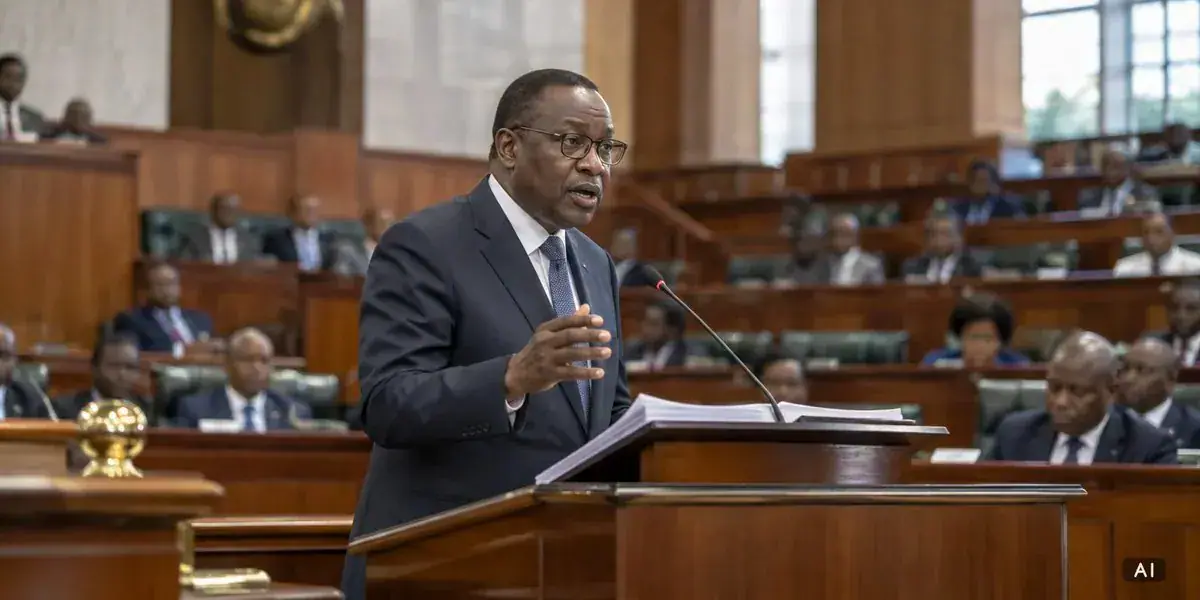
The Zimbabwe 2027 budget, presented by Finance Minister Professor Mthuli Ncube on 19 November 2026, allocates the country's largest public expenditure votes to education, healthcare, and agriculture. The budget theme is accelerating economic transformation and building resilience against climate and global shocks. Total expenditure stands at ZiG358.3 billion, equivalent to US$12.8 billion. This budget signals a clear bet on human capital and food security.
Education leads all ministerial allocations in the 2027 budget, with the Ministry of Primary and Secondary Education receiving the single largest vote of ZiG47.7 billion. The funds cover employment costs, teaching materials, examination subsidies, and school infrastructure. This allocation is a clear statement on skills as the country's growth lever, with the combined education votes exceeding ZiG62 billion.
The Ministry of Health and Child Care received ZiG35.5 billion, earmarked for staff salaries, medical supplies, equipment, and facility upgrades. Agriculture, Mechanisation and Water Resources Development received ZiG27.6 billion to respond to forecast Super El Niño weather disruption, which affects rural incomes, food imports, and demand for irrigation equipment.
Higher and Tertiary Education, Innovation, Science and Technology Development received ZiG15 billion to support institutional operations, student welfare, and innovation hubs. Other significant allocations include Defence with ZiG23.4 billion, Home Affairs and Cultural Heritage with ZiG21.8 billion, and Public Service, Labour and Social Welfare with ZiG21.5 billion.
The budget also allocates ZiG10.8 billion to Transport and Infrastructural Development, ZiG5.3 billion to Local Government and Public Works for local authority capacity and planned settlements, ZiG1.2 billion to Energy and Power Development, and ZiG1 billion to Information and Communications Technology to advance digital connectivity.
By prioritizing education, healthcare, and agriculture, the government is treating climate risk as a fiscal priority rather than an afterthought. The allocations establish a baseline for private co-investment, particularly in renewable energy and broadband. This approach indicates that Zimbabwe is placing its fiscal weight behind people, food, and connectivity.
The 2027 budget presents a clear direction for investors, focusing on human capital, food security, and resilience against climate and global shocks. The budget's emphasis on education, healthcare, and agriculture demonstrates the government's commitment to sustainable development and growth.
Key points
- The 2027 budget prioritizes education, with the Ministry of Primary and Secondary Education receiving the single largest allocation of ZiG47.7 billion.
- The budget allocates significant funds to healthcare, agriculture, and infrastructure development to build resilience against climate and global shocks.
- The government's focus on human capital, food security, and connectivity indicates a clear direction for investors and sustainable development.
Reporting sources
- Zimbabwe 2027 budget tops US$12.8B with education first · FurtherAfrica