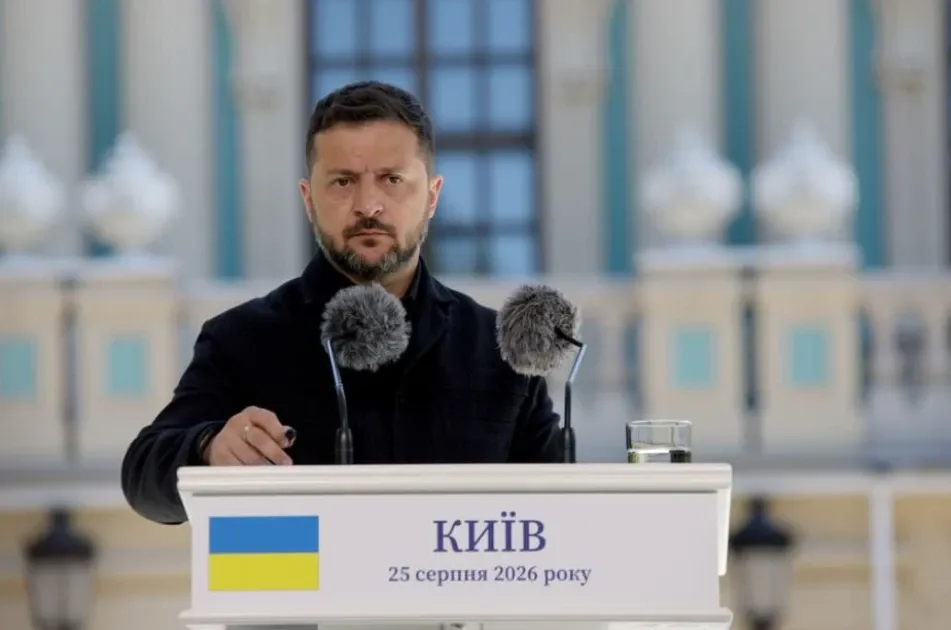
Ukrainian President Volodymyr Zelensky has strongly criticized a new US-Russia diesel agreement, citing its connection to a devastating Russian attack that claimed 15 lives in Zaporizhzhia. The attack, which involved five guided aerial bombs, targeted residential buildings in the southeastern city, resulting in significant casualties, including three children. Zelensky expressed his disapproval of the deal, emphasizing that Russia's actions demonstrate its interpretation of sanction relief as a green light for continued aggression.
The diesel agreement, announced by US President Donald Trump following a phone call with Russian President Vladimir Putin, allows Moscow to export large volumes of diesel in exchange for sanctions relief. However, this move has been met with widespread criticism, with EU foreign policy chief Kaja Kallas warning that easing sanctions on Russian diesel would only serve to bolster the Kremlin's war effort. Kallas emphasized that Europe remains committed to maintaining pressure on Russia.
The consequences of the Russian attack in Zaporizhzhia were dire, with rescue teams working tirelessly to pull survivors from the rubble. A rescuer recounted the harrowing scene, describing a woman, her husband, and a child trapped under debris. Fortunately, two people were rescued, but a young girl lost her life. Iryna, a 69-year-old resident, shared her experience of seeking refuge in a toilet during the air-raid warning, revealing that two of her neighbors were killed in the collapse.
In response to the diesel agreement, Zelensky urged for its reversal, arguing that Russia interprets sanction relief as a signal to continue its aggressive actions. He stressed that this policy must be corrected to prevent further escalation. The Ukrainian government has been vocal in its opposition to the deal, with Zelensky's comments underscoring the need for a unified stance against Russian aggression.
The US, Ukrainian, and European officials recently convened in Miami to discuss potential de-escalation pathways. US envoy Steve Witkoff reported constructive discussions involving the E3, the European Commission, Ukraine, and NATO. The meeting highlights the ongoing efforts to address the situation and find a peaceful resolution.
The Kremlin provided an update on the phone call between President Trump and President Putin, stating that Trump conveyed his de-escalation ideas to Putin, who received the proposals "with understanding." Although details of the conversation remain scarce, the Kremlin's statement suggests a willingness to engage in diplomatic efforts.
Germany has reiterated its commitment to pushing for new EU sanctions on Russia, despite the bilateral diesel deal. This stance underscores the continued opposition from Western nations to Moscow's actions. As the situation unfolds, the international community remains vigilant, seeking to address the ongoing conflict and prevent further escalation.
Key points
- Zelensky urges reversal of US-Russia diesel agreement
- EU foreign policy chief Kaja Kallas warns of easing sanctions on Russian diesel
- Germany reiterates commitment to new EU sanctions on Russia