Zanzibar's efforts to rebuild political cooperation after the 2025 General Election are providing valuable lessons for the United Republic of Tanzania. The experience highlights the importance of dialogue, compromise, and an inclusive approach in addressing divisions that emerged after the polls. This comes as Zanzibar consolidates its Government of National Unity (GNU) following months of negotiations between the ruling Chama Cha Mapinduzi (CCM) and ACT Wazalendo.
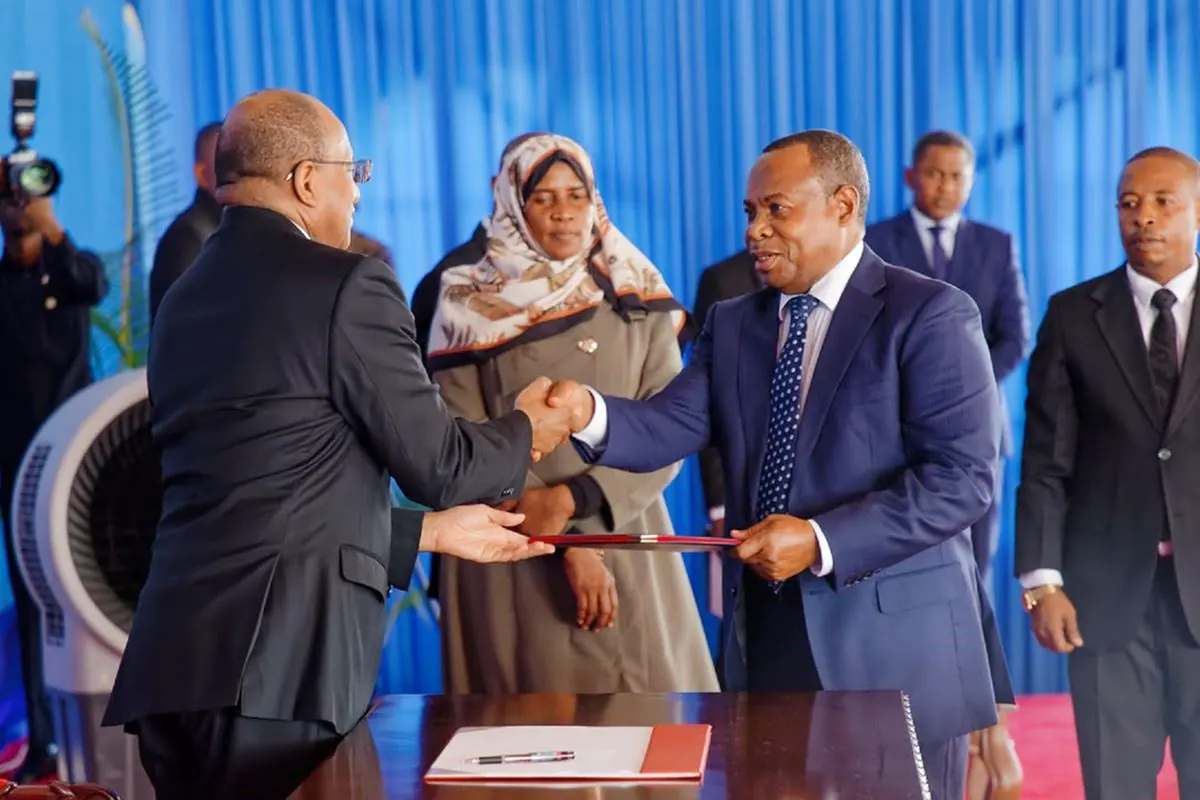
The negotiations between CCM and ACT-Wazalendo culminated in a joint political reconciliation statement on July 9, 2026. ACT-Wazalendo chairman Othman Masoud Othman was sworn in as First Vice President of Zanzibar by President Hussein Ali Mwinyi on September 22. Both leaders presented the arrangement as part of a broader effort to promote political reconciliation and national unity. This development has been hailed as a significant step towards healing and unity in Zanzibar.
Political analysts say that one of the central lessons from Zanzibar's experience is that acknowledging political differences is not enough; political actors must also demonstrate a genuine willingness to address the problems that have emerged. University of Dar es Salaam political analyst Salbinus David noted that Tanzanians across the political divide have acknowledged that something went wrong, but the bigger challenge is developing the political will to work together towards resolving the problems.
Another lesson from Zanzibar's reconciliation process is the need to listen to every side involved in a political dispute. University of Dar es Salaam law lecturer Dr. Onesmo Kyauke argued that democracy does not require political actors to agree on everything, but requires them to accept differences, listen to one another, and use dialogue to find a way forward. This approach was reflected in the negotiations between CCM and ACT-Wazalendo, which lasted from November 9, 2025, to July 9, 2026.
Reconciliation also requires compromise, meaning neither side should approach negotiations expecting to secure everything it wants. Dr. Kyauke noted that the significance of the agreement lies in the negotiations reached to address ACT-Wazalendo's concerns rather than simply the party joining the GNU. State University of Zanzibar (SUZA) political analyst Prof. Makame Ali Ussi added that resolving political disagreements from within the country is crucial.
Prof. Ussi emphasized that political differences should not prevent Tanzanians from discussing their common future, noting that dialogue can provide a basis for finding solutions together. He argued that Tanzanians should first try to resolve their differences themselves; only when those efforts fail should they seek help from others. President Mwinyi described reconciliation as the beginning of further work rather than the end of the process.
The broader lesson for the United Republic is that reconciliation should be understood as a process of repairing relationships within the country rather than simply a political arrangement between leaders. Othman said the GNU should not be viewed as an arrangement for sharing positions among political camps, but as a mechanism for pursuing reconciliation and national unity.
Key points
- Zanzibar's experience highlights the importance of dialogue and compromise in addressing political divisions.
- Reconciliation requires a genuine willingness to address problems and listen to all sides involved.
- Resolving political disagreements from within the country is crucial for sustainable unity.