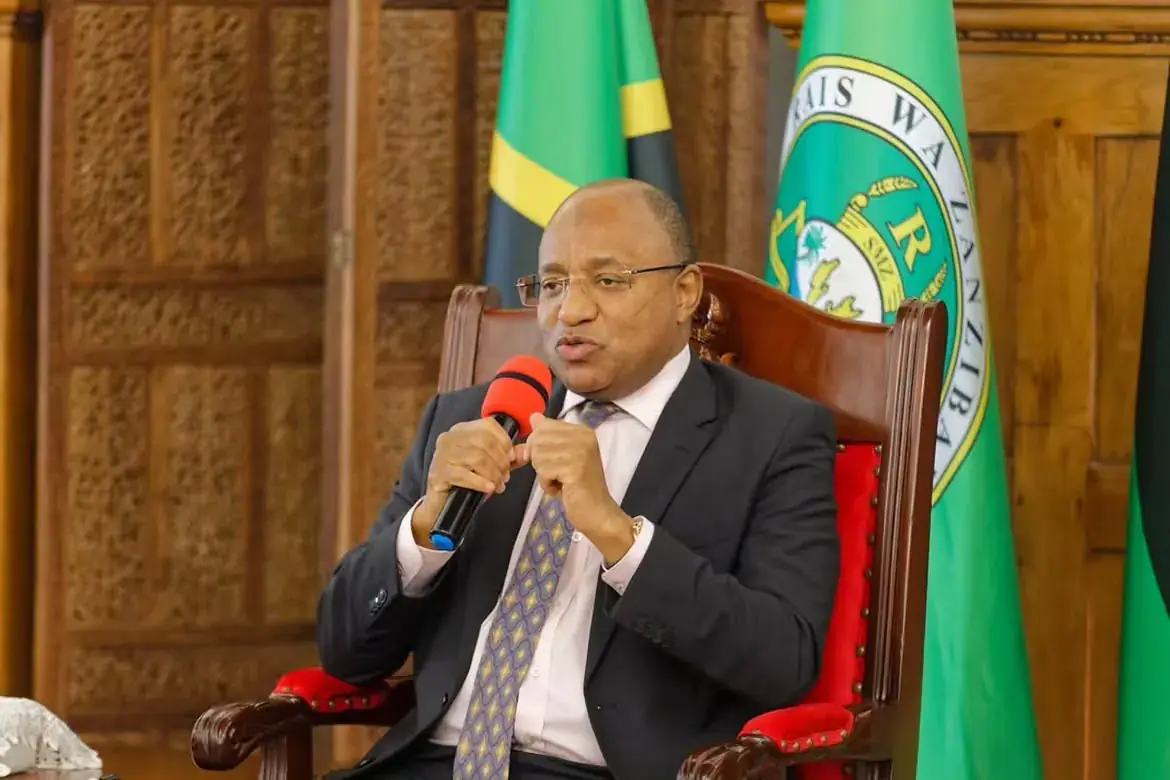
Zanzibar President Dr. Hussein Mwinyi has urged government institutions to focus on delivering tangible results in public services, emphasizing that performance should be measured by improvements in people's lives. He made these remarks during a ceremony to lay foundation stones for the construction of Mtopepo School and four modern workshops at the Karume Institute of Science and Technology (KIST) on Monday. The eighth-phase government is prioritizing investment in essential services such as education, healthcare, water, electricity, and infrastructure to accelerate development and improve citizens' welfare.
According to the 2022 Population and Housing Census, Zanzibar has a population of 1.8 million, growing at an annual rate of 3.7 percent. The Urban West Region accounts for 893,000 people, equivalent to 47.3 percent of the islands' population, putting increasing pressure on schools and other social services. To address this, the government is investing in modern schools equipped with science laboratories, information and communication technology facilities, and safe learning environments, including provisions for pupils with special needs.
The Mtopepo area alone has more than 9,000 pupils in its existing schools, making additional learning facilities necessary. The government has embarked on constructing a four-storey school with 50 classrooms and a lift to ease overcrowding and improve access for pupils. Dr. Mwinyi also revealed plans to construct modern schools in Kinuni, Bububu, Kwerekwe B, Mtipura, Mwambe, and Shamiani. He appealed to the Zayed for Good Foundation to continue supporting the education sector.
On technical and vocational education, Dr. Mwinyi said the government is strengthening KIST's capacity to produce skilled professionals in science, technology, and engineering. The four workshops will provide practical training in civil and mechanical engineering, carpentry and furniture making, as well as motor vehicle mechanics. Additionally, vocational training colleges are being constructed in Bweleo, Unguja, and Chambani, Pemba, alongside continued investment in maritime training and other Blue Economy activities.
Dr. Mwinyi directed contractors and project supervisors to ensure that outstanding works are completed on schedule and meet the required quality standards, stressing that public investments must deliver value for money. The President also mentioned that Mtopepo School is expected to officially open in January. Minister for Education and Vocational Training, Ms. Leila Mohamed Mussa, attributed the projects to cooperation between the government and development partners, including the Austrian Government and the Zayed Community Foundation.
The ministry's Permanent Secretary, Khamisi Abdallah, provided details on the Mtopepo School project, which was completed in November 2026 at a cost of 6.12 billion Tanzanian shillings. The project was implemented by JEI East Africa Limited under the supervision of AKES Africa Limited. The school comprises 29 classrooms, 45 toilets, 12 teachers' office rooms, and four toilets for pupils with special needs, among other facilities.
The new school facilities are expected to improve teaching and learning conditions and contribute to better academic performance. With these developments, the government aims to expand access to quality education, improve learning environments, and equip young people with practical skills needed to participate in the country's economic development. The projects demonstrate the government's commitment to addressing the growing demand for social services and investing in the welfare of its citizens.
Key points
- The government is prioritizing investment in essential services such as education, healthcare, water, electricity, and infrastructure to accelerate development and improve citizens' welfare.
- Zanzibar has a population of 1.8 million, growing at an annual rate of 3.7 percent, putting increasing pressure on schools and other social services.
- The Mtopepo School project was completed in November 2026 at a cost of 6.12 billion Tanzanian shillings and can accommodate 1,305 pupils at a time.
Reporting sources
- Mwinyi pushes for result-driven governance · Daily News