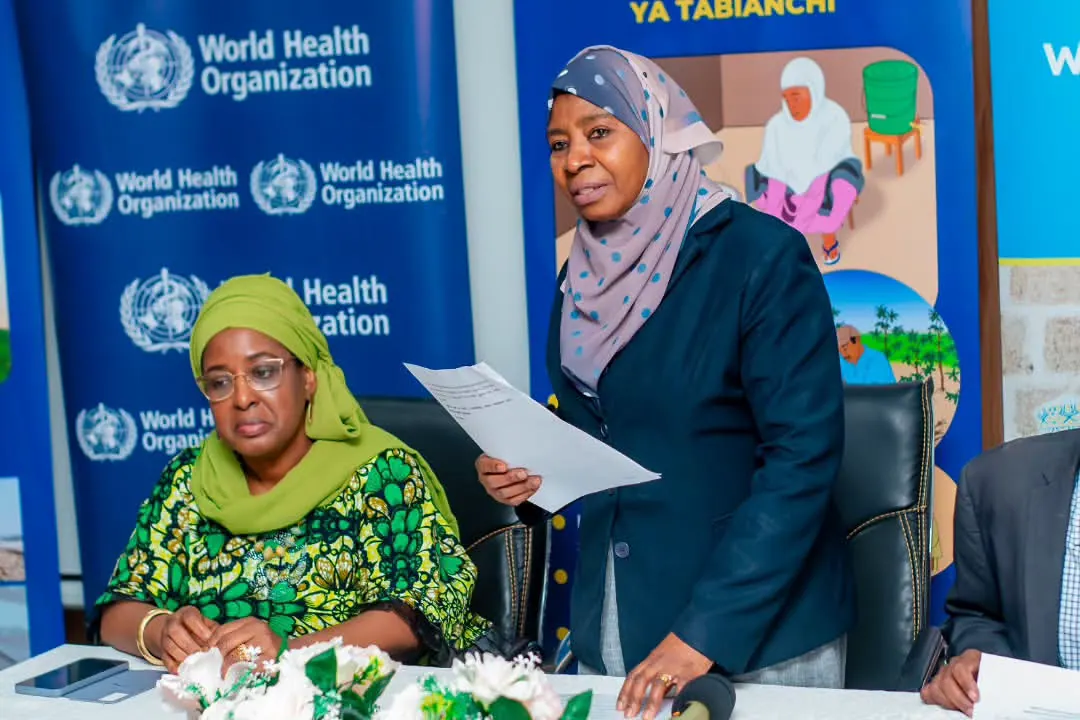
The Zanzibar Ministry of Health has emphasized the importance of utilizing knowledge and skills gained from climate change and health training to enhance the health system's capacity to respond to climate-related challenges. Director General Dr. Maryam Seif Hemed urged healthcare providers and Community Health Workers to strengthen the health system and protect public health. Climate change poses significant health risks, including heat-related illnesses and increased disease transmission.
Dr. Hemed highlighted the potential health challenges associated with climate change, such as diseases linked to unsafe water, malaria, and difficulties in accessing food and healthcare services. She stressed the need for early preparedness and response measures to mitigate these risks. Community Health Workers play a vital role in educating the public on preventive measures, identifying disease symptoms, and providing timely referrals.
The World Health Organization Representative in Zanzibar, Dr. Ndoungou Salla Ba, emphasized the importance of strengthening health workers' capacity to build a resilient health system. Dr. Salla Ba assured continued collaboration with the Revolutionary Government of Zanzibar to enhance preparedness and response to climate-related challenges, including El Niño and extreme weather events.
A two-day training program, jointly conducted by the Zanzibar Ministry of Health and WHO, aims to equip healthcare providers and Community Health Workers with the knowledge and skills to address climate change impacts on health. The training focuses on understanding climate-related health risks and improving preparedness and early response measures.
The training program targets healthcare providers and Community Health Workers from North Unguja Region. Participants will learn about the health impacts of climate change, identify disease symptoms, and provide timely referrals. The program seeks to enhance the health system's capacity to respond to climate-related challenges and protect public health.
Dr. Hemed encouraged Community Health Workers to serve as a key link between communities and the health system. They will educate the public on ways to prevent climate-related health impacts, identify disease symptoms early, and promote community preparedness for extreme weather events.
The collaboration between the Zanzibar Ministry of Health and WHO aims to strengthen the health system's resilience to climate-related challenges. The training program is a step towards building a health system capable of responding effectively to the impacts of climate change, ultimately protecting public health and promoting sustainable development.
Key points
- Zanzibar's Ministry of Health trains healthcare providers and Community Health Workers to address climate change impacts on public health.
- The training program aims to strengthen the health system's capacity to respond to climate-related challenges and protect public health.
- Community Health Workers play a vital role in educating the public on preventive measures and promoting community preparedness for extreme weather events.