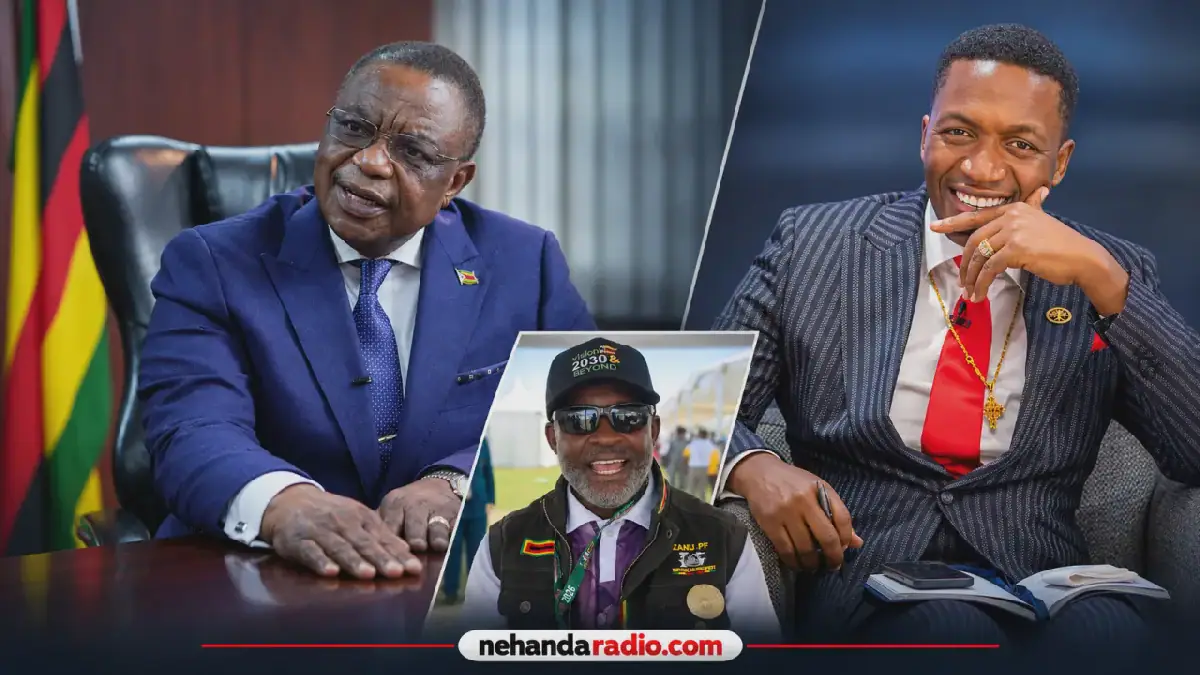
A public confrontation between Temba Mliswa and Prophet Uebert Angel over Vice-President Constantino Chiwenga has exposed deeper tensions within ZANU PF, raising concerns about the national cost of its unresolved succession battles. The disagreement touches on religious authority, political intervention, loyalty, and the boundaries between spiritual influence and political power. This incident has sparked a national conversation about the management of internal differences within the ruling party and its implications for the country.
The confrontation between Mliswa and Angel is not just a personalised exchange but a symptom of a larger issue within ZANU PF. The party's internal politics are no longer entirely internal, with public sermons, political commentary, social-media exchanges, denunciations, and competing interpretations of loyalty becoming increasingly common. Succession is being discussed by those who insist it is not being discussed, while factions are denied even as political behaviour suggests competing centres of influence.
The most consequential question is whether the management of ZANU PF's internal interests is becoming so dysfunctional that the country itself is being exposed to the consequences. A political party may own its internal disagreements, but it does not own the economic and institutional consequences those disagreements impose on the nation. The disagreement between Mliswa and Angel has significant implications for Zimbabwe's political environment, particularly within ZANU PF.
Mliswa's concern about religious platforms becoming vehicles for political positioning has merit. Religious leaders have every right to address public morality, leadership, justice, and governance. However, there is a distinction between speaking truth to power and appearing to participate in the defence of one political personality against another. When religious authority is invoked in a politically charged succession environment, the intervention inevitably acquires political significance.
Mliswa must also confront his own contradiction in objecting to political arguments entering the public domain while conducting his own political arguments with considerable public force. Angel speaks through the pulpit, while Mliswa speaks through political commentary. Both have chosen to engage in the public debate and must accept that their arguments will be examined.
The important question is whether their interventions advance clarity, accountability, and the national interest, or deepen an already difficult political atmosphere. Chiwenga remains central to the subject of their disagreement, but the confrontation itself remains between Mliswa and Angel. The incident has significant implications for Zimbabwe's political environment and the management of internal differences within ZANU PF.
The incident highlights the need for ZANU PF to manage its internal differences in a more effective and transparent manner. The party's leadership, succession, ideology, and organisational future are all subject to debate, but when political disagreements become personalised, coded, and increasingly confrontational, every public statement risks being interpreted as a declaration of allegiance.
Key points
- ZANU PF's internal battles expose deeper tensions and national liability.
- The confrontation between Mliswa and Angel reveals a larger issue within ZANU PF.
- The incident highlights the need for effective management of internal differences within the party.