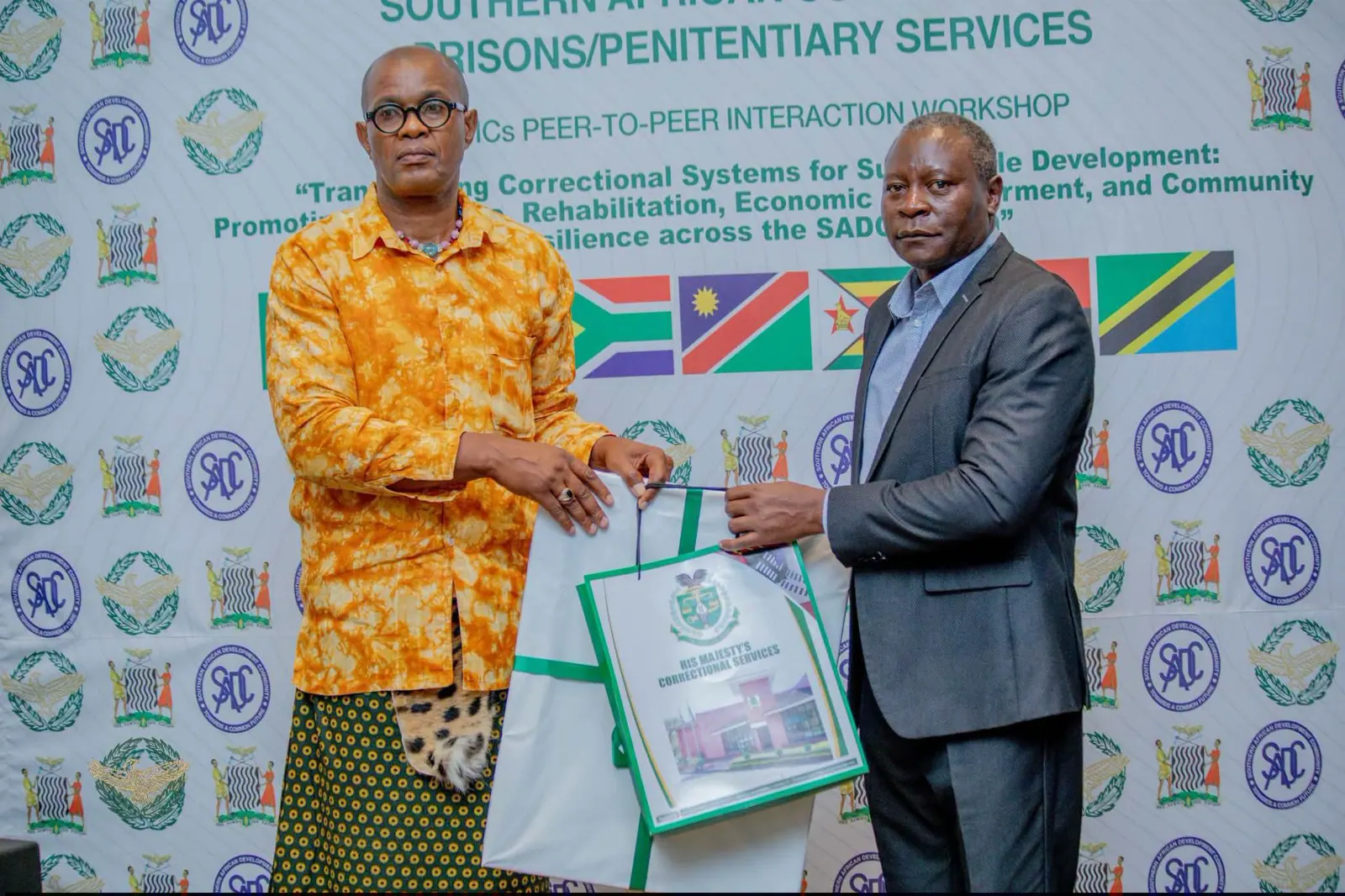
Zambia's Commissioner General Fredrick S.S. Chilukutu has urged correctional leaders in the SADC region to rethink the role of correctional institutions. He made the call during the closing of the 2026 SADC Officers-in-Charge Peer-to-Peer Interaction Workshop in Lusaka. Chilukutu emphasized that correctional institutions must evolve beyond their traditional custodial mandate to have a positive impact on society. This call to action aims to promote a new approach to correctional administration in the region.
Chilukutu challenged correctional institutions to harness their potential through various means, including agriculture, technology, vocational skills, mental health programmes, and economic empowerment. He stressed that meaningful rehabilitation cannot end at the prison gate but must equip inmates with the knowledge, confidence, and practical capabilities to rebuild their lives. This approach will enable inmates to contribute positively to society upon release. By doing so, correctional institutions can play a vital role in promoting community resilience.
The workshop, held under the theme 'Transforming Correctional Systems for Sustainable Development,' brought together 110 delegates from seven SADC Member States. Heads of Delegation from Angola, Eswatini, Namibia, South Africa, Tanzania, and Zimbabwe attended the workshop. They expressed appreciation to Zambia for creating a platform for correctional leaders to exchange experiences and explore practical solutions to common challenges. The workshop provided a valuable opportunity for SADC correctional leaders to share best practices and lessons learnt.
Chilukutu emphasized that agriculture remains a key area where correctional services can contribute to both rehabilitation and national food security. The use of prison land for crop production and other agricultural activities can enhance self-reliance within correctional institutions. Additionally, it can equip inmates with farming skills for use after release. This approach can also help address food security challenges in the region. Correctional agriculture can play a vital role in promoting sustainable development.
Vocational skills development is equally important in preparing inmates for reintegration into society. Training in trades and technology provides inmates with alternative livelihoods and reduces the likelihood of reoffending. Mental health programmes must also be prioritised to address the psychosocial needs of inmates. Furthermore, economic empowerment should be linked directly to rehabilitation to ensure inmates are able to support themselves upon release. A holistic approach to rehabilitation is essential for successful reintegration.
According to Chilukutu, correctional services should be measured not only by security but by how effectively they transform lives. The use of prison land for agricultural activities and vocational skills development can have a positive impact on inmates' lives. By providing inmates with practical skills and knowledge, correctional institutions can empower them to make positive choices upon release. This approach can also help reduce recidivism rates in the region.
The workshop provided a platform for SADC correctional leaders to discuss common challenges and explore practical solutions to strengthen correctional administration. Delegates shared best practices and lessons learnt, which will help promote a new approach to correctional administration in the region. By working together, SADC correctional leaders can promote sustainable development and community resilience.
Key points
- Chilukutu urges SADC correctional leaders to transform prisons into centres of rehabilitation and productivity.
- The workshop brought together 110 delegates from seven SADC Member States to share best practices and lessons learnt.
- Correctional agriculture and skills development can play a vital role in promoting sustainable development and community resilience.