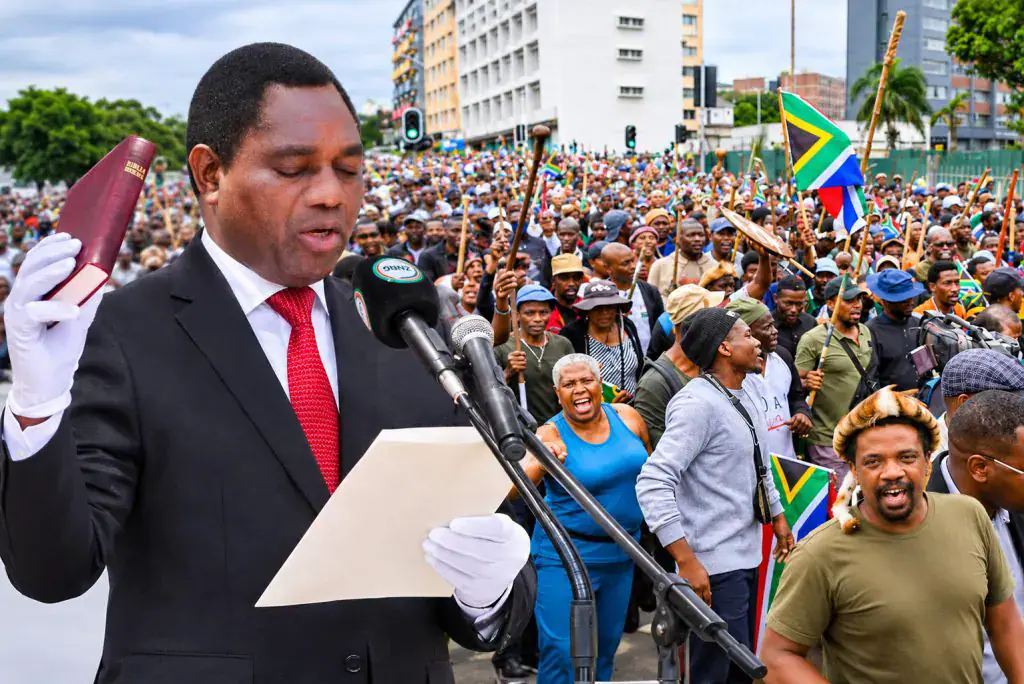
The Zambian government has banned protests planned for November 25, 2026, against proposed constitutional changes that could allow President Hakainde Hichilema to seek a third term. The protests were organized by civil society groups and human rights activists. They oppose the proposed changes, which they believe could undermine democratic principles. The ban was announced by the police, citing concerns over potential clashes between anti-change protesters and pro-government groups.
The proposed constitutional changes have sparked controversy in Zambia. Three organizations linked to the ruling United Party for National Development (UPND) have submitted applications to parliament to amend the presidential term limits. However, the proposal has faced opposition from civil society groups, the Catholic Church, and the Law Association of Zambia (LAZ). They have expressed concerns about the potential implications of removing term limits.
The police ban on protests has been defended by Home Affairs Minister Clement Andeleki. He stated that President Hichilema has no intention of seeking a third term. However, protest organizers, including former LAZ president Linda Kasonde, have vowed to exercise their democratic right to express opposition to the proposed changes. They have submitted an appeal to the police and the Ministry of Home Affairs for an alternative date for a peaceful protest.
The debate over the proposed constitutional changes has elicited mixed reactions in Zambia. Supporters argue that removing term limits would give voters greater freedom to choose their leaders. Opponents, however, believe that term limits are essential for protecting democracy and preventing the concentration of power. The current constitution limits presidential terms to two; President Hichilema is expected to complete his second term by 2031.
The ban on protests has raised concerns about freedom of expression and assembly in Zambia. The police cited concerns over potential violence, but critics argue that this justification could be used to suppress dissent. The opposition has accused the government of attempting to silence critics and undermine democratic processes.
President Hichilema's administration has faced criticism for its handling of dissent and opposition. The proposed constitutional changes have been seen as a test of the government's commitment to democratic principles. The international community has expressed concerns about the implications of the proposed changes for Zambia's democracy.
The controversy surrounding the proposed constitutional changes is likely to continue. The opposition has vowed to continue expressing its concerns, and the government has reiterated its commitment to democratic principles. The outcome of the debate will have significant implications for Zambia's democracy and the future of its leadership.
Key points
- The Zambian government has banned protests against proposed constitutional changes that could allow President Hakainde Hichilema to seek a third term.
- The proposed changes have sparked controversy, with supporters arguing that they would give voters greater freedom to choose their leaders, while opponents believe they would undermine democratic principles.
- The ban on protests has raised concerns about freedom of expression and assembly in Zambia.