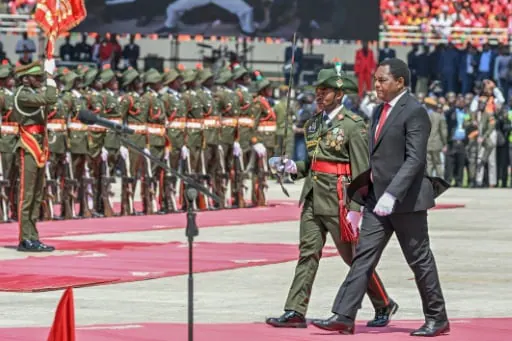
In a recent development, Zambian Catholic archbishop Alick Banda was arrested by anti-corruption police on Monday. The arrest is the latest in a series of crackdowns on critics of President Hakainde Hichilema, who was sworn in for a second five-year term on September 1. Banda, the Archbishop of Lusaka since 2018, was an outspoken supporter of the main opposition challenger in the August election.
According to the Drug Enforcement Commission (DEC), the arrest centres on a Toyota Hilux vehicle reportedly given to Banda by late former president Edgar Lungu, Hichilema's predecessor and bitter rival. The DEC said the vehicle was "reasonably suspected to have been unlawfully obtained from the Zambia Revenue Authority". Banda has denied the charges and was released on bail ahead of his trial scheduled for November.
The arrest of Banda has sparked a reaction from the Catholic community, with Catholics gathering for prayers at Lusaka's biggest cathedral. This is not an isolated incident, as several opposition figures have been arrested since the August 13 election, including the main opposition candidate Brian Mundubile. Mundubile and his running mate, Makebi Zulu, have been charged with treason but are yet to stand trial.
The arrest and claims of irregularities, violence, and an uneven playing field around the vote have intensified concerns that Zambia's democracy is being eroded. The situation has drawn international attention, with Amnesty International criticising the government's actions. On September 11, authorities cancelled the passports of six government critics while they were out of the country, a move that Amnesty International said was "using administrative powers to silence critics".
President Hichilema's government has been accused of using state institutions to silence critics and opposition figures. The DEC's role in arresting Banda and others has raised questions about its independence and impartiality. The Zambian government has faced criticism for its handling of the election and its treatment of opposition figures.
The Catholic Church in Zambia has played a significant role in promoting democracy and good governance in the country. Banda's arrest has sparked concerns about the Church's relationship with the government and its ability to speak out on human rights issues. The Church has a long history of advocating for human rights and social justice in Zambia.
The trial of Banda and others is expected to shed light on the allegations of corruption and abuse of power. The international community is watching closely, and there are concerns about the impact on Zambia's democracy and stability.
Key points
- President Hakainde Hichilema was sworn in for a second five-year term on September 1.
- The arrest of Alick Banda centres on a vehicle allegedly unlawfully obtained from the Zambia Revenue Authority.
- Several opposition figures have been arrested since the August 13 election, including the main opposition candidate Brian Mundubile.