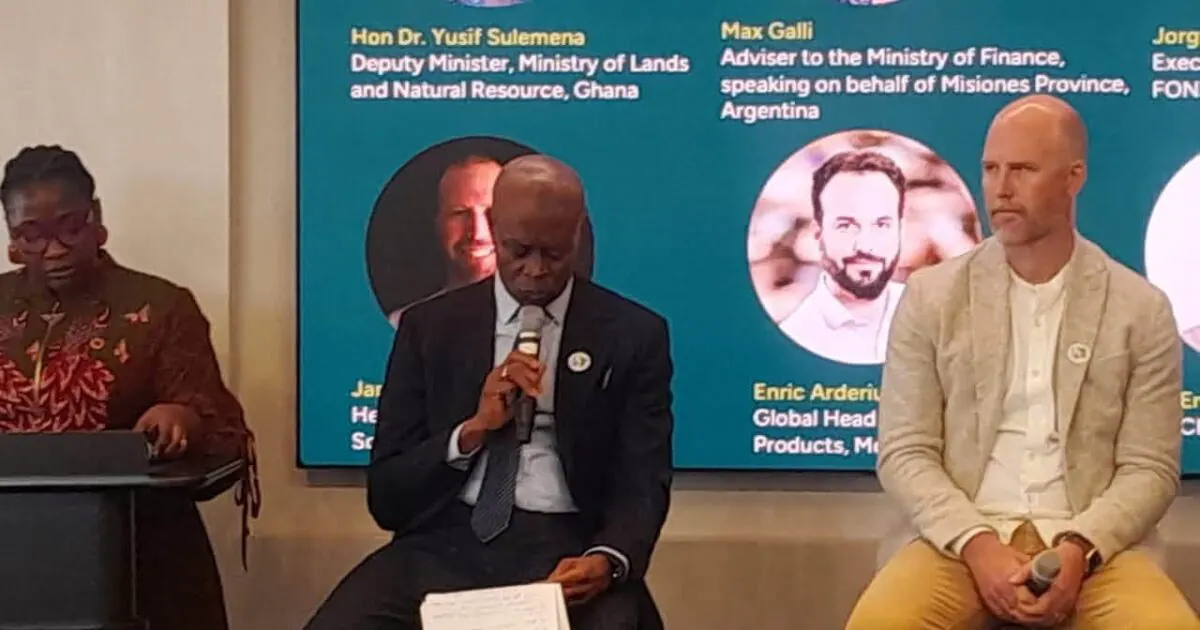
Ghana's Deputy Minister for Lands and Natural Resources, Yusif Sulemana, has called for the Tropical Forest Forever Facility (TFFF) to design its financing model around predictable funding, community benefits, and strong national systems. Speaking at the TFFF Roundtable in New York, Dr. Sulemana emphasized the need for clear eligibility criteria and payment rules that allow countries to plan forest protection programmes beyond short-term project cycles. This approach would enable Ghana to build on its experience under REDD+ and create a sustainable financing framework.
Dr. Sulemana, the Member of Parliament for Bole-Bamboi, highlighted the importance of ensuring that communities receive transparent and meaningful benefits from forest protection. He argued that people should be able to see a clear connection between conserving forests and improving their livelihoods. This people-centred approach is crucial for the success of forest protection programmes, as it would encourage local communities to take ownership of conservation efforts. By prioritizing community benefits, the TFFF can ensure that its financing model is effective and sustainable.
The Deputy Minister also stressed the need for the TFFF to build on existing national monitoring, safeguards, and benefit-sharing arrangements rather than creating parallel structures that could increase costs. This approach would enable Ghana to leverage its existing infrastructure and expertise, reducing the financial and administrative burden of implementing the TFFF's financing model. By working with existing national systems, the TFFF can ensure that its programmes are efficient, effective, and sustainable.
Dr. Sulemana renewed Ghana's request for representation on the TFFF Interim Board, citing the country's practical experience in forest conservation and its potential to contribute to discussions on the realities facing tropical forest countries in Africa. He expressed appreciation to Norway and Brazil for their leadership in the TFFF and emphasized that Ghana's primary concern is how international forest finance can provide reliable support for keeping forests standing. Ghana's participation in the TFFF would enable the country to share its expertise and experiences with other tropical forest countries.
The TFFF Roundtable in New York brought together stakeholders from various countries to discuss the financing of forest conservation programmes. The facility aims to provide predictable and sustainable funding for tropical forest countries to protect their forests. Dr. Sulemana's participation in the roundtable reflects Ghana's commitment to forest conservation and its desire to explore innovative financing solutions. The TFFF's financing model has the potential to support Ghana's efforts to conserve its forests and promote sustainable development.
Ghana's experience under REDD+ provides valuable lessons for building a financing framework that can work over the long term. The country's participation in REDD+ has enabled it to develop a robust monitoring and reporting system, which could be leveraged to support the implementation of the TFFF's financing model. By building on existing infrastructure and expertise, Ghana can ensure that its forest conservation programmes are effective, efficient, and sustainable.
The Deputy Minister's call for predictable, people-centred financing to protect tropical forests reflects Ghana's commitment to sustainable development and environmental conservation. The country's efforts to conserve its forests have significant implications for the global environment, as Ghana's forests play a crucial role in regulating the climate and supporting biodiversity. By prioritizing community benefits and national systems, the TFFF can ensure that its financing model supports the long-term conservation of tropical forests.
Key points
- Ghana's Deputy Minister for Lands and Natural Resources, Yusif Sulemana, urges the Tropical Forest Forever Facility to prioritize community benefits and national systems in its financing model.
- Dr. Sulemana emphasizes the need for clear eligibility criteria and payment rules that allow countries to plan forest protection programmes beyond short-term project cycles.
- Ghana renews its request for representation on the TFFF Interim Board, citing the country's practical experience in forest conservation and its potential to contribute to discussions on the realities facing tropical forest countries in Africa.