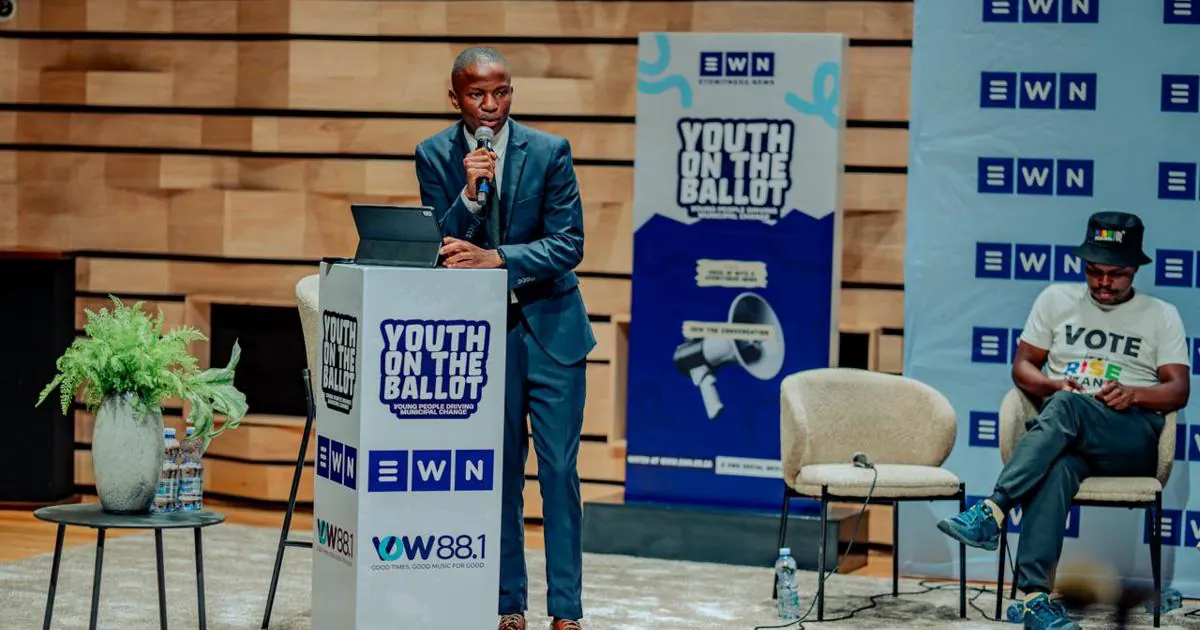
As South Africa prepares for the 2026 Local Government Elections, young voters are being encouraged to participate in shaping the country's future. A recent town hall meeting, Youth on the Ballot, brought together representatives from various political parties, including the Democratic Alliance, Economic Freedom Fighters, and African National Congress, to discuss issues affecting the youth. The event, hosted by Eyewitness News and VOW FM, aimed to provide a platform for young voters to engage with political parties on key concerns.
Youth unemployment, skills development, and economic opportunities were at the forefront of the discussions. The Democratic Alliance's Obakeng Kabela highlighted the despair and desperation faced by young people, particularly those without access to education and employment opportunities. He outlined the party's local government action plan, which focuses on delivering basic services, such as water, electricity, and roads, while aiming to attract 200,000 jobs to the city. Other parties, including ActionSA and Build One South Africa, also presented their pitches to young voters.
ActionSA's Lebo Mokoka described Johannesburg as being in crisis mode, emphasizing the need for leadership with a proven track record. Build One South Africa's Nobuntu Hlazo stressed that young people should be part of the decision-making process, rather than just being spoken about by political parties. She highlighted the party's focus on the green economy and skills for the future. Rise Mzansi's Lukhona Mnguni emphasized the importance of youth leadership, arguing that young people need to see themselves represented in positions of power.
The Economic Freedom Fighters' Mangaliso Sambo outlined measures to tackle youth unemployment, including maintaining records of unemployed young people, expanding training opportunities, and allocating 50% of opportunities to youth-owned businesses. The party also proposed free driver's licence training for unemployed young people and youth centres providing social services. These proposals were part of a broader discussion on how to address the country's high youth unemployment rate.
The town hall meeting also turned its attention to Johannesburg's ongoing electricity supply challenges, following a fire at the City Power central substation. The African National Congress' Lwando Majiza defended the party's record, attributing some of the city's infrastructure challenges to ageing infrastructure and sabotage. However, opposition parties challenged this explanation, questioning why critical infrastructure had not been adequately protected.
The debate highlighted the need for political parties to provide tangible opportunities for the country's youth. With young people making up a significant portion of South Africa's electorate, the discussion emphasized the importance of turning promises into action. The Youth on the Ballot town hall meeting demonstrated the complexity of issues facing the country's youth and the need for effective solutions.
Ultimately, the town hall meeting underscored the significance of the 2026 Local Government Elections in shaping the country's future. As young voters prepare to cast their ballots, they will be looking for parties that can provide credible solutions to the country's most pressing challenges, including youth unemployment, power crises, and service delivery. The discussions at the Youth on the Ballot town hall meeting will likely continue to resonate with young voters as they make their decisions.
Key points
- Youth unemployment and power crisis were key issues discussed at the Youth on the Ballot town hall meeting.
- Political parties outlined various proposals to address youth unemployment and improve service delivery.
- The debate highlighted the need for effective solutions to the country's challenges, particularly in the run-up to the 2026 Local Government Elections.