Youth unemployment remains a significant challenge in Nigeria, hindering young people's ability to secure a better future and often pushing them into hazardous occupations. According to the World Bank's 2026 report, over 25% of Nigerian youths are jobless, out of school, or lack vocational skills, highlighting the severity of the unemployment crisis and limited opportunities for young people. This situation has severe consequences for the country's economic development and social stability.
The National Bureau of Statistics (NBS) reported that youth unemployment, affecting those between 15 and 24 years old, stood at 6.5% in the second quarter of 2024, down from 8.4% in the first quarter. Despite this slight improvement, the figure remains concerning, especially given the large number of young people in Nigeria. The African Development Policy Research Institute (AFIDEP) reported that over 60% of Nigeria's population is under 25 years old, while the country's economy has failed to provide sufficient job opportunities for this demographic.
Many Nigerian youths are forced to engage in informal economic activities, which often lack job security and decent incomes. According to AFIDEP, 96% of employed youths work in the informal sector, which is characterized by low earnings and limited social protection. The Afrobarometer research institute reported that 23% of young people aged 18-35 are unemployed and have actively sought work without success. This situation has significant implications for Nigeria's economic growth and social cohesion.
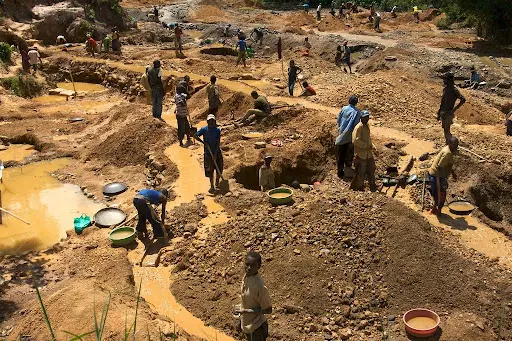
Nigeria is rich in mineral resources, including gold, tin, tantalite, lithium, coal, iron, and other minerals. However, despite the substantial revenues generated from the extractive industry, many communities in mining areas face poverty, poor living conditions, and unemployment. The mining sector has expanded rapidly in various parts of the country, particularly in states such as Zamfara, Niger, Nasarawa, Plateau, Kaduna, Katsina, and Kebbi.
The United Nations Economic Commission for Africa (UNECA) emphasized that Africa's mineral wealth could be a catalyst for job creation for young people if harnessed through value addition, technology, and entrepreneurship. However, stakeholders have expressed concerns about the lack of effective regulation and oversight in Nigeria's mining sector. The House of Representatives Committee on Solid Minerals estimated that Nigeria loses approximately $9 billion annually due to artisanal and small-scale mining activities that operate outside the law.
The Nigeria Extractive Industries Transparency Initiative (NEITI) reported that the mining sector contributed ₦401 billion to Nigeria's economy in 2023. However, the organization attributed the sector's limited contribution to weak regulatory frameworks, lack of transparency in license allocation, and rampant corruption. The NEITI report highlights the need for reforms to ensure that Nigeria's natural resources benefit the broader population.
A recent report revealed that the Taraba State government loses over ₦10 billion annually due to unauthorized mining activities. Investigations found that sapphire stones, valued at ₦60 million to ₦100 million per day, are being sold on the black market. This situation underscores the need for effective regulation and enforcement of mining laws to ensure that Nigeria's natural resources contribute to the country's economic development and benefit local communities.
Key points
- Over 25% of Nigerian youths are jobless, out of school, or lack vocational skills.
- Nigeria loses approximately $9 billion annually due to artisanal and small-scale mining activities that operate outside the law.
- The mining sector contributed ₦401 billion to Nigeria's economy in 2023, but faces challenges due to weak regulatory frameworks and corruption.