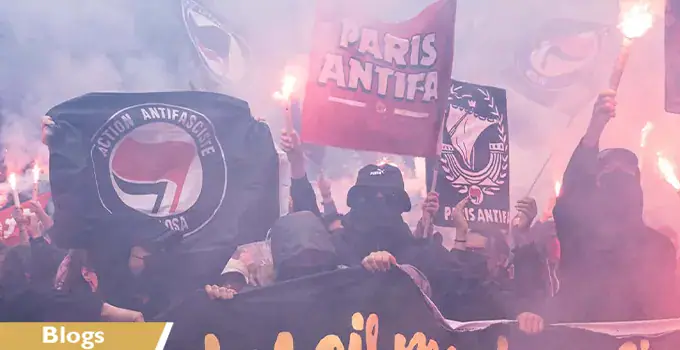
A wave of social mobilizations has been sweeping across Europe, led by young people from Generation Z. These movements, seen in countries such as France, Albania, Spain, and Germany, are characterized by innovative tactics and a strong sense of solidarity. The use of social media, general assemblies, and coordinated actions has enabled young people to mobilize and express their demands. This phenomenon is not limited to Europe, as similar movements have been observed in the Arab, Asian, African, and Latin American worlds.
The current youth mobilization in Europe draws parallels with the May 1968 movement in France. However, the new generation's approach is distinct, with a focus on decentralized, non-hierarchical structures and a blend of online and offline activism. The involvement of young people in various social movements, including labor struggles, artistic initiatives, and independent media, reflects a broader desire for change and a redefinition of politics. The mobilization of resources and creative tactics has allowed young people to gain visibility and influence public discourse.
The new generation's politicization is often misunderstood as apathy or disengagement. However, this perception neglects the ways in which young people are reappropriating democratic tools to intervene in public debates. While few young people affiliate with traditional political parties or unions, they are actively engaged in various forms of activism and community organizing. The slogans and messages displayed on their placards offer a glimpse into their imagination and values, revealing a desire for rupture with the existing social order.
According to philosopher Peter Sloterdijk, the current mobilizations can be seen as an "explosion cathartique," a release of accumulated frustration and anger. The "banques de la colère" – or "banks of anger" – that have been building up over time have finally reached a boiling point. However, the role of emotions in politics extends beyond anger and resentment, encompassing a politics of attachment, love, and solidarity. This affective dimension of politics enables the formation of collectives and communities of struggle.
The youth movement's emphasis on emotions and affects challenges traditional notions of rationality and progress. For older generations, modernity was associated with technical progress, liberation, and social mobility. In contrast, young people today face a reality marked by insignificance and disillusionment. The slogan "la fin de l'époque contemporaine" – or "the end of the contemporary era" – reflects a sense of disillusionment with the current state of affairs.
The current youth mobilization in Europe is part of a broader global phenomenon. The geographical dispersion and cultural heterogeneity of these movements have not prevented a transnational synchronization of methods and the emergence of a global social movement. The October 17, 2026, French youth movement is a notable example of this new dynamic of opposition to neoliberal policies and repressive trends.
As historian Marc Bloch once wrote, "The France of defeat will have had a government of old men. It is only natural. The France of a new spring will have to be the thing of the young." This maxim can be universalized, suggesting that the current youth mobilization may herald a new era of politics, one in which young people take center stage and redefine the terms of engagement.
Key points
- The current youth mobilization in Europe reflects a global shift in politics, characterized by decentralized, non-hierarchical structures and a blend of online and offline activism.
- Young people's politicization is often misunderstood as apathy or disengagement, but they are actively engaged in various forms of activism and community organizing.
- The role of emotions in politics, including affects such as love, solidarity, and attachment, is a key dimension of the current youth movement.