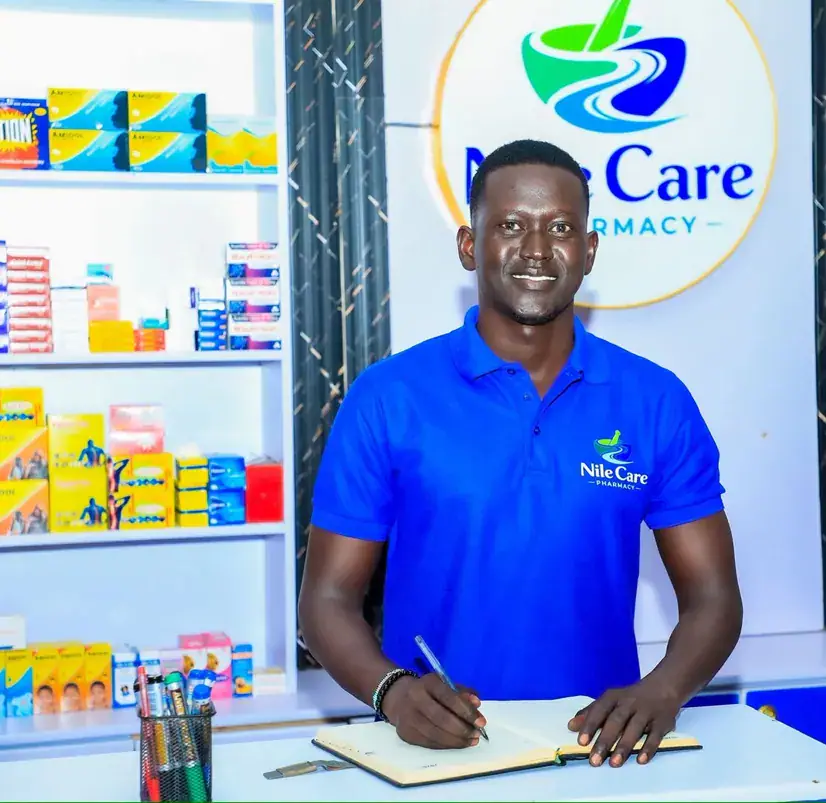
For residents of Shirikat, accessing essential medicines once meant a long and costly journey into Juba town, involving additional transport costs, lost time, and difficulties for patients seeking treatment. However, a young South Sudanese pharmacist, Deng Atem Garang, is working to change that experience by bringing essential medicines closer to the community. Garang, 29, is the founder of Nile Care Pharmacy, which aims to improve access to medicines while creating employment opportunities for young people.
Garang graduated with a Bachelor's degree in Pharmacy from Fayyum University in Egypt in 2022 and began pursuing his ambition of establishing a pharmaceutical business to address gaps in access to essential medicines. His experience working in several pharmacies and a pharmaceutical supply company helped him identify opportunities to improve access to medicines. Garang decided to establish his pharmacy in Shirikat, informed by the difficulties residents faced accessing medicines in Juba town.
In January 2026, Garang partnered with another pharmacist to establish Nile Care Pharmacy in Shirikat, providing essential services and first aid to the community. The pharmacy stocks various medicines, including treatments for diabetes and ulcers, alongside baby supplies, sourced from Egypt, Kenya, and Turkey. Garang said his previous employment did not provide sufficient income to support his ambitions, prompting him to pursue entrepreneurship in an area where he had professional training.
Beyond improving access to medicines, Garang hopes to expand Nile Care Pharmacy into a network of pharmaceutical outlets serving communities across the country. He plans to open more branches, offering services including baby supplies, human medications, and cosmetics. The business currently employs three people, with plans to recruit more workers as it expands. Garang is currently pursuing a master's degree in public health at the University of Juba.
However, establishing and operating a pharmaceutical business has not been without challenges. Garang identified high rental costs, expensive medicines, unreliable electricity, and taxation as some of the difficulties affecting the business. He explained that maintaining appropriate storage conditions for medicines is another concern, particularly because some pharmaceutical products require reliable electricity and controlled temperatures.
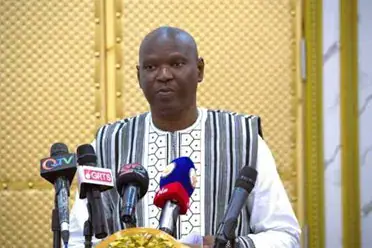
Garang's concerns come as South Sudan continues to face challenges in strengthening its healthcare system and improving access to essential medical supplies. The caretaker Minister of Health, Dak Duop Bichiok, has previously highlighted the importance of collective responsibility and increased domestic investment in healthcare. For young professionals entering the pharmaceutical sector, businesses such as Nile Care Pharmacy provide opportunities to gain practical experience and develop their careers.
Adum Deng, a pharmacist assistant at Nile Care Pharmacy, said joining the pharmacy had provided an opportunity to develop her professional skills while serving the community. She described Nile Care Pharmacy as a well-equipped facility with a wide range of medications, a great resource for the community. For Garang, Nile Care Pharmacy is a step towards improving access to healthcare in South Sudan, and he hopes to continue expanding his business to serve more communities.
Key points
- A young South Sudanese pharmacist is bringing essential medicines closer to underserved communities, improving access to healthcare and creating employment opportunities.
- The pharmacy, Nile Care Pharmacy, stocks various medicines, including treatments for diabetes and ulcers, alongside baby supplies, sourced from Egypt, Kenya, and Turkey.
- The business aims to expand into a network of pharmaceutical outlets serving communities across the country, providing essential services and first aid to more people.