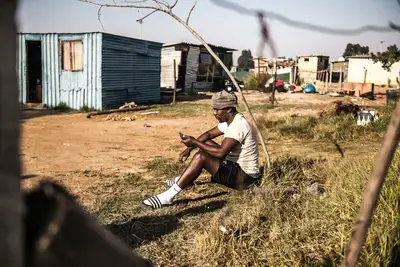
As South Africa prepares for local government elections, young voters are demanding more meaningful engagement with their elected representatives. Many are registering to vote for the first time, driven by a sense of civic duty and a desire for change. However, they face significant challenges, including a lack of understanding about how to effectively participate in local government. Zahra, a Cape Town law and politics student, is one such voter. She learnt the importance of voting at school but only encountered the possibility of approaching an elected representative in a university course.
Research by the Human Sciences Research Council provides insight into the ambivalence felt by many young voters. An analysis of South African Social Attitudes Survey data for 2024 and 2025 found that 63% of Generation Z respondents regarded voting as a civic duty. However, only 23% believed their vote made a difference. This disconnect is reflected in voter turnout statistics. The Electoral Commission's 2021 municipal election report shows that among registered voters aged 20 to 29, turnout was 35%, compared with 64% among those aged 60 to 69.
Young voters are seeking more from their elected representatives, including integrity, transparent service delivery plans, and practical proposals to address pressing issues such as gender-based violence and crime. Naledi, a 28-year-old Johannesburg attorney, has voted before but is disillusioned with the current state of service delivery. She believes that residents are often left to resolve problems themselves and that voting seems like a process of choosing the lesser of evils. She wants candidates who can deliver on their promises and provide relief for households struggling to make ends meet.
Despite these challenges, many young voters remain hopeful about the potential for change. Thandi, a 19-year-old Johannesburg law student, is preparing to cast her first ballot and believes that her vote can help bring about positive change. She wants infrastructure maintained and a plan backed by evidence that candidates can deliver. Others, like Sipho, a Johannesburg fashion designer, are less engaged, citing a lack of understanding about the voting process and a sense of disconnection from the political system.
The logistical challenges of voting also pose a significant barrier for many young voters. Megan, a 23-year-old au pair who recently moved from Johannesburg to Mtunzini in KwaZulu-Natal, is registered but says she will not vote. She moved after the registration deadline and could not update her details, leaving her unable to vote in her new community. Registration and updates to voters' details for this election closed at midnight on 7 August, and many young voters may face similar challenges.
Inequality and uneven service delivery are also major concerns for young voters. Amy, a 23-year-old medical student from Cape Town, regards voting as both a constitutional right and a responsibility. She is troubled by the disparity between wealthier and poorer neighbourhoods and wants to see more effective use of taxes to maintain roads, improve public spaces, and address everyday issues. Sibongile, a 19-year-old politics student, is particularly concerned about women's safety and wants candidates to demonstrate results on safety, service delivery, and fair treatment of communities.
As young voters head to the polls, they are seeking more than just a chance to cast their ballots. They want meaningful engagement with their elected representatives and a sense that their voices are being heard. Leyla, from Cape Town, first voted in 2021 and regards the right to vote as a particular privilege as a woman. She wants to see more accessible ways for young people to raise concerns and receive feedback from their representatives.
Key points
- Young voters in South Africa are demanding more meaningful engagement with their elected representatives.
- Many young voters face significant challenges, including a lack of understanding about how to effectively participate in local government.
- Inequality and uneven service delivery are major concerns for young voters.