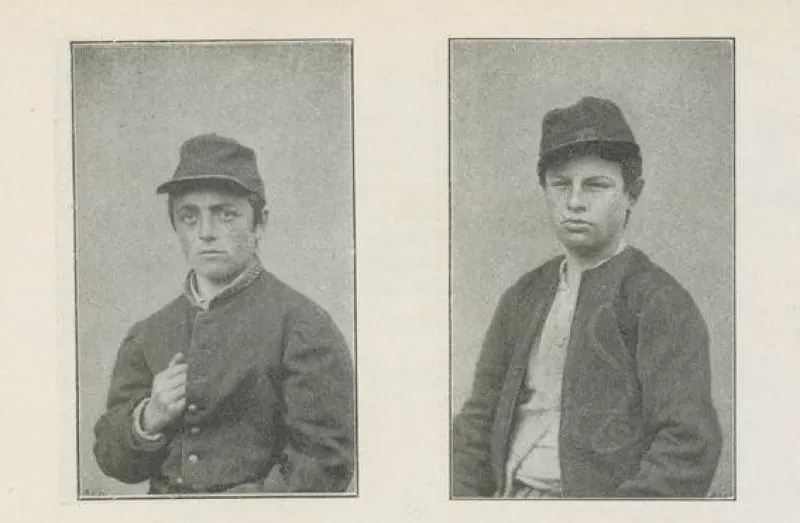
In the aftermath of the Siege of Paris, a significant number of young boys from the city joined the Commune's forces in March 1871. These children, some as young as 12, were imprisoned and put on trial in Versailles, drawing media attention as revolutionary "urchins" and members of the "Montmartre army." The press eagerly covered their stories, portraying them as a unique and intriguing phenomenon.
Historian Prosper-Olivier Lissagaray described the somber processions of defeated Communards leaving Paris, noting that children marched alongside men with white hair and beards. These young insurgents played an active role in the Commune, with some being killed in action or executed against a wall like adult combatants. Victor Hugo's poem in "L'Année Terrible" immortalized the story of a young insurgent's execution, highlighting the tragic involvement of children in the conflict.
In the fall of 1871, unusual trials were held in Versailles, where children were tried in groups, accused of belonging to a band known as the "Pupilles de la Commune." However, a year earlier, during the Siege of Paris, the Republic had celebrated the enlistment of child volunteers, known as the "Pupilles de la République," who were as young as 15. These children were initially employed in non-combat roles, such as building barricades, working in ambulances, or serving as messengers.
The "Pupilles de la République" were initially seen as a symbol of patriotism and enthusiasm, with some media outlets portraying them as a new kind of crusader. However, not everyone shared this enthusiasm, with some critics accusing the government of "embrigadement" and arguing that children's place was in school, not on the battlefield. Henri Rochefort, a member of the provisional government, praised the "brave gamins" for their contributions to the war effort.
As the Commune continued, the "Pupilles de la Commune" took on similar auxiliary roles, but some children were also integrated into other Communard formations. Unfortunately, they were often confused with other groups, such as the "Enfants perdus de la Commune," which had a reputation for brutality. This led to a shift in public perception, with the children being portrayed as "little monsters" rather than heroes.
The involvement of children in the Commune was marked by both enthusiasm and tragedy. While some saw them as symbols of patriotism and courage, others criticized the government for putting them in harm's way. The legacy of the "Pupilles de la Commune" serves as a reminder of the complexities and challenges of war, particularly when it involves children.
The story of the young Parisian insurgents serves as a poignant reminder of the human cost of conflict and the importance of protecting children from the dangers of war. As we reflect on this chapter in history, we are reminded of the need to prioritize the safety and well-being of children, even in the most challenging and tumultuous times.
Key points
- The "Pupilles de la Commune" were child soldiers who played an active role in the 1871 Paris Commune, taking on auxiliary roles and fighting alongside adult revolutionaries.
- The involvement of children in the Commune was marked by both enthusiasm and tragedy, with some being killed in action or executed.
- The legacy of the "Pupilles de la Commune" serves as a reminder of the complexities and challenges of war, particularly when it involves children.