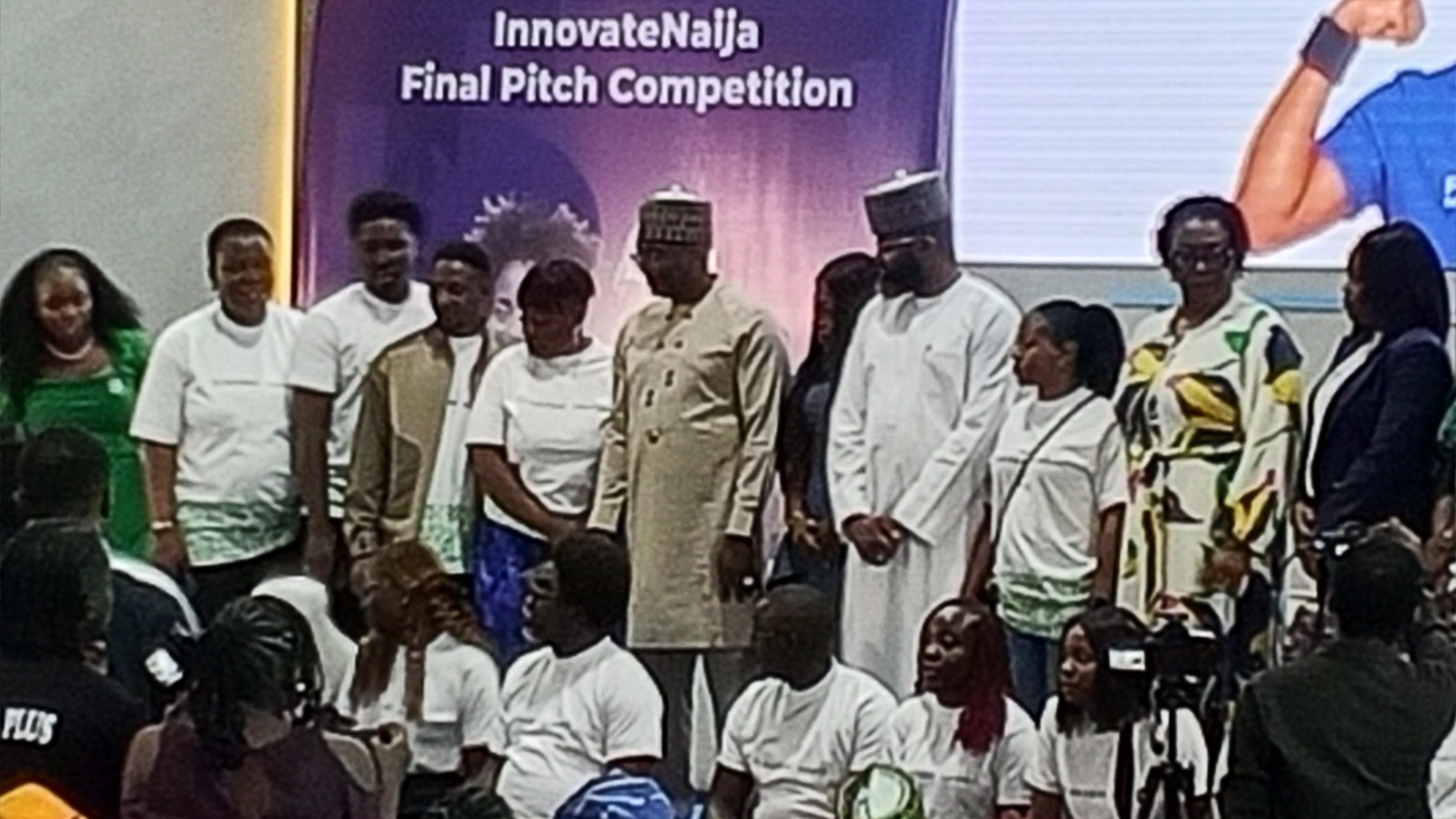
Three young Nigerian innovators, Oluwadamilola Adebayo, Kemisola Bolarinwa, and Zang Luka, are using engineering and hardware technology to develop practical solutions to pressing healthcare and accessibility challenges in Nigeria. Their inventions, showcased through InnovateNaija, a national challenge designed to identify, support, and commercialize promising Nigerian inventions, aim to address sickle cell disease, breast cancer, and digital accessibility. Adebayo's CellGuard is a specialized screening and management monitoring system for sickle cell care, while Bolarinwa's EwaDX is a non-invasive diagnostic garment for early breast cancer detection. Luka's Computer Foot Mouse enables people with upper-limb disabilities to navigate computers using their feet.
The three innovators are among the 15 national finalists selected from innovators across the 36 states and the Federal Capital Territory, competing for a ₦100 million grand prize and additional grants for runners-up. Bolarinwa's motivation for developing EwaDX was personal, having lost her aunt to breast cancer. She aims to make breast cancer screening more accessible through wearable technology. Her device has reached the working-prototype stage, and she is preparing for clinical trials before seeking regulatory approval for commercial deployment.
Luka's Computer Foot Mouse and locally manufactured USB cables address the exclusion of people with physical disabilities from using conventional computer equipment. His foot-operated computer interface gives users greater independence in accessing digital tools. Luka's company, Zang Global, sources about 40% of its materials locally, with the remaining 60% obtained from outside the country. However, he faces challenges in scaling production and commercializing his products.
The InnovateNaija experience has demonstrated that Nigeria's innovation talent is widely distributed beyond traditional technology centers like Lagos and Abuja. According to Nanko Madu, Director of Programmes at AfriLabs, over 1,200 innovators participated in the programme, with 133 innovations selected to proceed to the next stage. The objective is to create a pipeline for promising engineering solutions to receive infrastructure and technical support needed to reach the market.
The National Agency for Food and Drug Administration and Control (NAFDAC) and other relevant authorities must certify Bolarinwa's EwaDX before commercial launch. Luka urges the government to support local manufacturers with access to machinery, tools, and production facilities to increase production and export locally manufactured products. He believes that with investment and partnerships, his product can serve the whole of Africa.
Director of Programmes at AfriLabs, Nanko Madu, emphasizes that innovation talent is not limited to traditional technology centers. She cites the Ekiti-based breast cancer innovation as evidence that Nigerians develop solutions to pressing local problems wherever they live. Madu believes that access and opportunity, rather than talent, have been the challenges facing innovators.
Executive Vice Chairman/Chief Executive Officer of NASENI, Mr. Khalil Suleiman Halilu, stresses the need for stronger bridges between ideas and opportunity, prototypes and production, and innovators and industry. NASENI's approach is anchored on three principles: Creation, Collaboration, and Commercialisation. Halilu believes that Nigeria has the talent, creativity, and problems worth solving, but needs to develop technologies that respond to real Nigerian needs.
Key points
- - Three young Nigerian innovators develop solutions to sickle cell disease, breast cancer, and digital accessibility challenges. - InnovateNaija aims to identify, support, and commercialize promising Nigerian inventions. - NASENI emphasizes the need for stronger bridges between ideas, prototypes, and industry to support innovation.