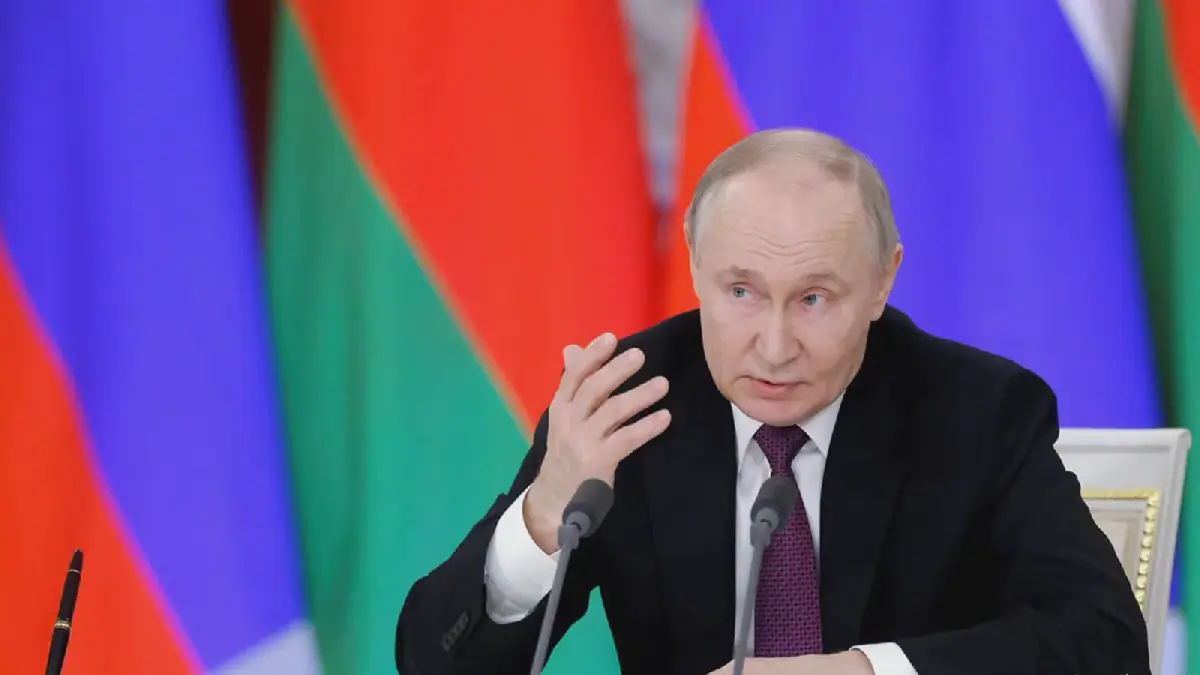
On October 28, 2026, Russian President Vladimir V. Putin opened the Russia–Africa Summit in Moscow, addressing a continent where his country's influence is on the rise. According to the African Youth Survey 2026, 54% of young Africans view Russia's influence positively, up from 44% two years ago. This surge has propelled Russia past France, which has seen its sway decline to 47%. The survey, conducted by PSB Insights and commissioned by the Ichikowitz Family Foundation, gathered data from 4,901 face-to-face interviews with 18-to-24-year-olds across 16 African countries.
The survey reveals a complex picture of Russia's influence in Africa. In Burkina Faso, 95% of respondents believe Moscow wields significant influence, the highest reading of any surveyed nation. Congo Brazzaville and Chad follow closely, with 69% and 65% respectively. However, there is a significant disparity in perceptions, with only 24% of young Liberians and 26% of young Somalis viewing Russia as influential. This 71-point chasm highlights the diverse national experiences and encounters with Moscow's advance.
Despite the warm reception, young Africans express concerns about foreign powers' influence over their countries. Four in five respondents, or 80%, say they are uneasy about foreign influence, a figure that has risen from 72% in 2024. Ivor Ichikowitz, the survey's founder and commissioner, notes that Russia's achievement should be taken seriously, but also warns that approval is not a blank cheque. Africa's young people seek partners who can help build their future, not control it.
The survey highlights a crucial distinction: a favorable view of a particular power can coexist with wariness about outsiders' intentions. The data show that even in Burkina Faso, where 95% of respondents recognize Russian influence, 72% remain worried about foreign influence in general. Outside analysts have offered their own readings of Russia's motives, with some concluding that Russia's military engagement in Africa serves both strategic ambition and practical interest.
When asked about the qualities that matter most in an international ally, 43% of respondents chose the capacity to invest in their country's infrastructure and economy. Respect for natural resources followed at 39%, while democratic values and a strong human rights record, and respect for sovereignty and non-interference, were each selected by 34%. This pragmatic set of priorities suggests that young Africans measure friendship in outcomes, not sentiment.
The survey also reveals that young Africans are clear-eyed about how to engage the world. More than half, 55%, prefer alliances that deliver trade and investment, even with partners that operate under different political systems. Three in five believe their country should forge strong alliances with one or two major global powers to secure long-term advantage. The upshot is that the great contest is not a simple choice between Russia and the West, but rather a choice between relationships that work for Africans and those that do not.
The African Youth Survey 2026 provides a cumulative portrait of a demographic that will define the continent's century. Since its launch in 2020, the research has reached 28 countries and gathered 18,882 interviews over four waves. As Russia and other global powers vie for influence in Africa, the survey's findings offer a nuanced understanding of young Africans' priorities and concerns. The test of the promises made in Moscow will be in the outcomes that follow.
Key points
- Russia's influence among young Africans has risen to 54%, surpassing France.
- Concerns about foreign powers' influence over African countries remain high, with 80% of respondents expressing unease.
- Young Africans prioritize practical benefits, such as investment in infrastructure and economy, when evaluating international alliances.