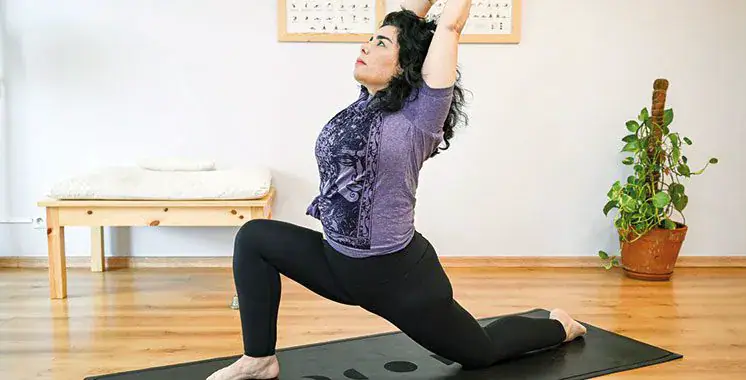
Hammouda Mounia, writing for Aujourd'hui Le Maroc, notes that yoga can be beneficial for people with joint issues and osteoporosis, but it must be practiced with caution and adaptation. The goal of yoga is not to anatomically correct conditions like osteoarthritis, but to improve functional abilities and comfort. Osteoarthritis is a chronic joint disease that affects cartilage, bone, and other joint structures, causing pain, stiffness, and limited mobility.
Mounia explains that osteoarthritis is not simply a mechanical wear and tear of cartilage, but a complex disease involving mechanical, metabolic, and inflammatory mechanisms. It can affect various joints, including knees, hips, hands, and spine. Symptoms include pain during movement, stiffness, limited mobility, and decreased muscle strength. Contrary to common misconceptions, osteoarthritis does not require joint immobilization; instead, adapted movement is a crucial aspect of its management.
The National Institute for Health and Care Excellence (NICE) recommends that people with osteoarthritis participate in individualized exercise programs, including local muscle strengthening and general physical activity. Supervised sessions can also be beneficial. When practicing yoga with osteoarthritis, it is essential to prioritize gentle and progressive mobilizations, avoid deep knee flexions that cause pain, and use supports to reduce joint stress.
Osteoporosis is a systemic bone disease characterized by decreased bone density and altered bone microarchitecture, increasing the risk of fractures. It often progresses silently, with minimal symptoms until a fracture occurs. Distinguishing between osteopenia (low bone density) and osteoporosis is crucial, as is evaluating bone mineral density through osteodensitometry. The risk of osteoporosis increases with age, particularly in postmenopausal women due to decreased estrogen levels.
Mounia highlights the importance of movement for bone health, as bones are living tissues that constantly renew themselves through remodeling. Mechanical stress on bones regulates this process, and adapted exercises can stimulate mechanisms that maintain or improve bone resistance. The British consensus Strong, Steady and Straight recommends exercises that stimulate bone solidity, improve balance and strength, and reduce the risk of falls and fractures.
To adapt yoga for people with osteoporosis, it is essential to consider specific precautions. Certain traditional postures require modifications, especially for individuals with advanced osteoporosis. The Canadian recommendations, updated in 2023, encourage progressive strengthening, functional exercises, and balance work, while cautioning against movements that involve significant spinal flexion, rotation, or stress.
In conclusion, yoga can be a valuable practice for people with joint issues and osteoporosis, but it requires careful adaptation and consideration. By prioritizing gentle mobilizations, avoiding stressful movements, and focusing on functional abilities, individuals can benefit from yoga while minimizing the risk of exacerbating their condition. With proper guidance and precautions, yoga can be a safe and effective way to improve overall health and well-being.
Key points
- Osteoarthritis and osteoporosis require adapted yoga practices that prioritize gentle mobilizations and stress reduction.
- The goal of yoga is to improve functional abilities and comfort, not to anatomically correct joint conditions.
- Mechanical stress on bones regulates bone remodeling, and adapted exercises can stimulate mechanisms that maintain or improve bone resistance.
Reporting sources
- Yoga, articulations et santé osseuse (2/3) · Aujourd'hui Le Maroc