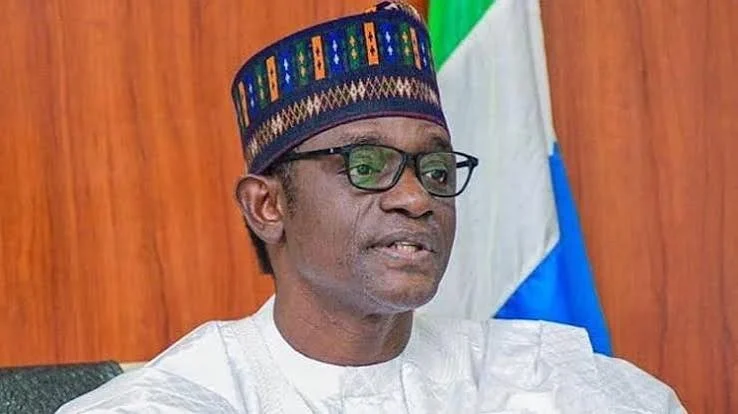
Yobe State Governor Mai Buni and the Institute for Peace and Conflict Resolution (IPCR) have emphasized the need for sustained investment in peacebuilding, dialogue, justice, and inclusion as Nigeria prepares for the 2027 general elections. This call was made on Monday in Abuja at the 2026 International Day of Peace Commemoration, with stakeholders stressing that peaceful democratic participation requires continuous efforts beyond election periods. The event was organized around the United Nations theme, ‘Invest in Peace: For Everyone, Everywhere, Every Day.’
Governor Mai Buni, represented by his Special Adviser on Security Matters, Brig-Gen. Dahiru Abdulsalam (retd.), highlighted Yobe State's deliberate efforts to strengthen its peace architecture in response to security and conflict challenges. The state has invested in early warning and response mechanisms, responsible use of technology to counter information disorder, conflict management and peacebuilding capacity, as well as peace education and dialogue across communities. Buni added that these interventions are being implemented despite the activities of conflict entrepreneurs seeking to exploit divisions in society.
The governor also noted that Yobe State is contributing to the Renewed Hope Agenda of President Bola Tinubu’s administration, particularly in the areas of durable peace, improved security, economic resilience, inclusive growth, and democratic consolidation. Buni emphasized the state government's commitment to peace promotion, conflict management, and peacebuilding, and its participation in the International Day of Peace Commemoration to reinforce this commitment. He also mentioned that the state is using the commemoration to identify with peace practitioners and institutions.
IPCR Director-General, Dr. Joseph Ochogwu, stated that the International Day of Peace should be viewed as a platform for practical action rather than a ceremonial observance. He emphasized that peace requires continuous investment in people, institutions, dialogue, and systems that promote fairness. Ochogwu noted that democratic stability is not limited to activities at polling stations but is built through daily practices of justice, fairness, inclusion, dialogue, and respect for the rule of law.
Dr. Ochogwu also mentioned that IPCR has domesticated the global theme for Nigeria through the lecture topic, “Renewed Hope Agenda: Investing in Peace for Democratic Stability – Everyday Pathways to Justice and Inclusion Ahead of Nigeria’s 2027 General Elections.” The institute has intensified election-related conflict prevention through its early warning and early response systems, engagements with political actors, traditional institutions, women and youth networks, and policy work on electoral violence mitigation.
The United Nations representative, Dr. Grace Kpoa, called for greater attention to women and young people as partners in peacebuilding, while urging stronger institutions and mechanisms for resolving differences through dialogue. She emphasized that conflict prevention is most effective when grievances, tensions, and risks are identified and addressed before they develop into crises, and that collaboration among government, civil society, traditional and religious leaders, development partners, and communities remains important.
The International Day of Peace is observed annually on September 21, and the 2026 theme highlights peace as more than the absence of war, emphasizing safety, dignity, opportunity, cooperation, and everyday action. The United Nations remains fully committed to supporting Nigeria’s efforts in this regard, and stakeholders are urged to engage with open minds and focus on practical measures that could strengthen social cohesion, reduce tensions, expand inclusion, and protect democratic processes.
Key points
- Yobe State Governor Mai Buni and IPCR emphasize the need for sustained investment in peacebuilding, dialogue, justice, and inclusion for peaceful 2027 elections.
- IPCR has intensified election-related conflict prevention through early warning and early response systems, engagements with political actors, and policy work on electoral violence mitigation.
- The United Nations representative calls for greater attention to women and young people as partners in peacebuilding and stronger institutions for resolving differences through dialogue.