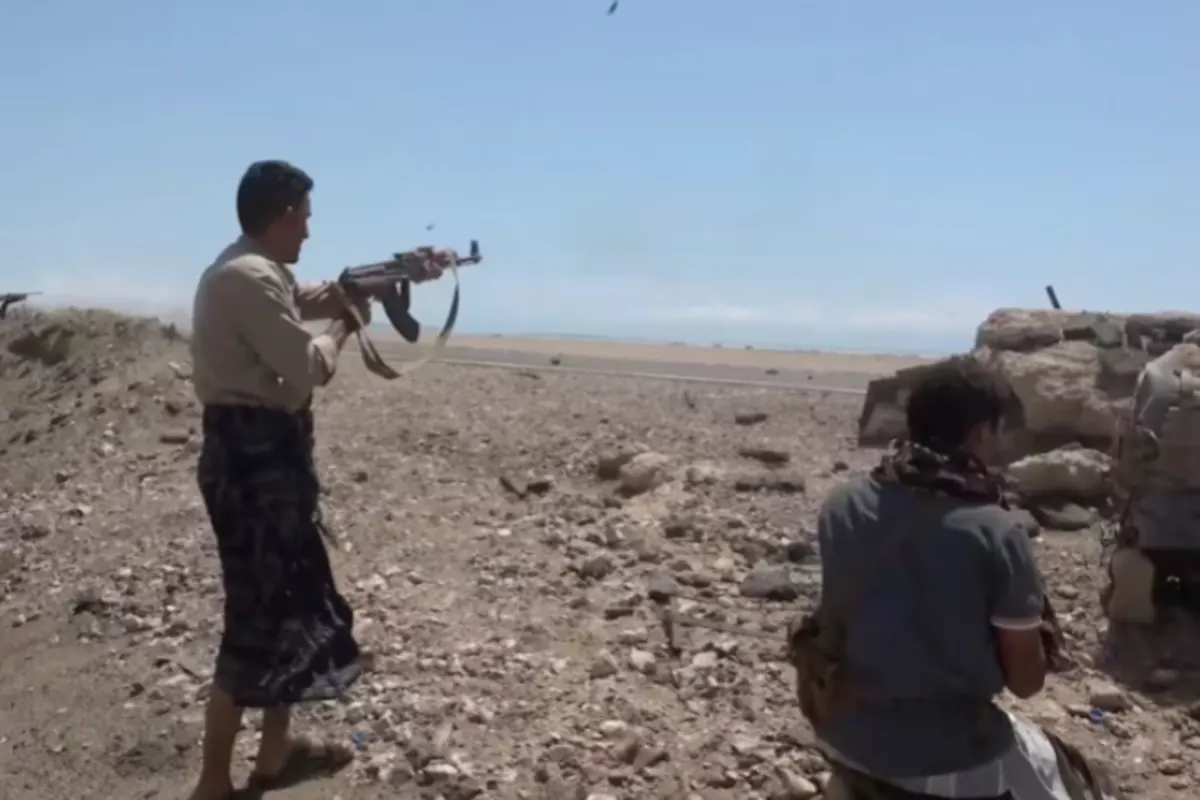
Yemeni government forces, backed by heavy Saudi air strikes, have staged a lightning advance to retake control of the Bab el-Mandeb Strait and areas around the city of Mocha. The Houthi fighters, who had seized the strait last month, are retreating into the highlands, according to four government sources. The Defence Ministry confirmed that the city had fallen under government control. This development could loosen the Houthis' grip on a vital Red Sea oil route.
The Houthis responded to the government's advance by attacking key locations in Saudi Arabia, including the King Khalid International Airport in Riyadh, an Aramco refinery in Rabigh, the Abha international airport, and the Khamis Mushait military base. However, these claims could not be immediately verified, and Saudi Arabia and Aramco did not respond to requests for comment. The conflict has been escalating, with fighting raging along several front lines in Yemen for weeks.
The Yemeni government forces had already taken key positions, including an airstrip in the Dhubab district at the mouth of the strait. The seizure of the strait by the Houthis last month sent shock waves through energy markets. The Saudi-led coalition fighting the Houthis also carried out a military operation in Yemen's Red Sea governorate of Hodeidah. However, Reuters could not independently verify the extent of the government gains.
The Houthis, who have controlled many of Yemen's more populous areas, including the capital Sanaa since 2014, denied the government's claims, calling them baseless. Meanwhile, the Houthis made significant advances near the third-largest city of Taiz, gaining sections of a mountain road and leaving government forces besieged, according to five military sources. One government source denied that the road had been cut.
The escalating conflict has prompted Riyadh's allies to act. Saudi Arabia, Turkey, and Pakistan agreed to rapidly deploy military forces and capabilities in Saudi Arabia under their Mecca defence pact. The fighting has worsened a humanitarian crisis in Yemen, with the UN migration agency reporting that 184,000 people have been displaced since the war resumed.
Yemen's internationally recognised president, Rashad al-Alimi, vowed to fight until the country is liberated from the grip of the Houthis. Saudi Arabia said it had attacked hundreds of targets to provide air cover for the Bab el-Mandeb Strait and Yemeni ground forces. The Yemeni government launched attacks on several fronts, including in Sanaa province, resulting in casualties.
The conflict has resulted in significant humanitarian and economic impacts. The heaviest fighting has been in the southwest, both in the coastal area near the strait and in the hills around Taiz. The situation in Taiz, a city with a population of over half a million, remains dire, with residents struggling to access basic necessities like fuel and cooking gas.
Key points
- The Yemeni government forces have retaken control of the Bab el-Mandeb Strait.
- The Houthis have launched attacks on key locations in Saudi Arabia.
- The conflict has worsened a humanitarian crisis in Yemen, displacing 184,000 people.