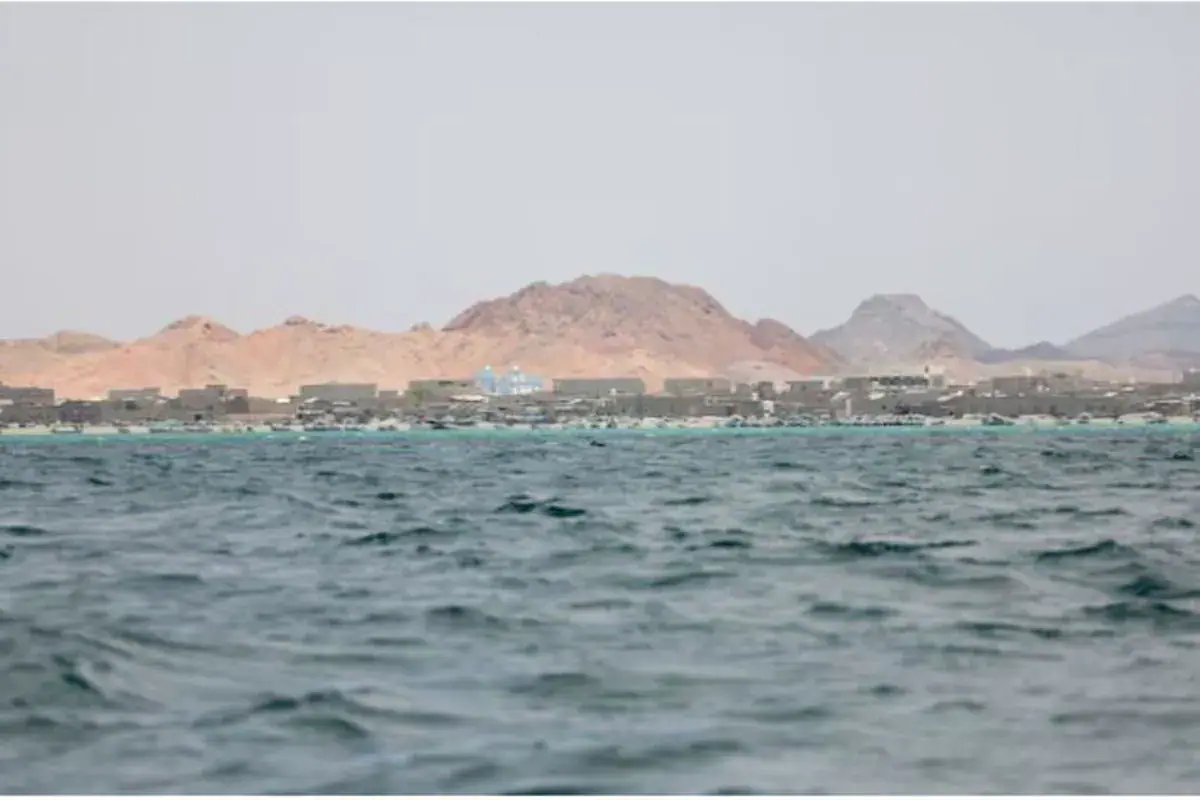
The Yemeni government forces have announced their withdrawal from the area near the Bab el-Mandeb Strait, a strategic location that controls access to the Red Sea. This move is seen as a major setback for the Saudi-backed campaign against the Iran-aligned Houthis. The government forces will now focus on defending their main base in Aden. The withdrawal comes after a six-week counteroffensive to reclaim the coast near the mouth of the Red Sea, which was seized by the Houthis in September.
The Houthis had made rapid gains in Yemen, capturing the coast along the Red Sea and the Bab el-Mandeb Strait. They also besieged government forces in Taiz, the country's third-biggest city, in mountains above the approach to Aden. A Saudi-backed government offensive last month retook key positions around the strait, but failed to drive the Houthis entirely away from the area or retake the city of al-Mocha further up the coast. The Houthis have responded by intensifying drone and missile attacks on Saudi Arabia.
The withdrawal of government forces from the Bab el-Mandeb area raises the prospect of new Houthi advances towards Aden. It also underscores the predicament faced by Saudi Arabia in trying to stop the Houthis' drone and missile attacks on the kingdom. The government forces have been based in Aden on the southern coast since 2015 after the Houthis seized the capital Sanaa. The Houthi gains in Yemen and attacks on Saudi Arabia and Red Sea shipping have strengthened the position of Iran in the wider Middle East conflict.
The Southern Armed Forces, the main military force fighting for Yemen's government in the south of the country, announced the redeployment of its forces from Dhubab Airport and the Bab el-Mandeb area. The redeployment is aimed at securing the capital, Aden, and the neighbouring governorates, as well as strengthening the front lines and addressing existing threats. There was no immediate response from the Houthis or from Saudi Arabia, the Yemeni government's main international ally.
The Houthis have made significant advances in the highland areas north of Aden, cutting off Taiz in early October and putting increased pressure on the disparate coalition of forces fighting for the internationally recognised government. Government forces are still trying to push the Houthis from coastal areas nearby, Yemeni military sources said. The Houthi gains around Taiz, which has become the fiercest front of the civil war, undermined the government campaign around Bab el-Mandeb.
Fighting is still intensifying around the western region of Taiz, with humanitarian conditions worsening. The city, which hosts about half of the 300,000 people displaced across Yemen by the latest fighting, remains besieged. Aid supplies are unable to enter, and civilians are unable to leave. The Houthis have released 600 prisoners, the International Committee of the Red Cross said on Sunday.
The Yemeni civil war, which had been dormant since 2022, abruptly reignited this summer as a spillover from the Iran conflict. The conflict has resulted in significant humanitarian crises, with millions of people displaced and affected. The international community is working to find a solution to the conflict, but the situation remains complex and challenging.
Key points
- The Yemeni government forces' withdrawal from the Bab el-Mandeb area is a major setback in the war against the Houthis.
- The Houthis have made significant gains in Yemen, capturing strategic locations and intensifying drone and missile attacks on Saudi Arabia.
- The conflict has resulted in significant humanitarian crises, with millions of people displaced and affected.
Reporting sources
- Yemeni government force retreats from strait in major setback in war against Houthis · https://www.thecitizen.co.tz/