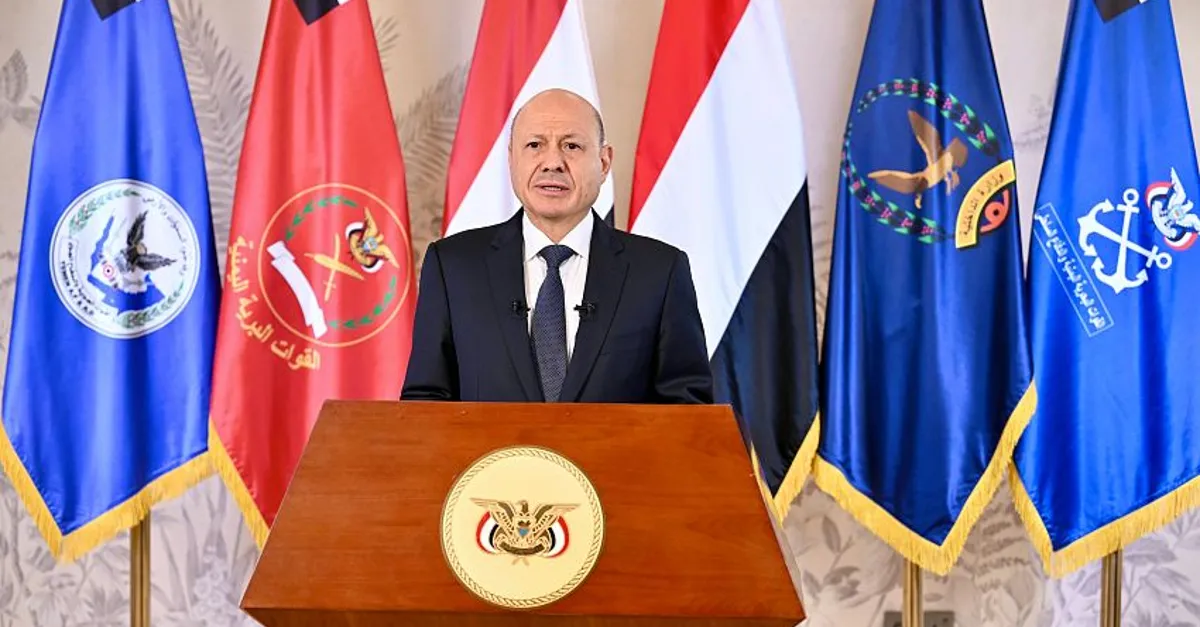
On Sunday, Yemen's Presidential Leadership Council, led by Rashad Muhammad Al-Alimi, announced the commencement of military operations aimed at reclaiming the country's remaining territories and establishing state authority across the nation. This move marks a shift from a period of preparation and readiness to a phase of liberation, following the exhaustion of all peaceful resolution efforts. The decision was made in accordance with the council's constitutional responsibilities to protect the nation's sovereignty and its citizens.
According to Al-Alimi's statement to the Yemeni people, the operations are designed to restore the state's control over its territory and institutions, following the failure of peace initiatives. The council has directed the armed forces and security agencies to execute their assigned tasks as per approved plans to liberate the country. This step comes after the state extended an olive branch, which was met with further escalation and mobilization by militant groups.
The decision to initiate military operations was necessitated by the continuation of threats to national security, citizens' safety, and regional stability. Al-Alimi emphasized that the state's position today is one of assuming its national responsibility in confronting Houthi militias, which have persisted in their actions outside the state's control, threatening both domestic and international security.
The Yemeni Presidential Leadership Council's chairman clarified that the conflict is not directed against citizens in specific provinces, nor is it a war against a particular sect or tribe. Rather, it is a national endeavor aimed at restoring state institutions, correcting past mistakes, and ensuring that the will of the Yemeni people is not dictated by force.
The military operations are a direct response to the ongoing aggression and expansion by Houthi militias, which have been targeting civilians, national infrastructure, neighboring countries, and international shipping lanes. The council's actions are intended to safeguard the nation's sovereignty, protect its citizens, and secure its territorial integrity.
The escalation comes after an extended period of efforts to achieve peace, which were unilaterally disregarded by militant groups. The state's move is seen as a measure to enforce its authority and restore order, emphasizing that the continuation of the status quo, with weapons outside state control, is untenable.
As the situation unfolds, the international community is closely monitoring developments, with many expressing concern over the potential for further escalation and humanitarian impact. The Yemeni government and its international partners continue to stress the importance of finding a peaceful resolution to the conflict, while also acknowledging the state's right to defend its sovereignty and citizens.
Key points
- The Yemeni Presidential Leadership Council has initiated military operations to regain control of the country's remaining territories and assert state authority nationwide.
- The decision follows the exhaustion of peaceful resolution efforts and continued aggression by Houthi militias.
- The conflict is framed as a national endeavor to restore state institutions and protect citizens, rather than a targeted attack on specific groups or regions.