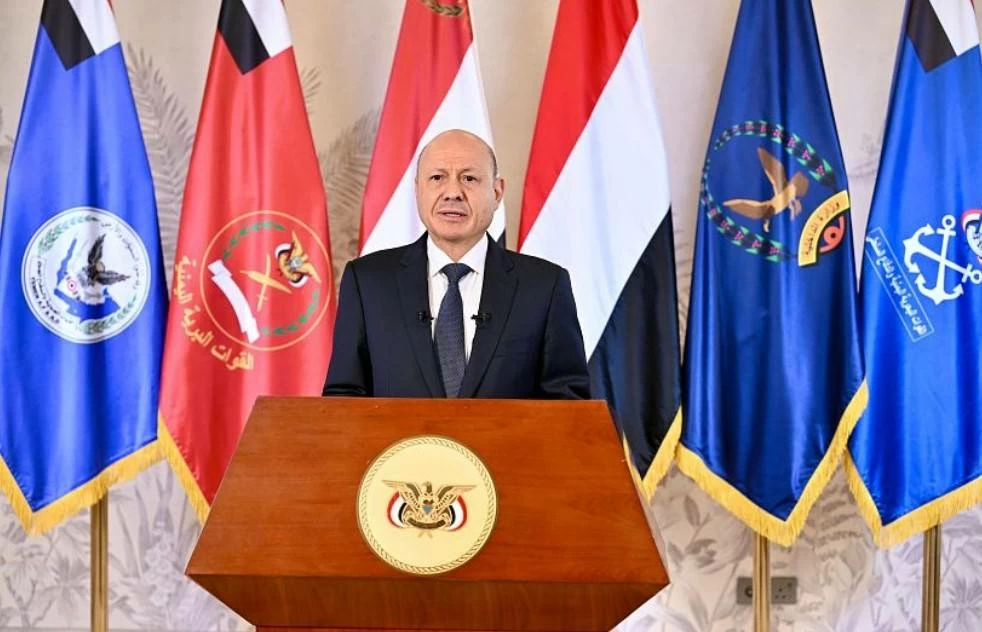
Yemen's Presidential Council, led by Rashad Muhammad Al-Alimi, announced on Sunday, October 4, 2026, the commencement of military operations aimed at restoring state control over the country's remaining territories. This move marks a shift from a phase of preparation to one of action, as stated by Al-Alimi in an address to the Yemeni people. The operations are part of a broader strategy unveiled on September 26, which includes national mobilization and a safe return initiative for those willing to leave Houthi ranks.
According to Al-Alimi, the decision to launch military operations comes after the government has given the option of peace sufficient time and opportunities. The current phase represents a transition from preparation to practical action on the ground. This transition follows a series of directives issued by the Presidential Council, including the acceleration of a general mobilization and a safe return policy for those willing to disengage from Houthi forces, as announced on September 28.
In a direct message to residents in areas under Houthi control, Al-Alimi emphasized that the military operations are not aimed at the people of Sana'a, Hudaydah, or Saada, nor do they target any specific sect or tribe. The objective, he stated, is to restore state institutions. Al-Alimi assured that civilians are not a target and urged them to distance themselves from Houthi gatherings and military positions, not to allow their children to be drawn into the conflict, and to cooperate with the armed forces and security agencies.
The safety and rights of citizens, as well as their dignity, are among the key goals of the government's operations, Al-Alimi stressed. He promised that once a city is liberated, it would enter a phase of stability, recovery, and reconstruction. This approach aims to ensure that the restoration of state control leads to tangible improvements in the lives of Yemeni citizens.
The announcement of military operations to restore state control comes amid ongoing concerns about the security situation in Yemen and the impact of the conflict on the country's population. The Yemeni conflict has been marked by complex political and military dynamics, with various factions vying for control. The Presidential Council's move signals a significant escalation in efforts to stabilize the country.
The military operations are also seen as critical to addressing issues related to international navigation and security, which have been affected by the conflict. Al-Alimi has previously stated that the security of international navigation is contingent upon ending the control of Iranian proxies over parts of the Yemeni coast. This highlights the broader regional implications of the conflict and the efforts to resolve it.
As the situation in Yemen continues to evolve, the international community is closely monitoring developments. The success of the Presidential Council's strategy and the impact of the military operations on the ground will be crucial in determining the future trajectory of the country. The focus on restoring state control and ensuring the safety and rights of citizens remains central to these efforts.
Key points
- The Yemeni Presidential Council, led by Rashad Muhammad Al-Alimi, has begun military operations to regain control of the country's remaining territories.
- The operations aim to restore state institutions and ensure the safety and rights of citizens, with a focus on transitioning from preparation to practical action on the ground.
- The move is part of a broader strategy that includes national mobilization and a safe return initiative for those willing to leave Houthi ranks.